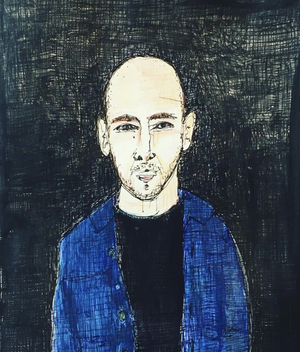
Interview with Hugo Branco for the second episode of the Ossos do Ofício Podcast
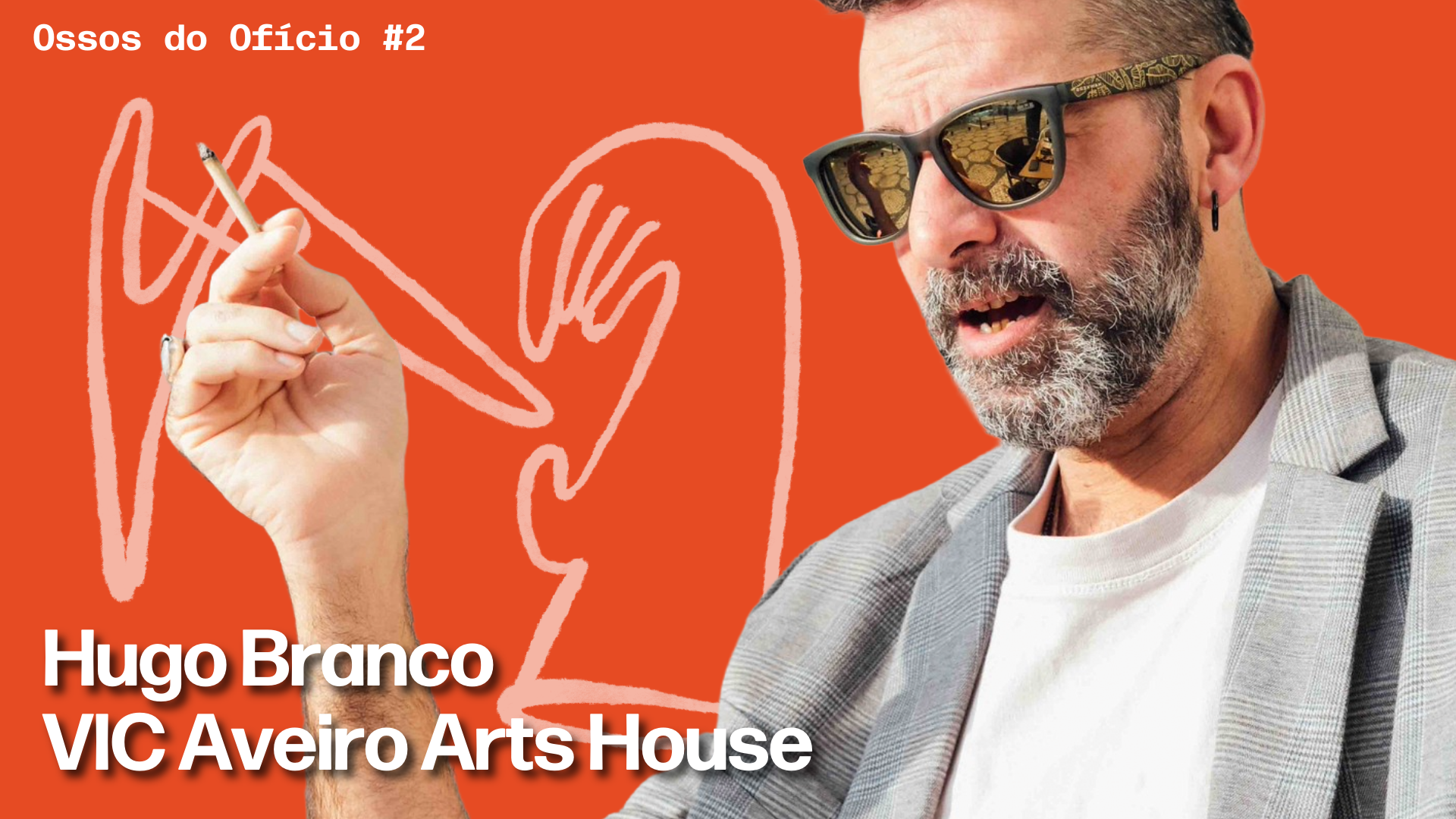
This post is a translated transcript from the second episode of our recently launched podcast, Ossos do Ofício (< click to listen).
In the new episode of Ossos do Ofício, Miguel Barbot talks to Hugo Branco, musician and producer, artistic director of VIC // Aveiro Arts House.
We talked about how you take on a family house that had been closed for twelve years and was at risk of being sold, and turn it into a creative ecosystem spread across five floors. Who pays the bills at the start, how long it takes before there is any room to do anything else, and how you sustain a cultural project without continuous funding.
The conversation covers the guest house that finances everything else, the relationship with Aveiro's cultural fabric, because a project like this does not survive in isolation, and the question that never gets settled in these structures: whether to grow or not, and with what team.
At the end of the episode, Hugo talks about VIC NIC, the house's record label, about the work of conserving the legacy of his grandfather, Vasco Branco, and of the rest of the family, including his mother, the poet Rosa Alice Branco. And about his own musical projects, such as Piurso.
Here you can find a Portuguese transcription of this episode.
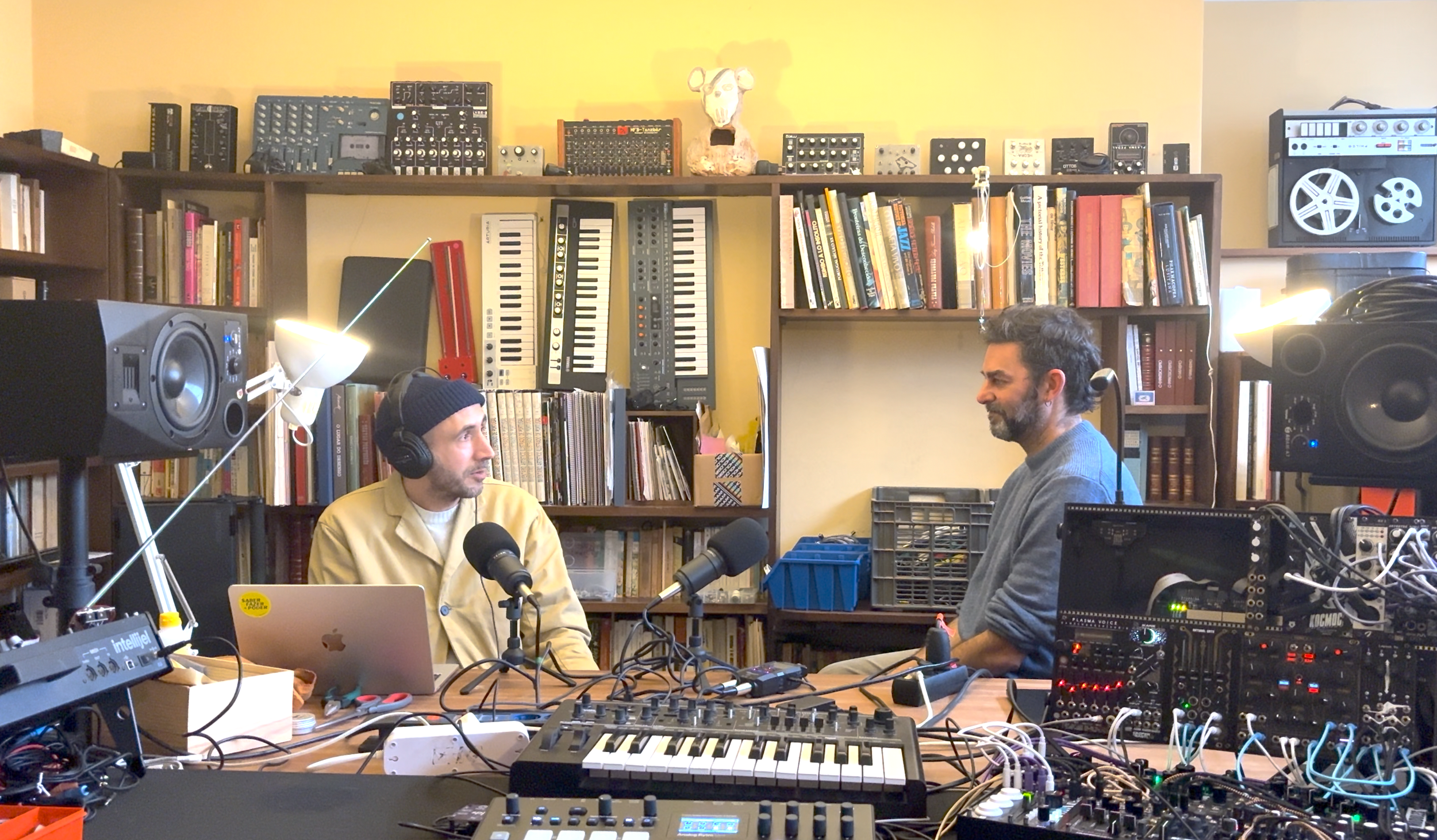
Miguel Barbot: Today we have Hugo Branco with us, a friend not of long standing, but a good friend, and a good partner of Barbot Bernardo and Ofício, and we have been working together for the last three years. Hugo is a philosopher, a flâneur, a lover of cities, a musician and an author, and some years ago he landed in Aveiro, which is where his family comes from. He landed in this place where we are now, VIC, Aveiro Arts House. Anyone who follows our work will have seen a good deal about it on our channels, because we help Hugo with communication and have been working with him on various projects.
Essentially, it is his grandparents’ house, where Hugo spent a great deal of time, where his mother grew up, herself an author with considerable standing in this field, and where his grandparents developed a whole practice. I say grandparents because there is no one without the other.
Hugo, perhaps you could explain a little about what this building is, which is really a house with several floors, several functions and several things going on. And how you came to land here some years ago.
Hugo Branco: Thank you, Miguel. Let us start there. As you said, it was my family’s house, my grandparents’, my mother’s, my uncles’, where the three of them grew up. Although both my grandparents were pharmacists, my grandfather (Vasco Branco) was someone deeply involved in the arts, and throughout his life he devoted himself above all to painting, ceramics, literature and cinema. He left an extensive body of work in all of these fields.
Aveiro is a good example. It was his city, the city he loved, and it is filled and adorned with his public work, in the centre and in various districts. But he even has ceramic panels in hospitals in Japan. The thirty to forty short films he made won him cinema prizes in twenty-one countries, across all five continents. He left, I think, some fourteen published books and at least as many unpublished, perhaps more than those that were published. He is someone with a very extensive body of work, and within that work he experiments a great deal. In cinema, for example, he worked in documentary, in experimental film, in fiction and in animation, which is the area he specialised in and which, I think, gave him the most pleasure.
This project came about partly in that context. In 2016 the house was at risk of being sold, and at the time I was landing back from Mexico to carry on with the Viral Agenda project with my team here. Faced with that risk of a sale, I felt the need to step in for several reasons. First, because it is genuinely a house with an artistic legacy, with a tradition in the arts, in culture and in politics that is quite consistent. And second, out of an emotional and personal connection, because I lived here until I was almost five. I was born in Porto, but I lived here until nearly five, at which point I moved to Porto and started school there. But I was always very close to my grandparents’ house and to my family in general. So for me it would have been an absolute disaster for this house to be sold. I think a landmark space in the city would have been lost.
At the time the house had been closed for twelve years. It was a challenge to arrive here and take stock of the state of it. It is a five-storey building in the centre of Aveiro, right in the heart of the city. From the outside, apart from my grandfather’s ceramic panels, which sometimes escape anyone not paying attention, it is a residential building like any other from that period, but inside it holds a whole series of surprises, as you know. I arrive here and find three floors completely empty and two floors crammed with all the contents of the house.
The house was still looked after for quite some time, but at a certain point there were other priorities, and the priority was caring for my grandparents. There was not time for everything, there were not resources for everything, and people were put before the property. The question of selling came from the same place: the priority was people and their wellbeing, ahead of the property.
In the meantime I tried to find a compromise. I asked my family for a year to start developing this project and to make the house pay its way. I think it was having spent so many years travelling and coming into contact with projects of all kinds, and also developing my own projects, more punk, more anarchic, that gave me the backbone to take this on with a different outlook. And I am glad I did it at almost forty rather than at thirty, because by then I had another way of thinking about things.
Miguel: What is the house at this point?
Hugo: The house at this point holds a series of projects of different kinds. We call it a creative ecosystem because, more than anything, it is a meeting point for several types of inhabitant. From the tourists who stay here in the guest house, where each room is dedicated to one of my grandfather’s art forms, and so is also tied to that legacy. We have artists in residence, who normally stay longer and come to develop their own projects or to work with us on ours, and they come from all over the world, from Europe, from Latin America, from Asia, from more or less everywhere. We have volunteers, normally two or three, who work with us for periods of two to six months, and who also come from all over. Then we have the house team, the core team, and we have the Aveiro public who visit us during events, because we also put on a series of concerts.
Miguel: Anyone who goes to our blog, which we promise will be in Portuguese by the end of the year, will find a very recent post with some photographs taken here, to get a sense of it. At some point we have to decide on one language or the other. I will leave the links in the episode description.
But the house has layers. There is a cinema, there is a floor where you run artist residencies regularly, there is the guest house, and then there is a private floor.
Hugo: Yes, the floors more or less reflect the projects. On the ground floor we have the office and a sort of shop gallery, where we have our records for sale, which we will come to later, some of my grandfather’s work on display, and other products that come out of the projects developed here in the house. The ground floor is also where the volunteers’ private rooms are and the staff area, a kitchen and a sitting and dining room.
Then, down here, where we are now, we are in the library studio, which is the favourite floor of the house, full of nooks. As well as some storage rooms, where we also have work by my grandfather on display, we have this library that works as my studio and is a meeting point where I get together with other musicians, and where I bring them in to collaborate, not always with me, sometimes with each other, and where we develop a series of projects connected to that side of things.
And we have our auditorium, which worked as a clandestine cinema during the dictatorship, where the banned films were watched, where my grandfather showed his own films and where a number of other amateur filmmakers came to show theirs. It was above all a space for sharing and for free speech, at a time when that was difficult. There were people who travelled and brought back books, magazines, records, films, and this was one of the places where it was possible to share that material with the community.
On the first floor we have the guest house we mentioned, with four rooms dedicated to my grandfather’s four art forms and with all the shared areas. It has been running for ten years now and we take great pride in how we look after it and in how it has evolved over the years. We always try to keep the original aesthetic, even if often with furniture that is not original, but keeping to the line. We get very good results on the various platforms, Airbnb, Google, Booking, with extremely high ratings, and people like staying here partly because they are treated in a way that is professional but informal, which is how we always try to work. Essentially, we pay close attention to the people staying here and to what they need, but we treat them in an informal, more familiar way, which makes more sense to us.
Miguel: The secret for anyone creative is to work with pleasure…
Hugo: Without a doubt. And I think the people who work on the guest house side today are people who have always enjoyed having guests. Both Liliana and I are people who enjoy hosting.
Miguel: In other words, it is hard work, but you are applying something that is already part of who you are and already something you enjoy.
Hugo: Then, on the second floor, we normally have a residency area, also with four rooms and shared spaces, where we host artists from all over the world who can come and develop projects with us or develop their own projects and research.
Miguel: Do these people arrive through projects or self-funded?
Hugo: Most of the time it is the latter. We are not funded for artist residencies. What happens is that, when we have funded projects that give us the chance to invite artists in residence to develop them with us, we then take care of everything, including financially. When residencies are self-proposed, it is normally the artists who have to find their own funding, and we act as facilitators, in the sense that we create points of connection between them and whatever resources they need. Whether that is people, or meetings they need to have with someone in a particular university department, at the council or with another partner, or presentation spaces or workspaces, which will be the space we have available here. What we offer is somewhere comfortable and inspiring to stay, and then we facilitate everything else needed for the residency to work.
Then we have one more floor in the attic, a sort of loft with a lot of character, which was my home during the eight years I lived here, and which is now also available to rent.
Miguel: Anyone following the project from outside might get the impression that some outsider lands here and then everything happens with outsiders, whether tourists or artists in residence. That is not quite true. The house has a very strong relationship, almost as a driving force, with a certain underground scene in Aveiro. When you arrive here, roughly ten years ago with this project, what do you find of that ecosystem? How has it evolved? It is an important aspect for understanding how these things sustain themselves, and the podcast is very focused on that. How can someone do a thing like this? It does not live alone, it does not live for itself.
Hugo: We arrived at the end of one cycle and the beginning of another. We came across a cultural scene that at first glance looks depressed, and gives the impression that the creative people in the city feel somewhat isolated and somewhat disheartened. And that is why we started putting on our own events, our own concerts. The wish to do it came, at the start, not from wanting a cultural programme, which then emerged naturally, but from wanting this house to become a safe harbour again for lovers of art and culture and for creative minds. A place where they could meet informally, and we come back to informality again, because it is somewhat part of our working DNA. Where people can meet informally and eventually start discussing projects, or the possibility of them, ahead of any meetings, perhaps with a drink in one hand and a plate of food in the other, and a concert to watch.
We are people who always work collaboratively and in networks. So when we arrive in a city, in this case Aveiro, we want to know what is there, who is working on what, who we might work with in future. Many of these people end up becoming our friends and the people we spend time with in certain places around the city. Back then it was Mercado Negro, where we would find these people in the evenings, and we would talk, and a great deal came out of that. It is something that at the moment, for me, is very much dead in this city: places to meet at night. Anyone who works in culture and the arts knows that these are important spaces, and that the night is also an important space in a city.
Miguel: The University does not mobilise people?
Hugo: There is no shortage of trap and reggaeton bars, and the University does mobilise people. The issue is that, on the staff side, I think the great majority of university lecturers do not live here. And the great majority of students are perhaps at a stage in life where they often do not yet have well-defined tastes, and so they go after what is more mainstream and more commercial, although there are plenty of counterexamples.
We are in a complicated moment right now, but let us go back a little, to the moment we arrived, because I was saying that it was the close of one cycle but also the beginning of another. At that moment when we arrived, a number of interesting projects were also emerging. Bruno dos Reis was taking on GrETUA, for example, and helping turn it into something different and much closer to what it is today, which is one of the most active spaces in the city, not only in theatre but also in alternative music.
Miguel: GrETUA is the University of Aveiro theatre group…
Hugo: Yes, they are a very autonomous unit within the Aveiro students’ union, who we have worked with closely from the start, and still work with. Today it is João Neto who runs it, and he is doing excellent work too, but the leadership is changing at the moment. GrETUA is a genuinely experimental space, which right at the beginning, forty years ago, was already avant-garde, and which nonetheless has had its ups and downs, like everything. And at the moment we arrived here it was taking off again.
Alongside this, at more or less the same time, José Pina took over the direction of Teatro Aveirense. Out of that came not only a revitalisation of the theatre, but also a series of other initiatives, such as Festival dos Canais.
Miguel: Which you have been involved in.
Hugo: I think we have been involved in all of these events, but above all in Festival dos Canais. So on the public and municipal side there begins to be a stronger commitment to culture, which then develops towards the bid to become European Capital of Culture. And at the same time there are private efforts, which generally live on precarity and stubbornness. There was a crowd who had a garage and put on concerts, and sometimes workshops and other kinds of event, very much tied to alternative music too. There are people like Luís Macedo, who organised concerts in a series of venues, such as Mercado Negro and VIC itself. There is João Pessoa, who ran Mercado Negro for quite some time. This coming together of public and private will creates the start of a new cycle which, with all its strengths and weaknesses, we think was rather favourable.
Miguel: It brings a certain comfort. You are not on your own…
From a financial point of view, we are always here in the middle of what is always the problem in culture and creativity. We have had several conversations. In fact, there was a conversation we had here a few weeks ago that made me want to pick this up again and have it on audio, because the audio came out really well. I had only taken notes so that I could publish the interview on the blog later, as I have done with other people I work with. It was the catalyst for the podcast.
In that conversation we talked, and there are things that interested me a great deal. This idea that there is a timeline, and that we are looking at it with a plan, with a vision, with objectives, but it is a fairly long timeline and at the same time an elastic one. The guest house matters. It may look like the most commercial side of the thing, but it is about realising that you have a building to maintain, with all the madness of maintaining a building that is sixty or seventy years old. Some things cost money. It is about realising that a guest house can bring in some cash and, from there, slowly starting to build the different projects, until you reach a situation like now, where there is a sustainability achieved through the balance of different things.
Even so, you keep your own artistic practice going, as you can see from the setup right here in front of us for anyone watching on YouTube. You keep your flexibility. You are not tied to the project at a thousand per cent, you are only at a hundred.
Hugo: At two hundred…
Miguel: But this idea that what gets created from a beginning ten years ago creates a great deal of value, not only for the city, but for your community of musicians. This idea that, even when we have European projects or funded work, they have to lead somewhere, they cannot just be a way of paying salaries. They have to lead to releases, to networking between musicians and artists, they have to be projects tied to education, to capacity building and to the resilience of this community, which is always a problem. It is a subject that touches us both, and anyone who follows you online can see it is a concern of yours: how people build autonomy and how work can be paid fairly, or at least not be exploited.
So I see that the house and you are at a point now where there is a balance, or several balances at several levels. If we start from the financial question, how does this develop and how does it sustain itself?
Hugo: I arrive here with no capacity to invest. What do I have? I have a house with very interesting contents in terms of art, furniture, but also in need of a lot of care. And all of this starts in an absolutely DIY way. There are two, three or four of us, when we are lucky, painting, fixing small bits of electrical wiring, restoring furniture.
We arrived here in April 2016 and by July 2016 we are opening our first two rooms in the guest house. How can we sustain the project, especially in an early phase? We started with two rooms, the painting room and the ceramics room, I think. When we put the listings up, we had no idea whether anyone would bite or not. In the event, after twenty-four, forty-eight hours, we have our first booking. I think we did the last two nights straight through, to get the guest house ready for the booking, because there were two or three of us working.
But it went well, we started getting good reviews, people started enjoying being here and started giving us feedback on what they thought was missing or could be better. Two or three months later we already have two more rooms open, which makes the four rooms of the guest house, and at that point they start running at full capacity. The very next year, with those four rooms running, we managed to move up another floor, the artist residency floor, which at the start, over the summer, also had to work as a guest house, so that we could generate enough revenue to keep this going. Because in reality it is four water meters, four electricity meters, who knows how many internet connections, salaries, insurance. It is a substantial cost base.
We only got in touch with the City Council or with certain institutions, and in fact it was not us who got in touch, it was they who got in touch with us, when we held the official opening of the house, a year on. Because our concern during the first year was to become completely self-sufficient. Today we have Navalha, a cultural association, which is our not-for-profit side, and we work on a number of European projects and some funded projects. But well before that we wanted financial autonomy so that we could say: if we wanted to do this on our own, without funding, we could. From the moment things are working, when you notice small growth year on year and realise that this autonomy is possible, that is when we started moving towards other kinds of project.
Because, as I said, we very much enjoy hosting. I love thinking of myself as an innkeeper. But that is not all I want to do with my life. And the people who work with us are generally connected to the arts and culture and have interests in other areas. So we quickly started developing the cultural programming side, first on that basis of having a safe harbour for welcoming people from the city with an interest in these things. Then it starts to develop further and other kinds of project start to appear. We started being invited by institutions, above all by Aveiro City Council, to develop projects in partnership. We are often commissioned to create programming or content for council events, as with Festival dos Canais and the International Biennial of Artistic Ceramics.
Miguel: At the same time as you build this more commercial structure for the house, you are working on something like an initial investment in this networking, in getting across what VIC offers to the community. And things start coming back.
Hugo: Yes. Our concern, at the start, was that this should sustain itself and work. When that starts happening, it gives us room to start working on other things, many of which, in fact, come out of our own pocket. With events, for example, we give the artists the whole door, we make something on the bar, but often we end up spending more than we take. But it makes sense.
Miguel: It makes sense. I would like to talk a bit about the house and about its programming, which has little to do with the legacy. When we talk about music, we are talking about shows. And yet the connection to your heritage and your legacy is something that is always happening alongside it, perhaps less visibly.
Hugo: I would not say less visibly. Perhaps within our bubble we are somewhat outside it. For example, we had the centenary of my grandfather’s birth, for which we put together a weekend with some eight events across the whole city, in every museum.
Miguel: Because the legacy is not only your grandfather’s, it is your uncles’ too.
Hugo: Yes, my uncles. João, who sadly is no longer with us, Vasco, and my mother, Rosa Alice Branco, all of them also connected to the arts and culture. My uncles worked closely together, in collaboration with my grandfather, on ceramics, on painting. It is a lovely thing to grow up watching.
My mother leaned more towards literature, and I would venture even more so than my grandfather, because she focused on it, although she also has another kind of work, more on the essay side, connected to the psychology of perception and to neuroscience. She studied pharmacy and philosophy, then a master’s, a doctorate. She has this poetry side, and today she is genuinely an established poet in Portugal, but she also has this essay side. She recently published a book on colour theory, which was in fact hugely well received.
Miguel: It is a family legacy, and this also served as a reason to work a little with your mother.
Hugo: Yes. We had already worked together a number of times and had given some talks together, where we brought together a bit of our respective areas of interest. My mother, for instance, is normally the one who takes charge of the literature programming here in the house or at the events we run. And now we have that project we are working on with you as well, which is a double album of electronic interpretations of contemporary Portuguese poetry, where my mother is obviously leading the selection of poets and everything connected to the poetry, and I am directing everything connected to sound and music.
It was a chance to work with her, and also to work with my family, for example with my uncle Vasco and with my cousins, who are also connected to these areas, one a designer, another working in dance. Above all on these heritage questions, which are in fact the questions they get most involved in. Just recently, for instance, there was something we had been pushing for a long time, and we saw the work in Praça da República, the panel, restored. It is right there in the centre and had been getting into quite poor condition. So there is always this background work, whether tied to digitising the films, or to translating and publishing a book by my grandfather, or to the conservation and promotion of the heritage in general.
Miguel: To move towards the final stretch, there is a question that matters to me: what is the network you have? I do not mean the general network of partners and clients, but the network you have to get everything moving. This is quite an undertaking, you have many fronts open. You have mentioned Liliana, you have mentioned the volunteers. How does all of this get activated?
Hugo: At the start this is twenty-four hours a day. I can say I have done everything there is to do in this house, from fixing pipes to ironing sheets. That also gave me an overall view of my business, and at this point I know what things cost, I know how I like them done, what results I am after, I know how long they take and the effort they require. I think that matters in almost any business, unless you are talking about highly specialised things you genuinely have no way into.
But this starts with a very small team, which then grows as more resources come in. As I said, Liliana Caetano is the person who runs the guest house today, supported by Marcelo, who was also involved with Mercado Negro, and today they are more or less autonomous in that area. And they are supported by the volunteers as well.
Meanwhile we have a number of other people who work with us more or less continuously, such as Lana Gunjic, who you also know and who we have worked with several times. She started working with us in cultural management, first as an intern, and ended up joining us full time, for as long as we could keep her here. Because in reality, as I said, we do not have continuous funding in culture that would let us maintain that, and for me it is one of the biggest Achilles heels of this. Having to hire again and again puts us in a somewhat limited position.
It is always that question of growing or not growing, scaling or not scaling. Our outlook is to keep things to certain rules, a certain purpose, a certain way of seeing things. The team cannot be very large. But in cultural management we needed to always have someone in cultural management and production. At the moment we have Francisca Branco, who is not family, curiously. Everyone assumes she is, and she is family by now, we are a happy family. Francisca works with us mainly on the executive production side, everything to do with projects like in loco, this European project we are involved in, and she is managing the label dynamics with us as well, on the releases side. She has been working with us for a few months and will carry on for some time.
Then we have a number of people who work with us occasionally but consistently, such as Gabriela Benedetti on video. A number of collaborators who join us on specific projects. Sara Delgado, for example, on anything to do with building structures. One structure we built for Festival dos Canais is made ninety per cent from reused materials, and it is the structure that gives us everything: booth, bars, boxes, shade. It is developed at lightning speed and with a great deal of effort by Sara and a small team she pulled together. Ricardo Pimentel, for example, on the technical side, and Luís Ribeiro, who always helps us with the technical side at events too.
In other words, there is a set of people we call on whenever we can, because we know they work well, they are used to how we do things and a team comes together easily. And then a number of others, either from here in Aveiro, or new people who turn up and get in touch, either because they want to volunteer, or because they want to understand how it works and perhaps lend a hand, or who put themselves forward to start working with us. And then some people from further afield, as in your case, who we now work with on everything to do with communication, and some things on the design side. They are people or organisations we enjoy working with and who we think are worth continuing with.
Miguel: We feel much the same. We may not need cultural or project managers, since we have those in house, but we could do with someone supporting us permanently on the technical side, so we are not always in the stress of “did it record, did it come out alright”. You work with what you have.
One last question. In our last conversation we did not get to VIC NIC and the records. You are already on the twelfth and thirteenth releases.
Hugo: Out in the world, officially, at the moment we are up to double-oh-seven, which is Cinestesia dos Estóicos, by João Salcedo. Meanwhile we are getting to a series of releases that have been somewhat delayed, for various reasons. Some have to do with distribution, with wanting, for example, to get off Spotify. Others come down to the fact that over this last year and a half I have devoted a good deal of time to a personal music project, which will also be released, and to developing other projects. Without a large team, all it takes is for the small team there is to start focusing on certain things and others end up suffering a little. But things carry on afterwards, when there are resources to carry on.
Miguel: You said in that conversation we had that the label is a hole you pour money into. But it is also a long-term project, and things do come back, if you have focus and consistency.
Hugo: Without a doubt. The label is, in a way, a luxury. We think of it in two ways. On one hand, as a device for circulating work. Many of our releases are directly tied to artistic projects developed by Navalha or here in the house. So it is a device for circulating work that is not only sonic, but also written and visual. On the other hand, it is a meeting point for audiovisual misfits, technicians, creatives and thinkers who to us have very fresh views of what music is, and who make us want not only to bring the work to light but also to have them within the family. The great majority of the people we release are people we then go on to invite onto projects, to workshops and to work with us on various levels, because they are genuinely people whose work we believe in.
Right now we are just finishing double-oh-eight, which will come out in the form of a hydrophone. The boxes have arrived, the remaining materials are being printed, and it is a digital record curated by Jorge Barco, a Colombian sound artist and curator who is also a great friend of ours, works at the Museum of Modern Art in Medellín, and who comes with a contact microphone he builds himself. It will be a very limited edition, but a genuinely beautiful one, and one that gives us a lot of work.
Then we have double-oh-nine, whose digital edition is already out, which is From Chronos to Kairos, a compilation where I share the curation with Raquel Castro. We had a sound artist who, with the participants of a workshop he ran, recorded the soundscapes here in Aveiro. Those sounds were then sent to eight international artists, among them Kate Carr and KMRU, for example, who develop sound pieces or more electronic tracks out of them.
We have the record by a band from Serbia [confirm name]. There you go, they are some of these misfits for us. It was the first to arrive, and you were here on the day we opened the boxes, were you not?
Miguel: Yes, I was.
Hugo: It is a record by a band we find incredible, one we believe in and who have played live with us on a number of occasions. And then we have another one, also digital, by a great friend of ours here in Aveiro, Grave, who has taken part in these in loco events and in these European projects, and who these days is someone I share many of my nerdy preoccupations with, around synthesisers, equipment and live performance. About how we present this live in ways that are interesting and that give us the greatest pleasure.
And then we have a whole series of them, some of which you are working on as well, such as [confirm name], the one we mentioned earlier, the poetry one. My own project is also due out. We have just had a proposal from someone I met in London, an eco warrior, very trash techno, who sent us a release proposal that we accepted with great pleasure. So things are moving along nicely.
Miguel: The label, happily. And I am very glad we are part of it. Thank you very much, and let us see how this comes out. Let us hope it all recorded.
Hugo: Thank you, Miguel.
Miguel: And to everyone listening, thank you very much for sticking with us. It was not half an hour, it was forty or fifty minutes, but if you made it to the end it is because you enjoyed it. Thank you very much, and we will have a new episode before long.

This episode is part of a series of content developed for the TY-CO project and aligns with the ABR Festival's focus on sustainability and local culture.
TY-CO brings different cultural communities into conversation — from grassroots initiatives to established festivals — to understand the challenges they face, what they are trying to build, and how we can come together in more sustainable ways.
TY-CO is an EU project funded under the Creative Europe Programme CREA-CULT-2024-COOP-1. The project is a transcultural collaboration between ABR-Alternative Brains Rule (CY), Barbot Bernardo (PT), Arroz Estudios (PT), Loonatiks Design Crew (GR).
Funded by the European Union. Views and opinions expressed are, however, those of the author(s) only and do not necessarily reflect those of the European Union or the European Education and Culture Executive Agency (EACEA). Neither the European Union nor EACEA can be held responsible for them.