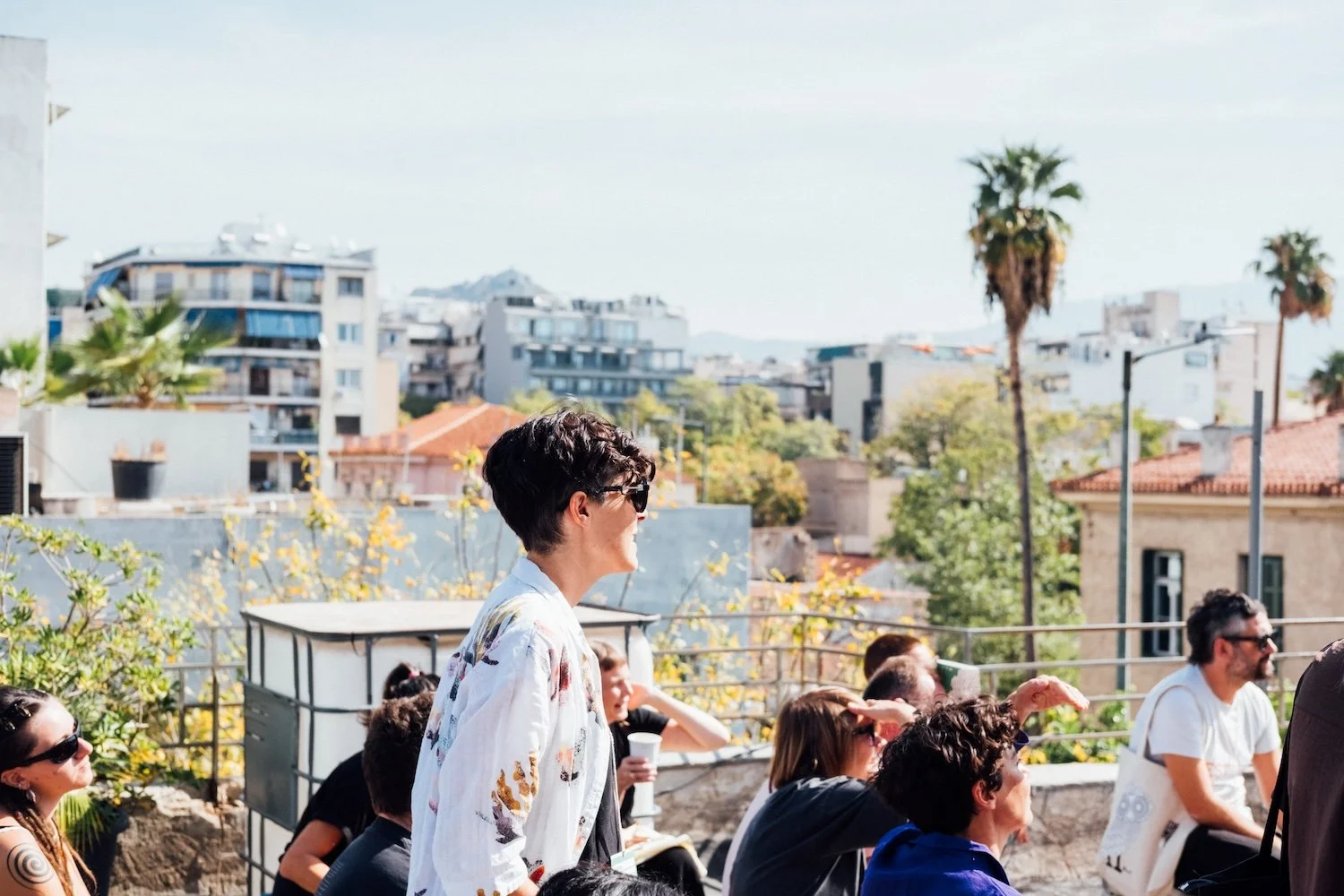
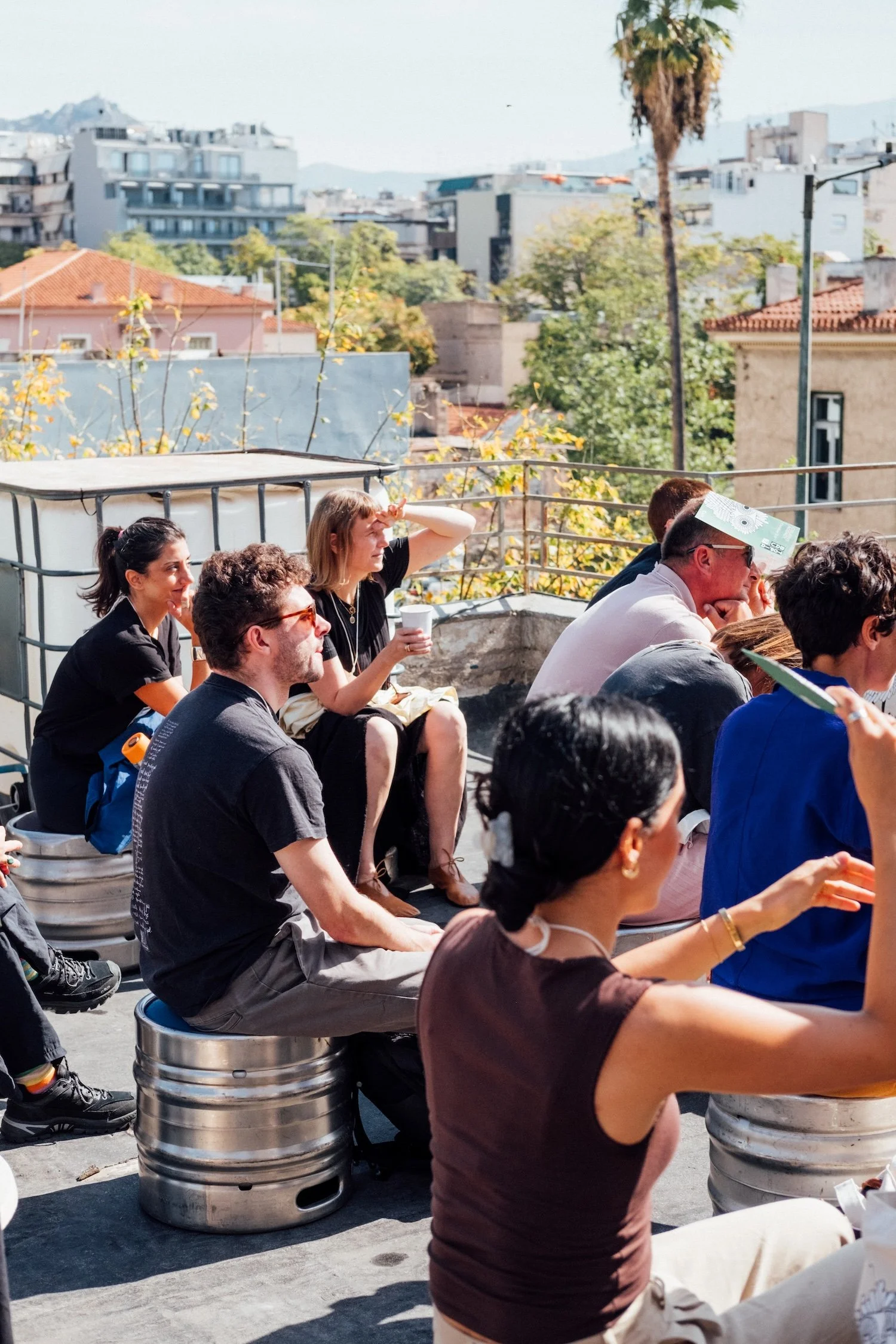
I’ve recently returned from Athens, after spending 5 days in the city for the most recent Bautopia, the European Creative Hubs Network (ECHN) annual conference. This year's edition, held in ECHN’s hometown, was spiced up by the addition of SONOTOPIA, the Bautopia soundtrack delivering different music events. In this post I will recount my experience and share a few of the photos I took there. It will have a personal tone, this is a blog, anyway.
Words and photography: Miguel Barbot
Making sense of our participation in Bautopia and ECHN
So, first things first. In 2022 I was invited by my good friend Tânia from CRU Creative Hub to attend the second Bautopia in my hometown Porto, after which Barbot Bernardo and Saber Fazer joined the network. Since then, I’ve attended events in Romania, Austria and Sweden and hosted two exchanges and events with fellow members here in Porto.
I confess that, until now, I wasn’t quite sure about what other contributions to the network we could provide as a creative hub. It has been great, meeting new people and making friends such as fellow conspirer Tiago Prata from Transversal, who I met in Malmö a couple of years ago, finding partners for our projects, such as Originn or Matera Hub, and being able to work together with fellow members over the years in many different projects, but it fell short when considered against the great potential of bringing together more than 300 organisations in Europe, most of them small private cultural and creative organisations such as ours.
For those arriving here for the first time, Barbot Bernardo is an education project and a transdisciplinary hub working in the cultural and creative fields at large, providing education and support for artists and creatives. This ‘mothership’ includes the certified vocational education and training unit and technical book publisher Saber Fazer. Saber Fazer is our flagship initiative specialised in small-scale manufacturing and craft technical education, with a focus on textile fibres and a connection to the fashion industry, but also to textile art, which is probably a more direct relation with our students’ universe.
The one thing transversal to everything we do is an engaged learning community made of students, educators, practitioners and researchers, something we have in common with at least a few of the other hubs in the network.
We are also a creative practice, running a small in-house studio, Ofício, employing 3 designers, which supports our book publishing efforts, but is totally funded by client work.
The Bautopia event in Athens comes after an increasingly disappointing experience with EU cooperation project proposals, with a sense that, over the years, more and more projects are being won by bigger organisations, “EU funds professionals”, who are mostly disconnected from the cultural fields and definitely not artist or practitioner-led organisations.
The success of these firms comes in sharp contrast with what I heard from almost everyone in a recent event with music festival organisers, who saw a sharp decrease of the success rate in the latest Creative Europe and Erasmus+ calls, and everyone was agreeing that it is more and more difficult to have our projects funded when bureaucrats armed with good AI models are farming money that should be directly funding culture. Perhaps the safeguards laid by the EC to diversify and make things easier for smaller folks are not being as effective as they should, something that would come up again at the General Assembly, as you will read below. This is just one example of the difficulties faced by culture and creativity organisations, especially those smaller in scale and more isolated in this age of uncertainty and generalised pessimism.
Just a few days before Bautopia, I attended a conference in Lisbon organised by our partners from Arroz Estúdios under the TY-CO - Typologies of Community Creative Europe project, an event gathering independent music festival organisers and cultural agents, where we discussed financial sustainability, business models and shared the lessons learned from the collective sum of many years working with culture.
TY-CO is a groundbreaking project for us: through many decentralised events, all under the progressive ethos of the ABR Festival in Nicosia, we were able to connect with different micro-communities, share knowledge and create legacy in a sort of informal Europe-wide learning community committed to a common reflection about topics such as financial sustainability of culture, provenance and local resources or inclusion and diversity in the cultural and creative industries. Here you can read an account of our event at Saber Fazer dedicated to food provenance and local resources.
After the conference I returned to Porto with a million ideas boiling in my head, and a question: should we structure this collective energy? And how? Our practice at Saber Fazer, being structured around a VET-certified school, offers a type of answer: the learning community is real, hundreds of people know and support each other, we are authors and publish books. But here we had something quite different and perhaps ECHN could provide another type of answer or different possibilities..
As I was saying, until now I wasn’t quite sure of our role in ECHN, but arrived at the event with a feeling of enthusiasm, knowing that, together with fellow members, we already are collectively big and a force for good. This realisation was the key to a better understanding of our potential contribution, and I travelled to Athens with the resolution of connecting and, along with colleagues and friends with whom I’ve been talking about this, helping lay the seeds of a new thematic cluster within ECHN aggregating hubs with learning communities.
Meeting André at the Airport
André, always chill.
I travelled on Tuesday morning and shared an Uber ride with my neighbours Tânia (CRU and Bombarda Arts District) and Rita (also Bombarda), as we all live within a 5 minute walk from each other in Central Porto. We were boarding different flights, mine through Munich, theirs through Milan, that would depart within a few minutes difference, and we planned to rejoin later in Athens to share a taxi to a shared Airbnb, and where our friend Esra from Originn, a creative hub in Izmir, Türkiye, would join us later.
I was about to arrive at my gate when I bumped into my friend André Forte, who was also boarding my flight. Seeing André was excellent news for me because I was not expecting him at all. We both share a love for music and art, and he has an almost infinite social battery. He is the type of person capable of easily connecting dots, a capacity every great networker has, which means most of the time in these events I can outsource the small talk just by being with him. He also has the orientation skills of a migratory bird flock leader, so when with him, one has just to follow and enjoy the views.
My friendship with André, also a neighbour in Porto (!), is a direct ECHN externality: we first met at a hub meetup in CRU, then in different Bautopia events, and got closer to each other in Sweden a couple of years ago. By then André was working at UPTEC, Porto University Science Park, which he left to join a big private cultural endeavour in Porto. After an almost two years stint there, he rejoined the UPTEC team.
Arriving in Athens, eating with your hands and plans for the night
Tânia made the apartment arrangements and found a cosy place in Exarcheia, the anarchist heart of Central Athens and conveniently located just a 20 minute walk from Bios, one of the Bautopia venues and half of that from Romantso, the other main location. We would be tourists in an anti-gentrification district. How considerate! André stayed in a corporate hotel just a five minute walk from us.
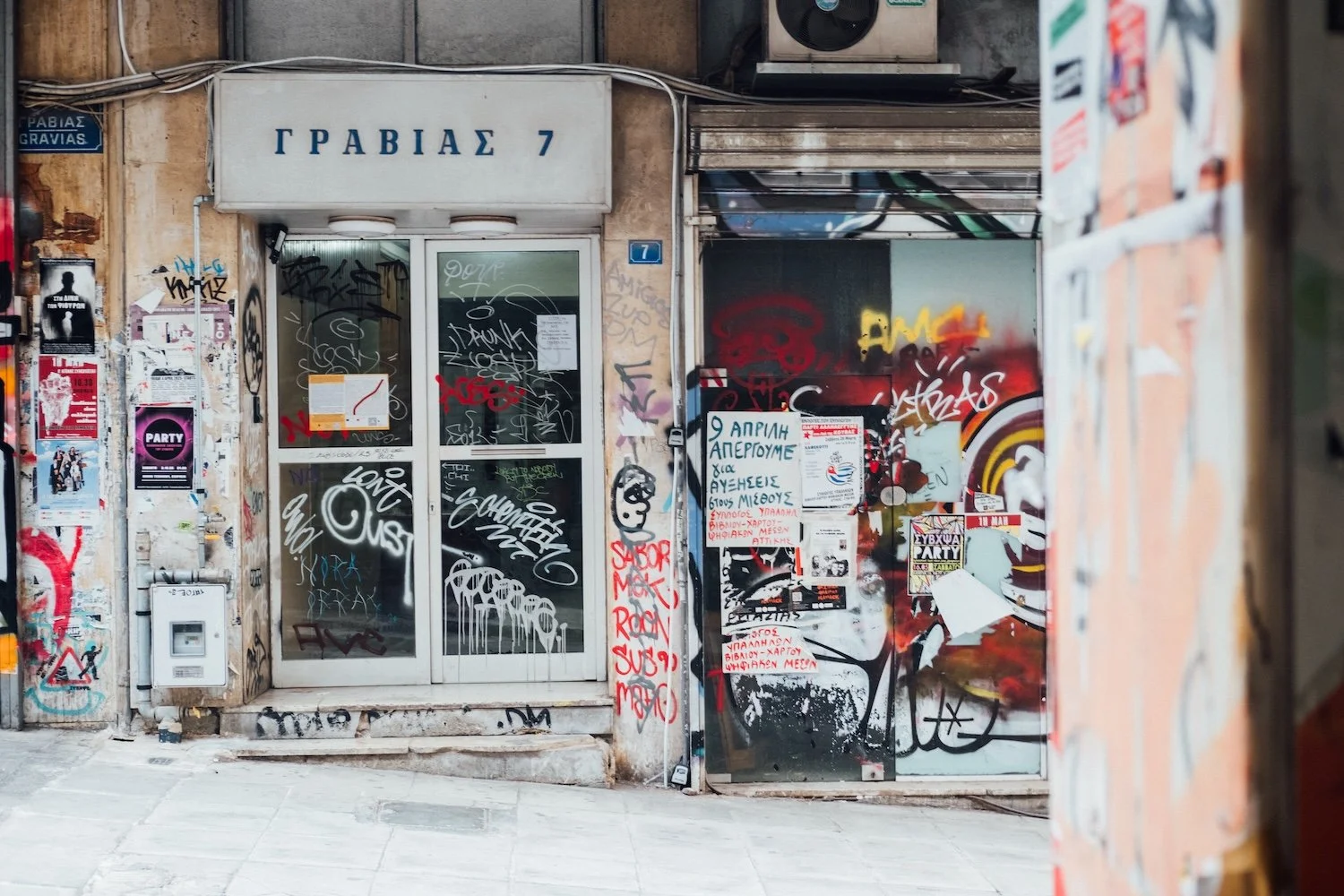
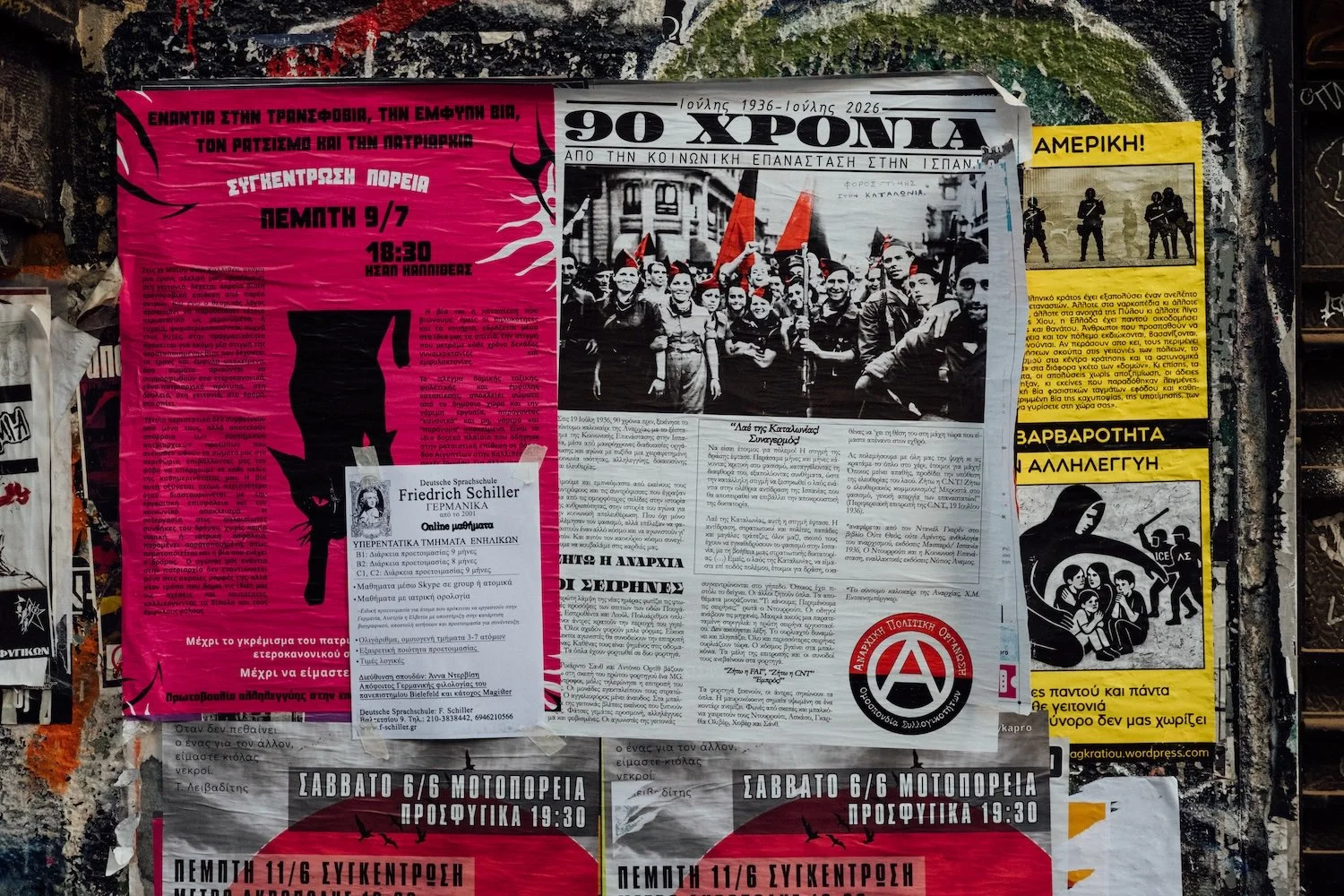
Knowing André, I knew I could trust his plans, as I hadn't made any, except for coffee! For the first night, he suggested going to a gig in a small venue in the city centre. The Cafe OTO alumni, Greece-based with London roots Bethnal Greener would open, followed by the French Grégory Dargent in a night dedicated to experimental electronica.
We all arrived in Athens just in time for a quick shower and a little rest before going out for dinner. Tânia had plans with fellow ECHN members, so the rest followed André’s suggestion and went for Ethiopian, a risky one: “we will eat Greek all week, so let’s go for something different”. Is there a better way to create bonds than eating with your hands from a shared plate in a hole in the wall in a foreign country?
The first impressions walking the city in the evening left me a bit unsettled: I could sense the weight of history, the charm of a European capital that doesn’t feel quintessentially European but something more complex, in a crossroads between East and West, with many different layers and very visible scars from both a faraway and recent past. Not dissimilar to some parts of the major cities in my country, but at a bigger scale and with an energy and tension that we don’t have in our little corner in the westernmost edge of Europe.
After dinner, Esra and Rita went back home and André and I headed to TV Control Center. We were running late, but with the conviction that it wouldn’t start in time. We were wrong: perhaps the Bethnal Green moniker influenced the organisers in all its Britishness, or we were just victims of our own prejudice, but when we arrived at the venue, he was done for the night and Grégory was already about to start. I was quite tired by then and a bit afraid of the cosyness of the room: dim light, warm temperature, comfortable enough chairs and the post-dinner IPAs settling in through an experimental gig from a musician I had never heard of before. I had nothing to be afraid of, though. As soon as Grégory started, I got mesmerised by the storytelling and the sound of his oud. The show Soleil D’hiver is a tour de force transporting us through the history of Grégory’s father's life journey after fleeing war-torn Algeria to France as a teenager. Gut wrenching, plainly beautiful. Feeling curious? Take a listen on his YouTube channel.
TV Control Center is the sort of venue we used to have a lot of back home, but which is almost impossible to find in Central Porto nowadays, with speculation pushing up the price of everything. It's located in a former black-and-white TV repair shop, in the basement of a residential building. After the gig we had time for a couple of beers more and to enjoy the warmness of the early autumn evening.
Strolling to the Acropolis, Niki Kanagini at the ΕΜΣΤ and a rooftop lunch recommended by Fare
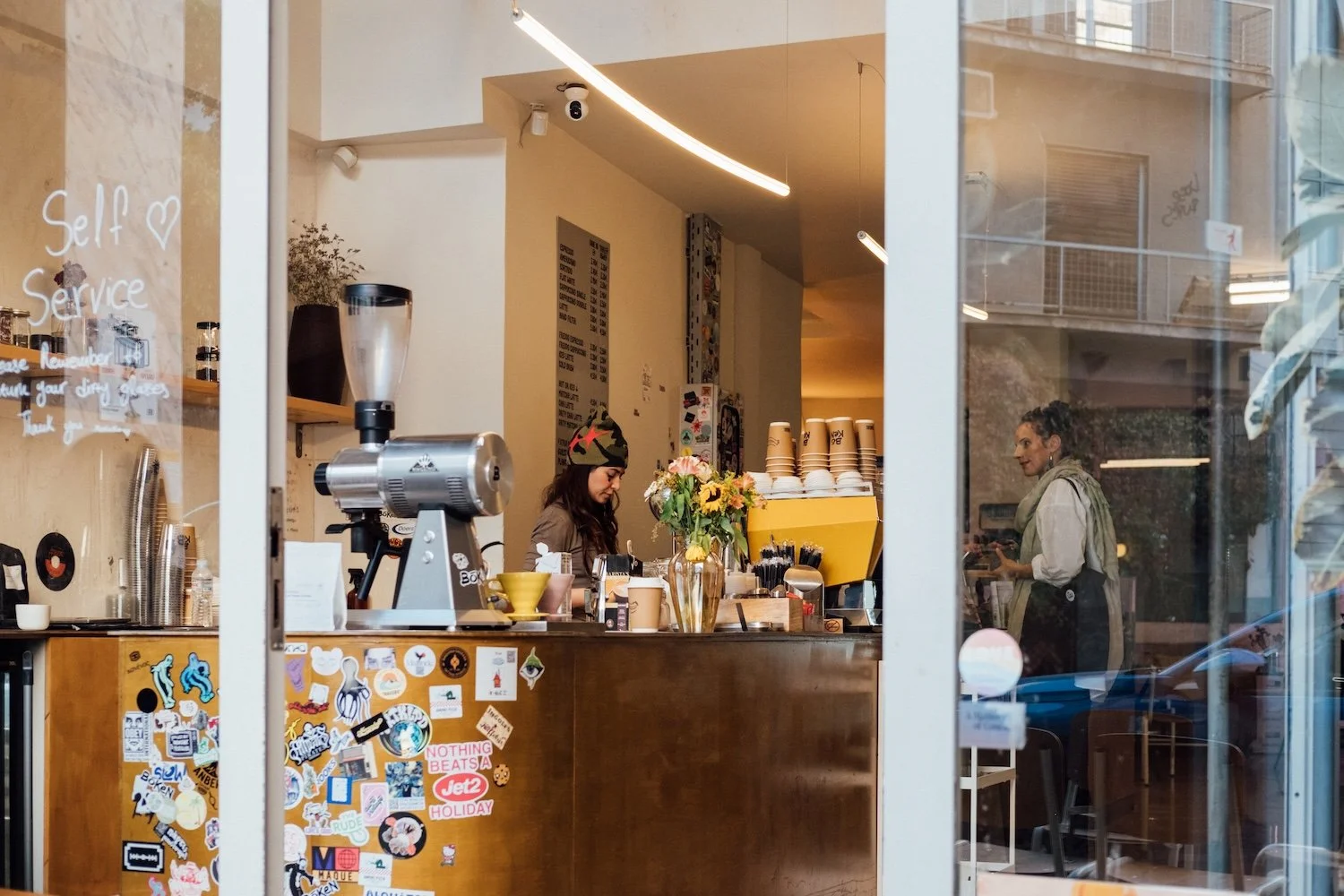
Before any trip, the only preparation I normally do is to collect a list of places for coffee and another for food. As I said before, we stayed in the anarchist neighbourhood, with bars working until late hours and punk and metal record shops, but still with plenty of bourgeois specialty coffee spots catering to the creative crowds.
Boken was first on my list, being just a short walk from home. The plan was to try a different place every morning, but the friendly staff and exceptional coffee made me go there every day instead.
When travelling to these sorts of events, we normally don’t have time (or patience) to do the tourist stuff, but this was Athens.
The plan for the only “almost” free morning was to check the Acropolis and the views, and then go through a long flânerie to the venue of the first event of the week, stopping to check the National Museum of Contemporary Art (ΕΜΣΤ) and lunch at a spot recommended by the highly recommendable Fare magazine, whose recommendations never fail.
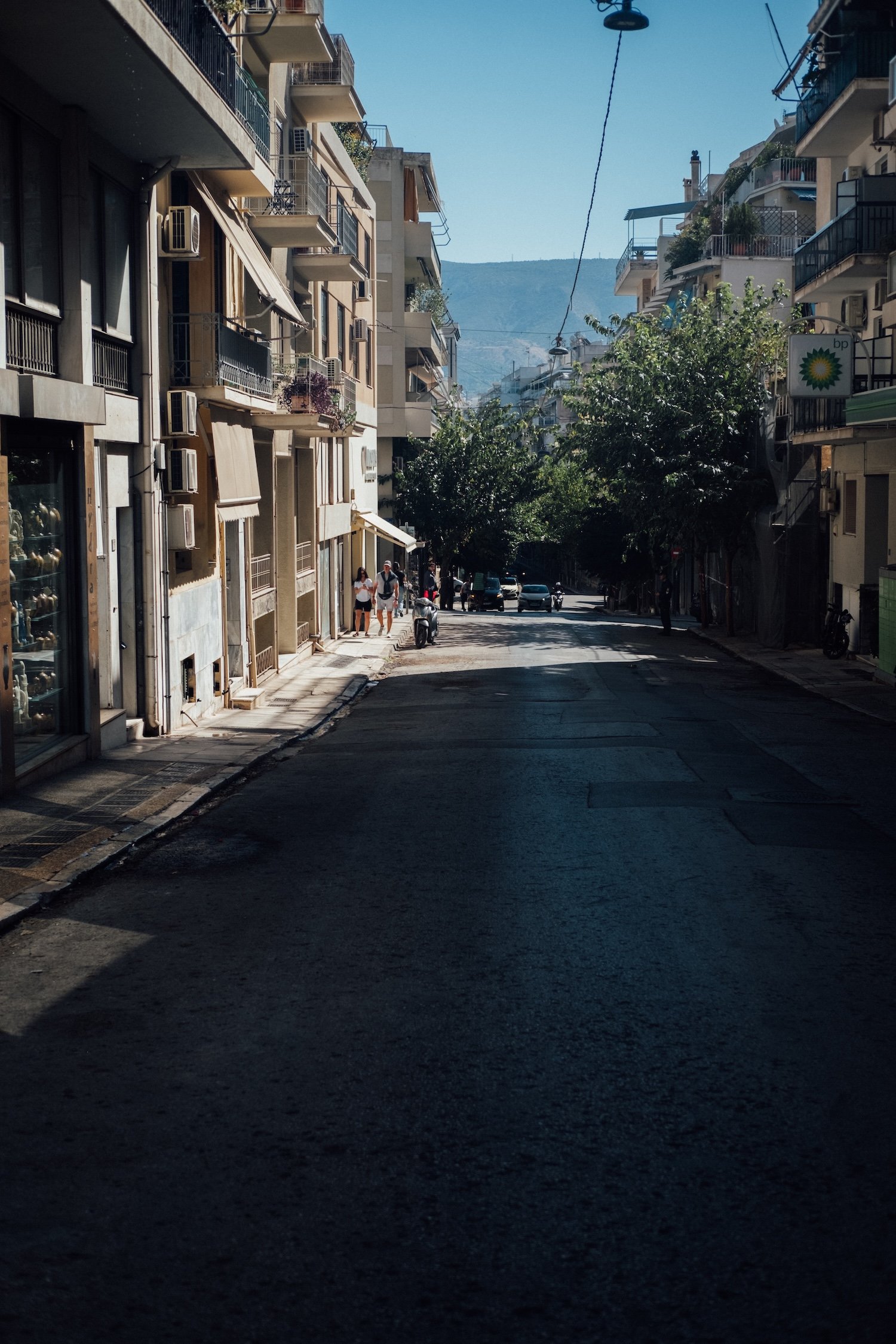
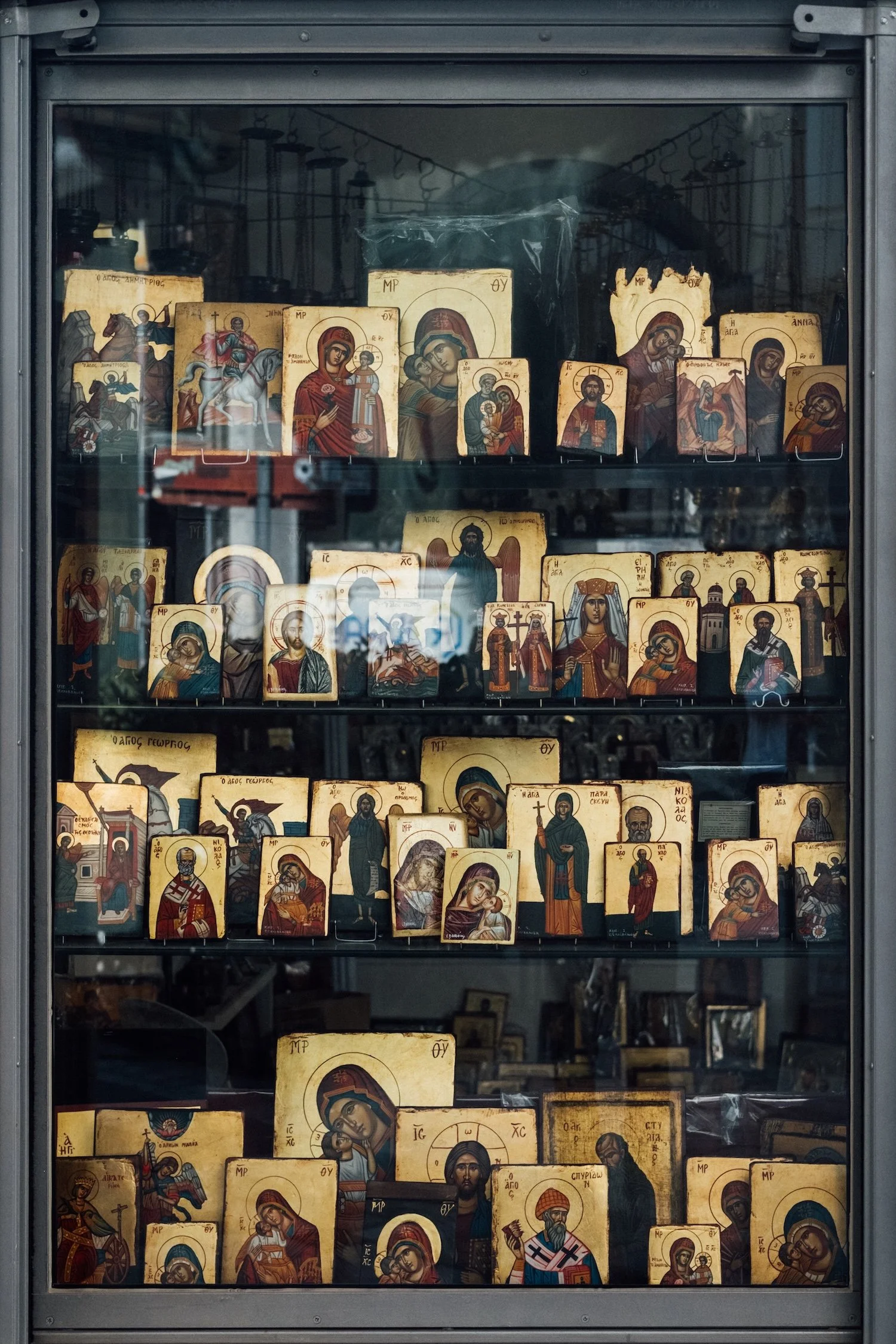
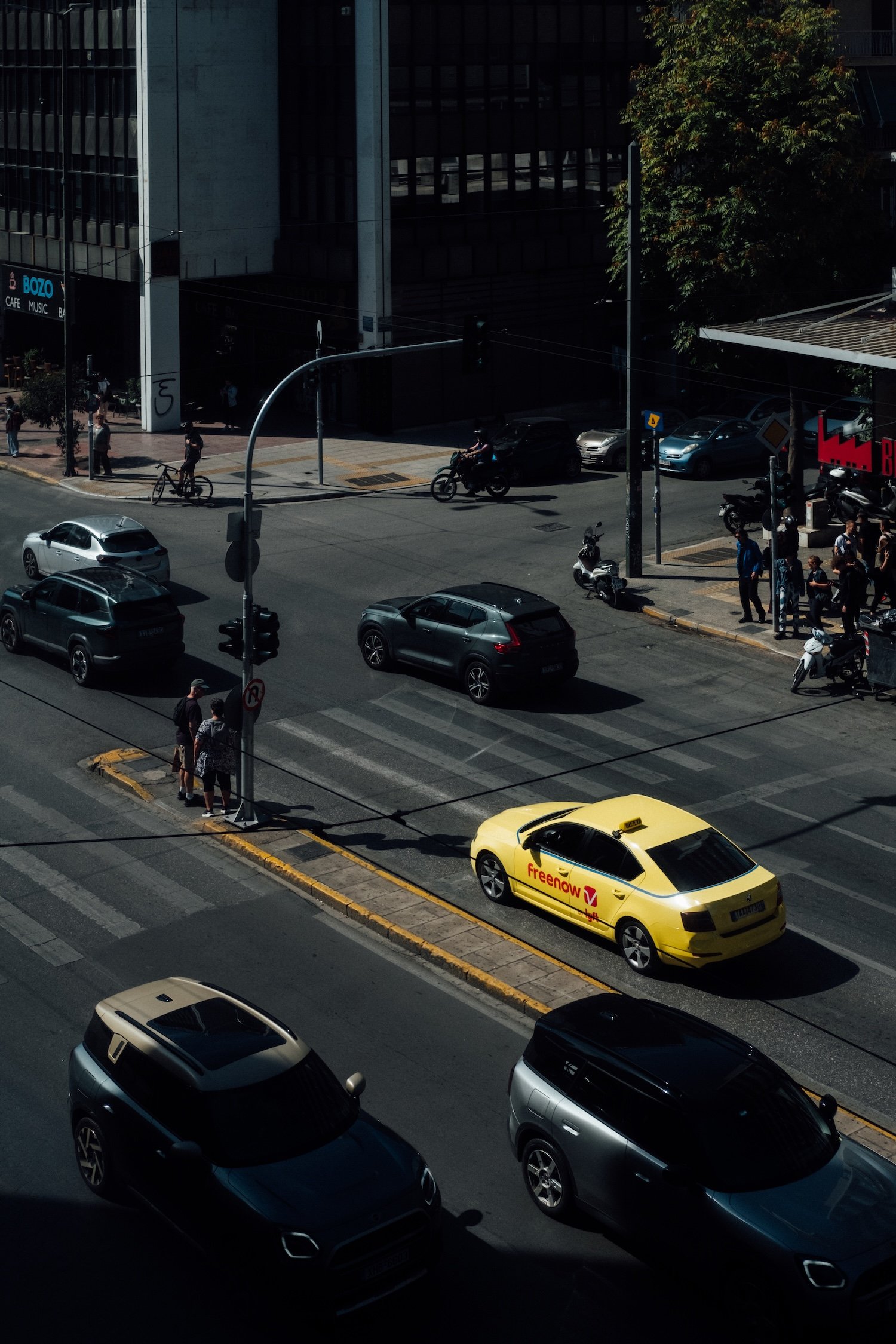
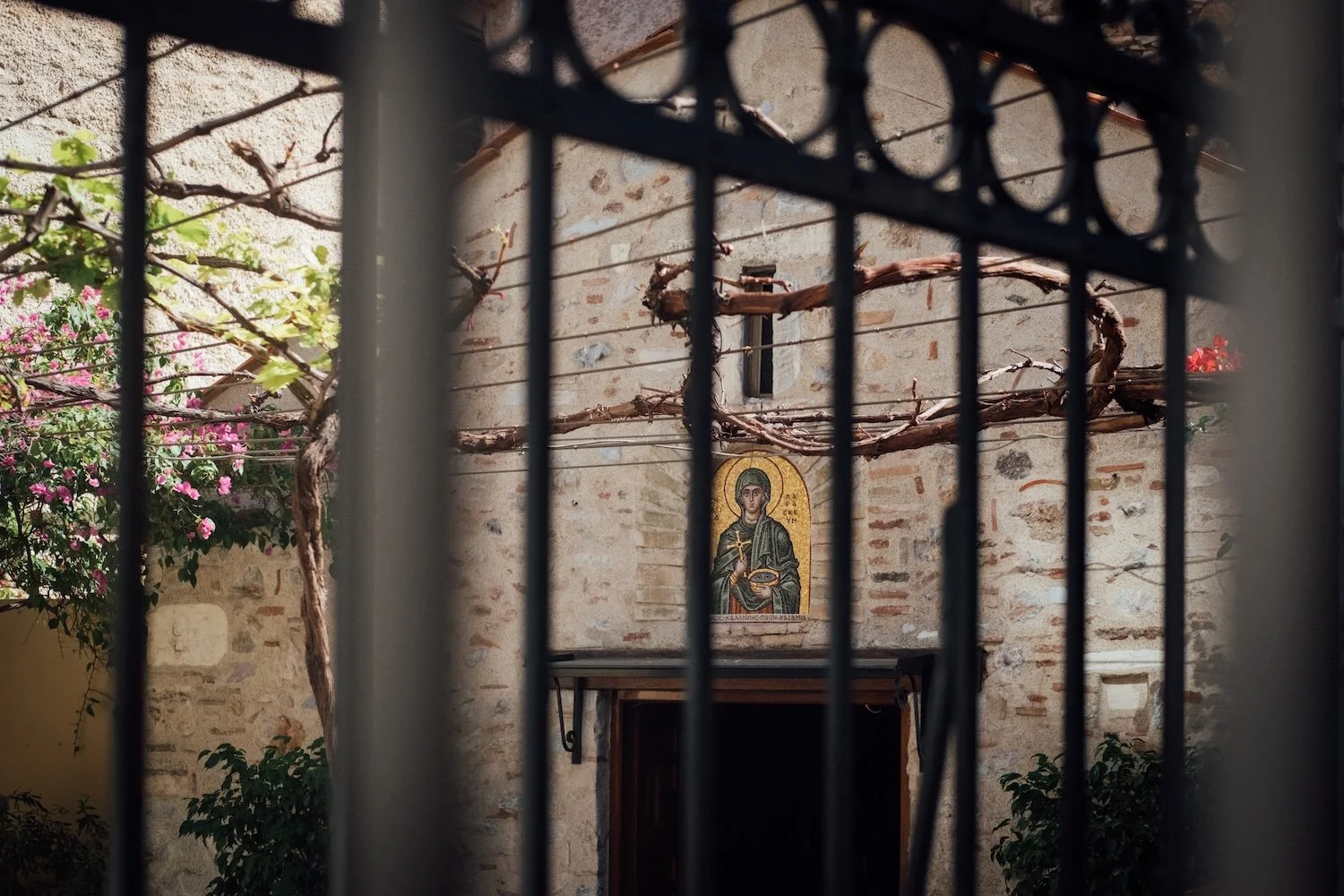
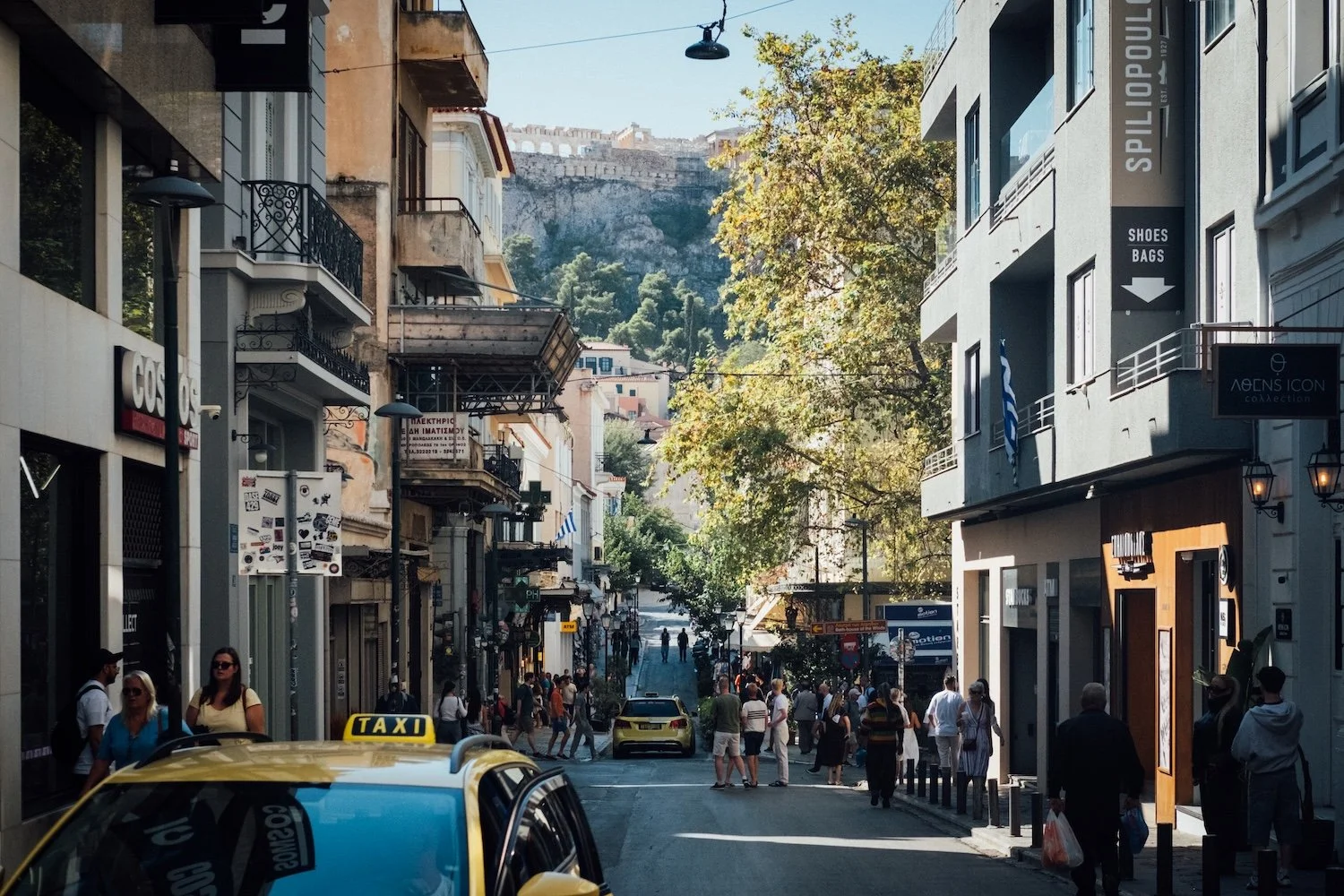
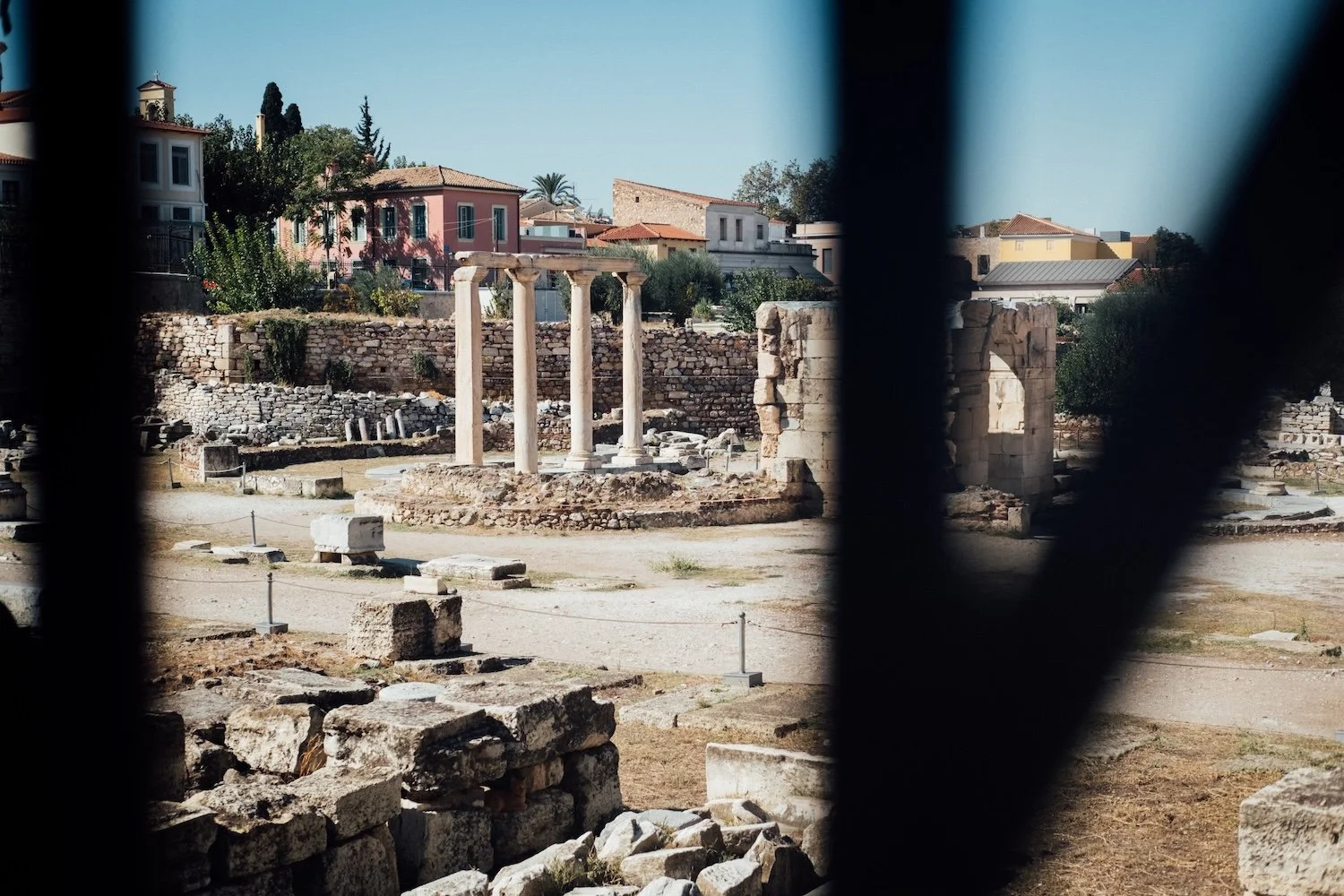
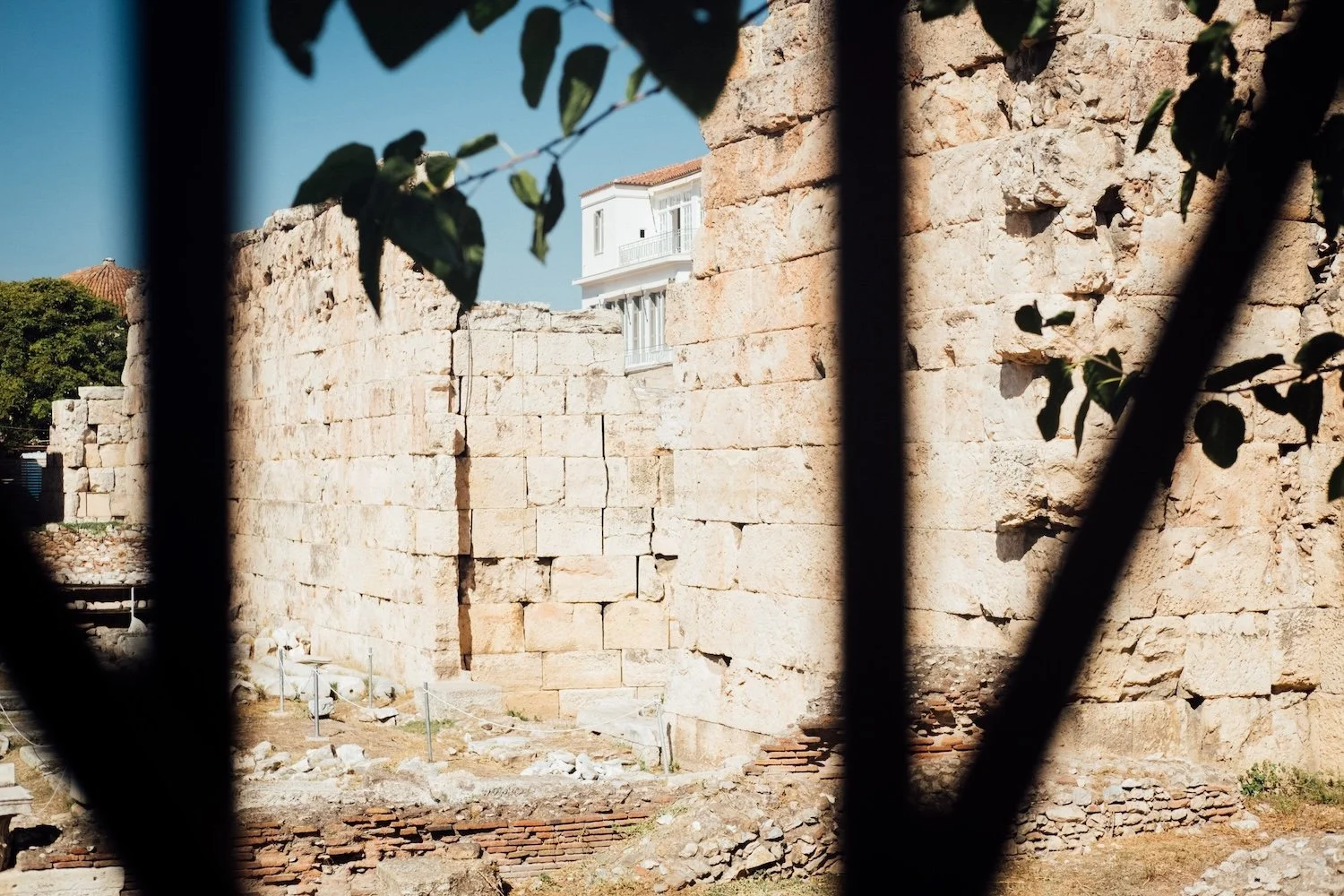
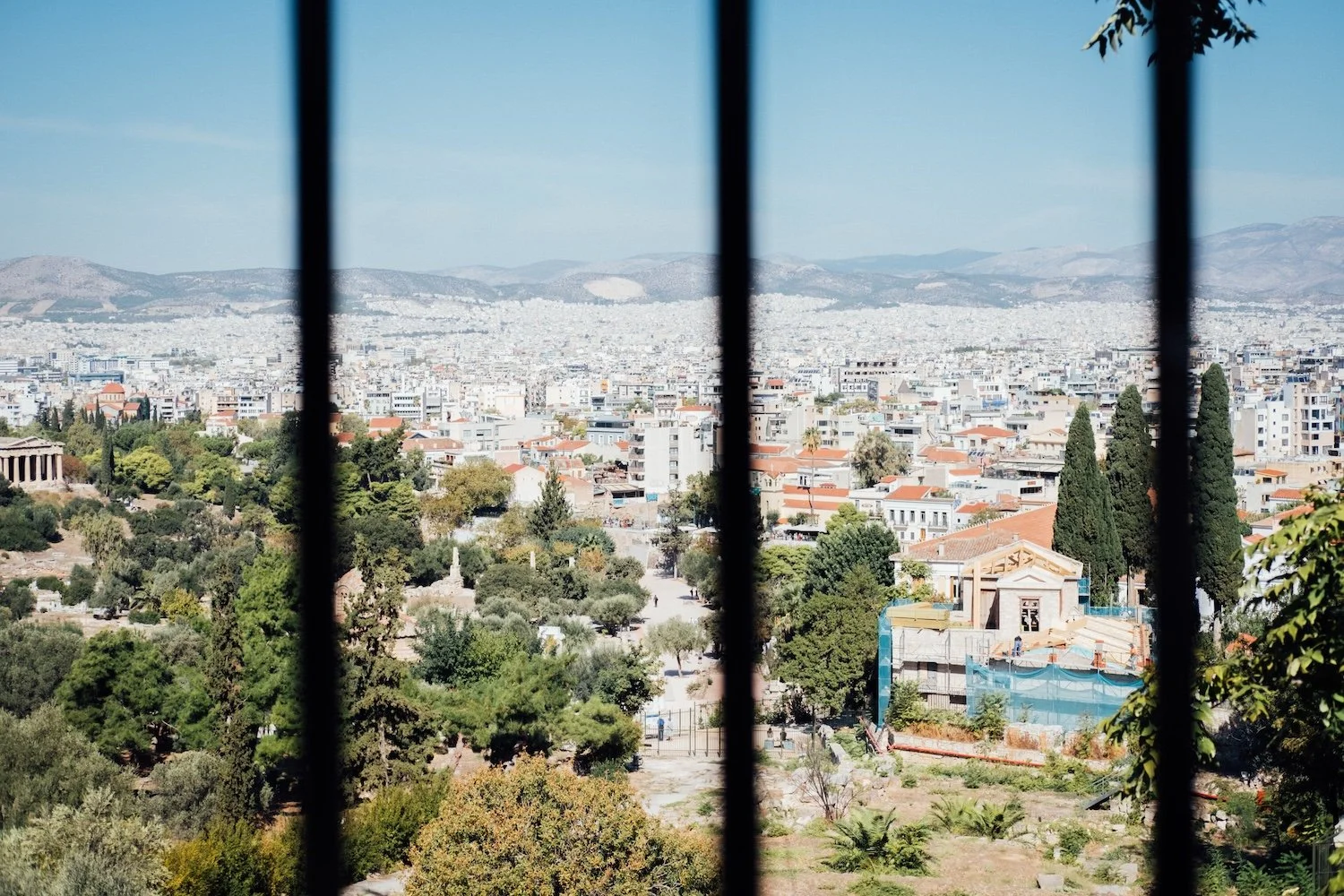
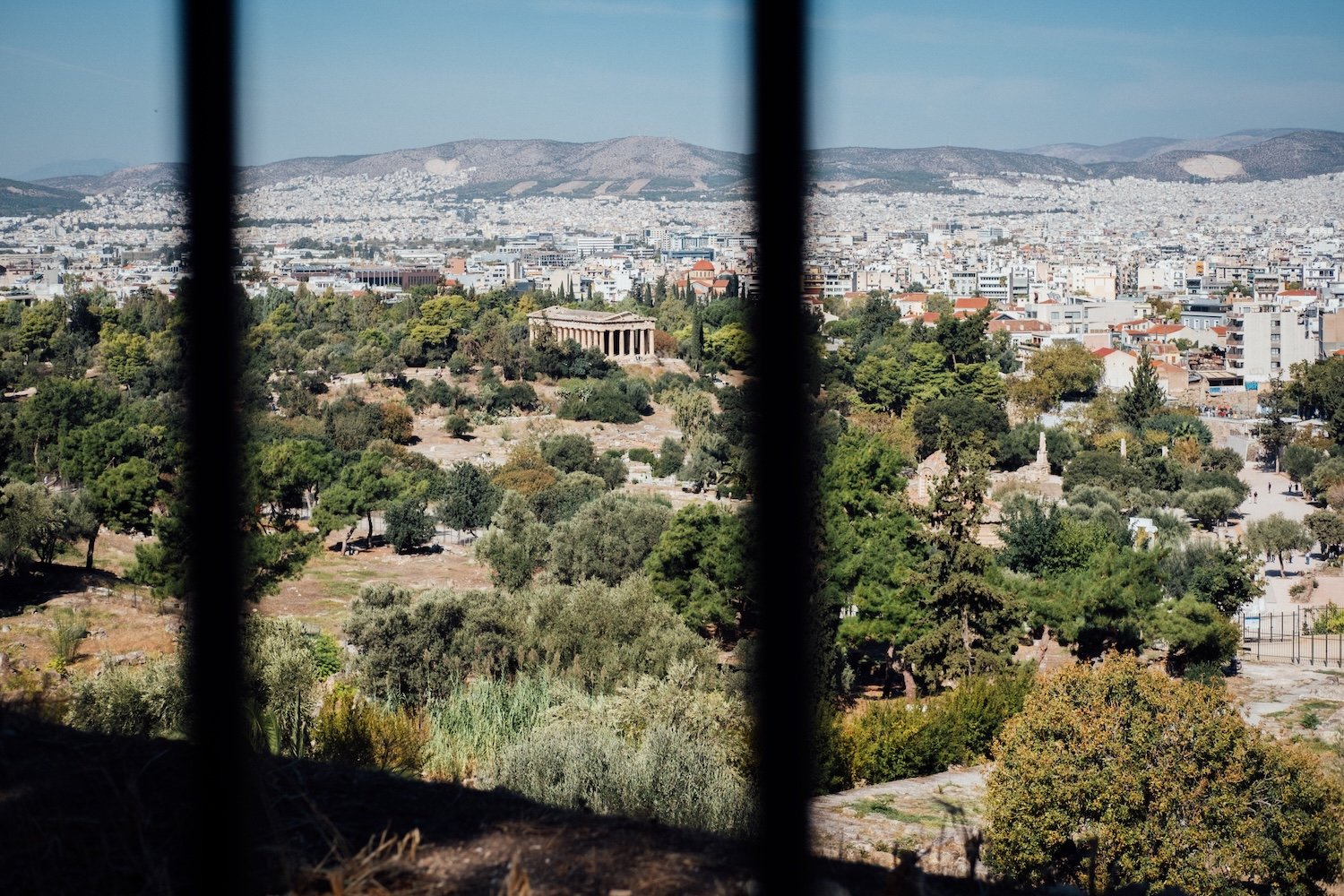
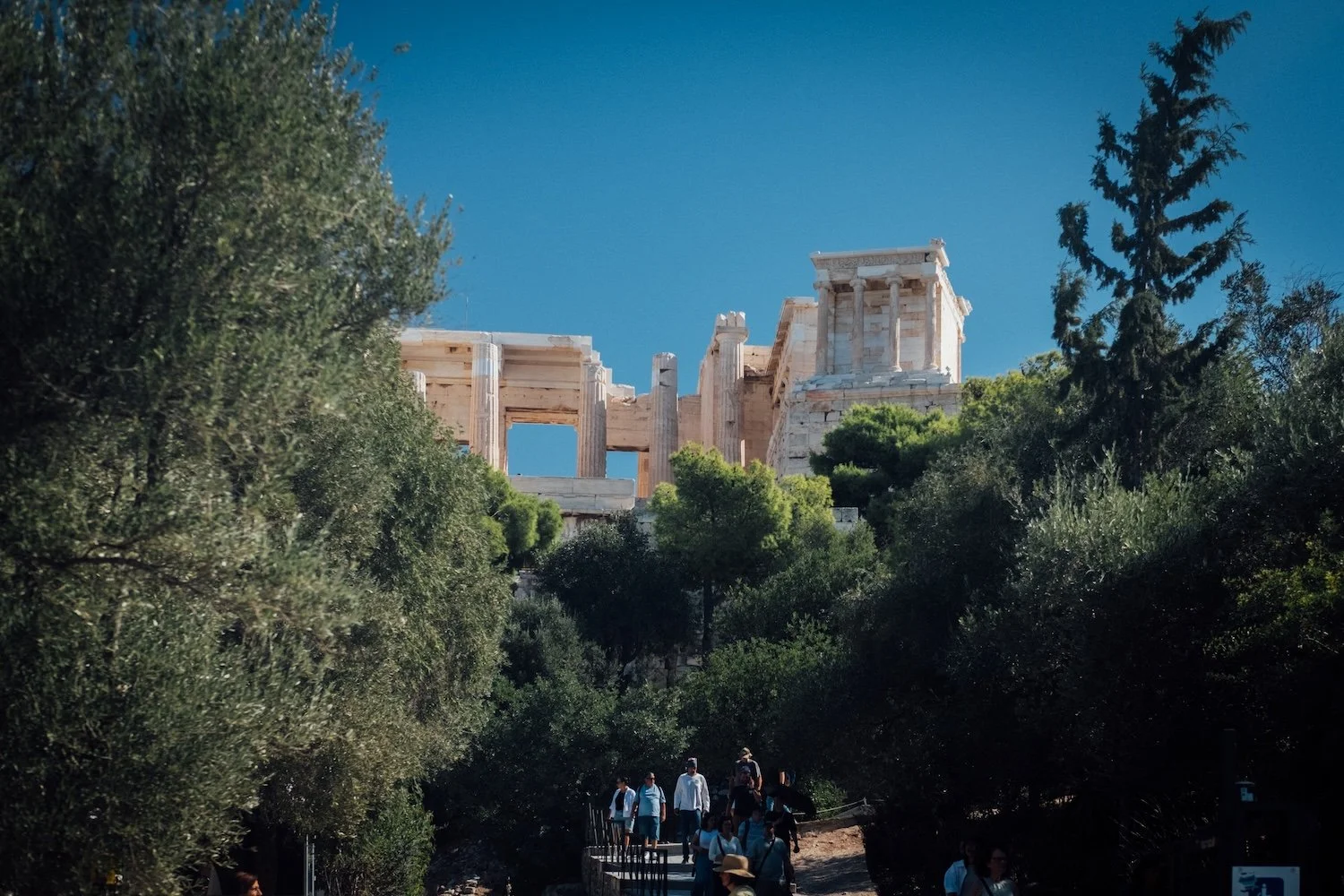
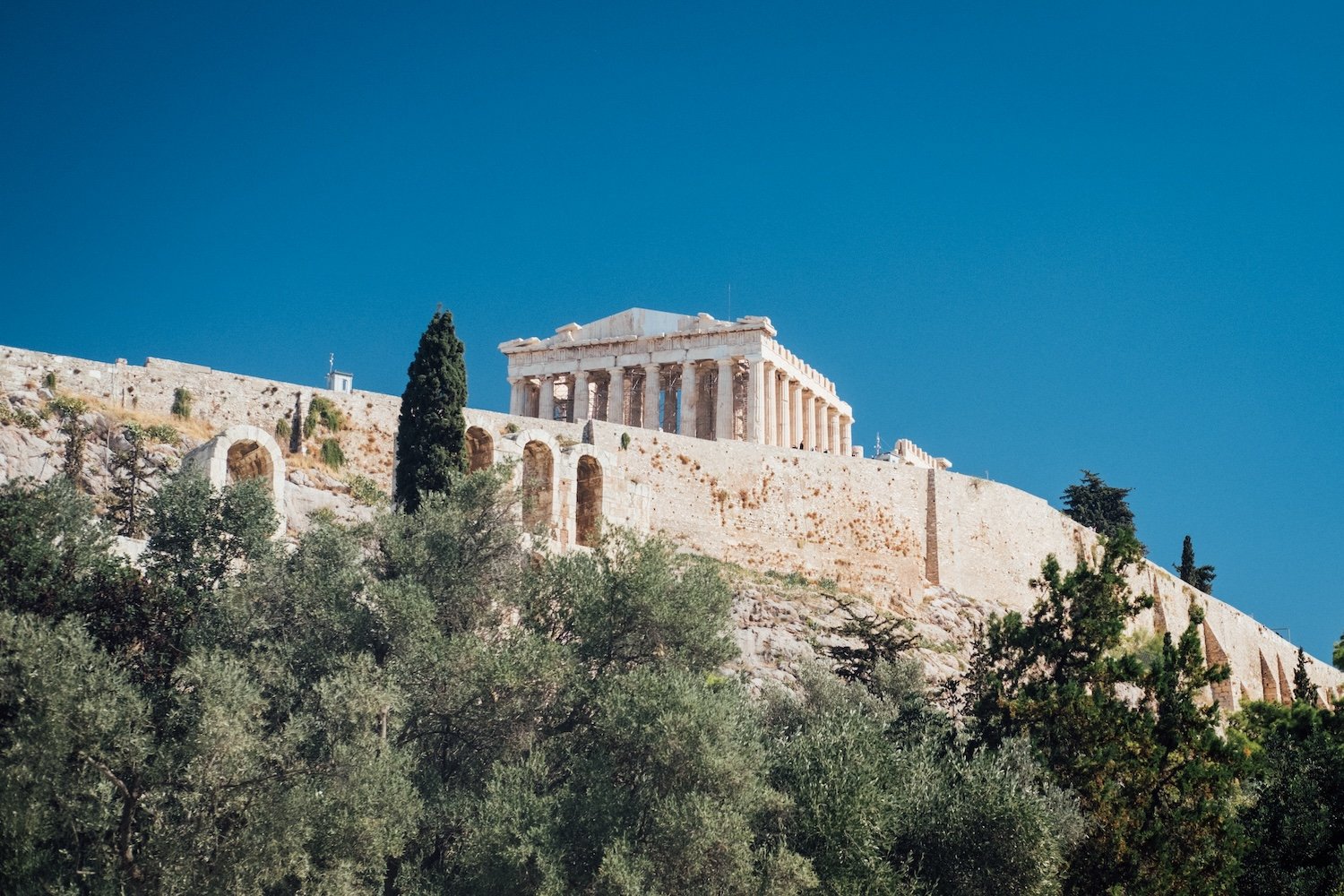
I will not write about the Acropolis, had nothing more to add to the 2000+ years of travellers’ recounts, and will move straight to the ΕΜΣΤ, where I got to know the absurdly good work shown at the retrospective of the Greek multi-disciplinary artist Niki Kanagini (1933-2008), crossing many of the interests of our own work, including textile art, installation, painting and graphic art.
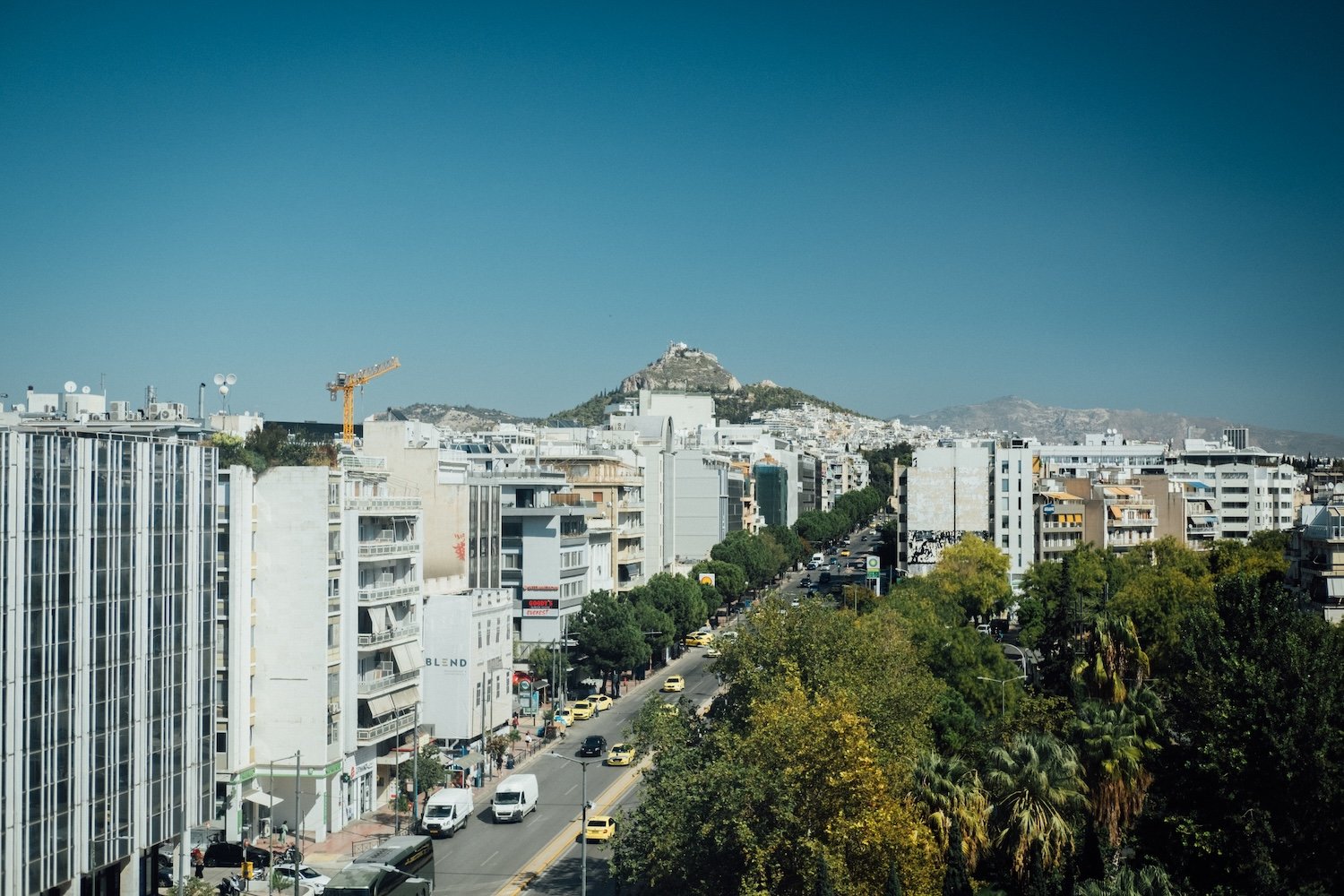
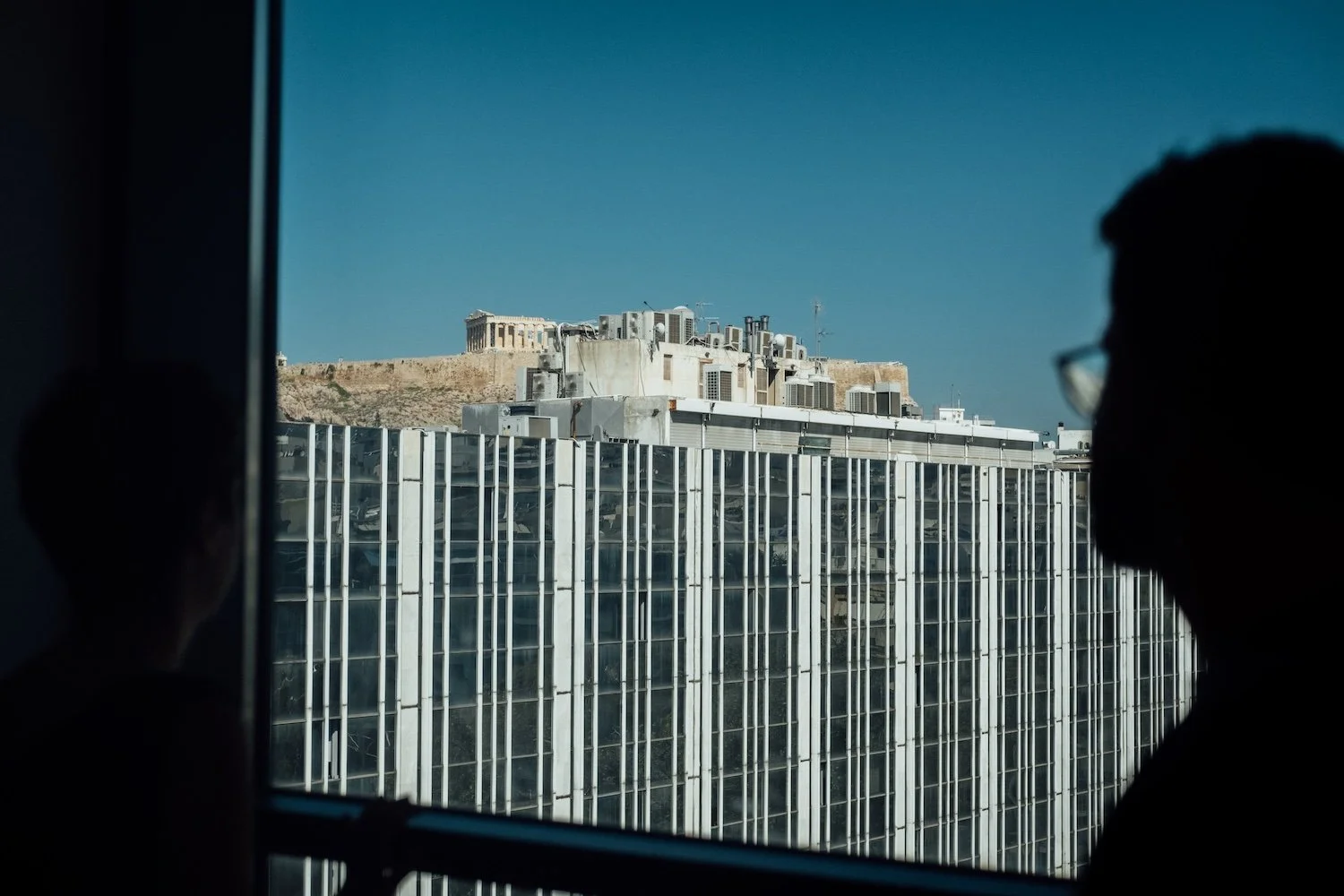
The views from the ΕΜΣΤ top floors
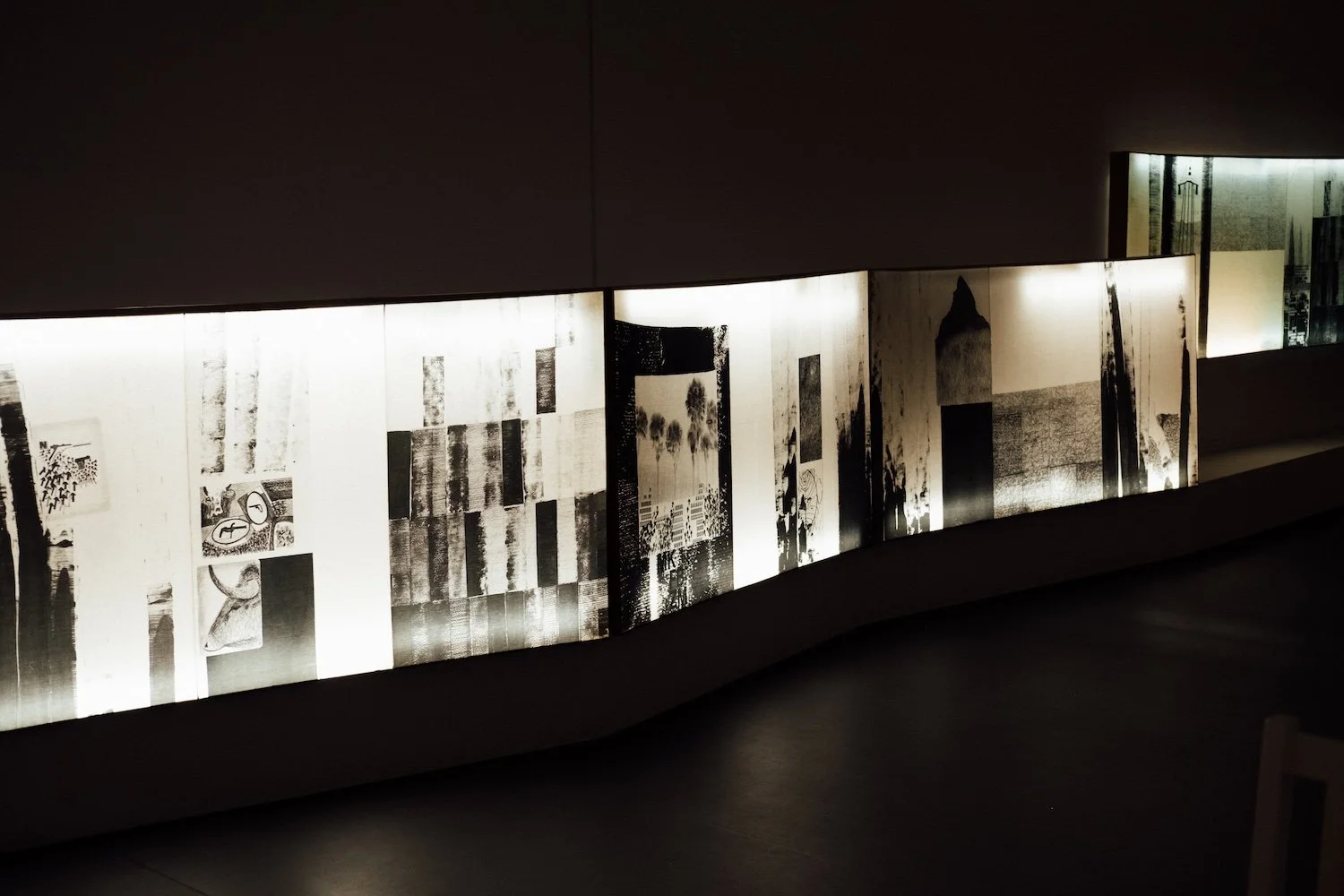
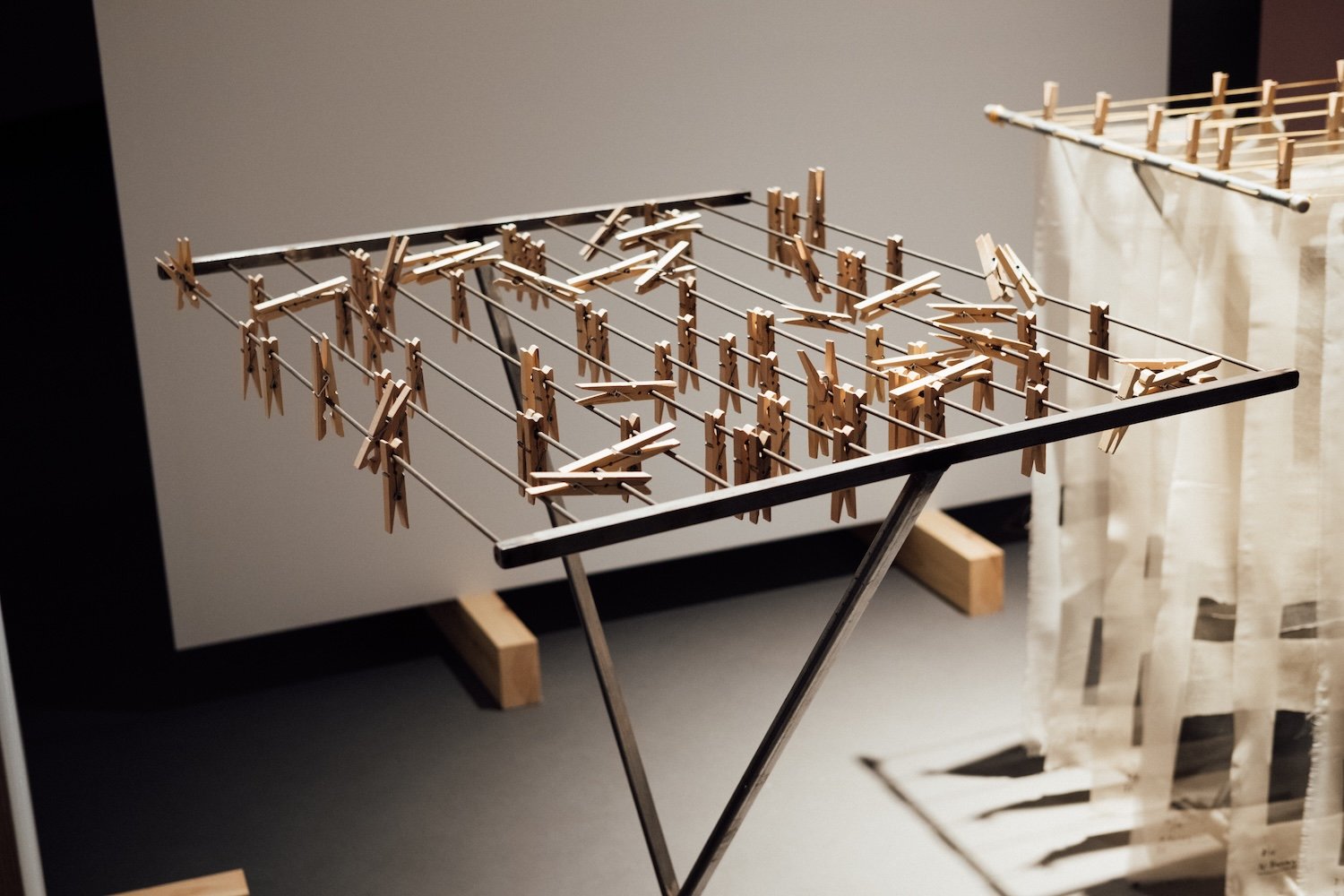
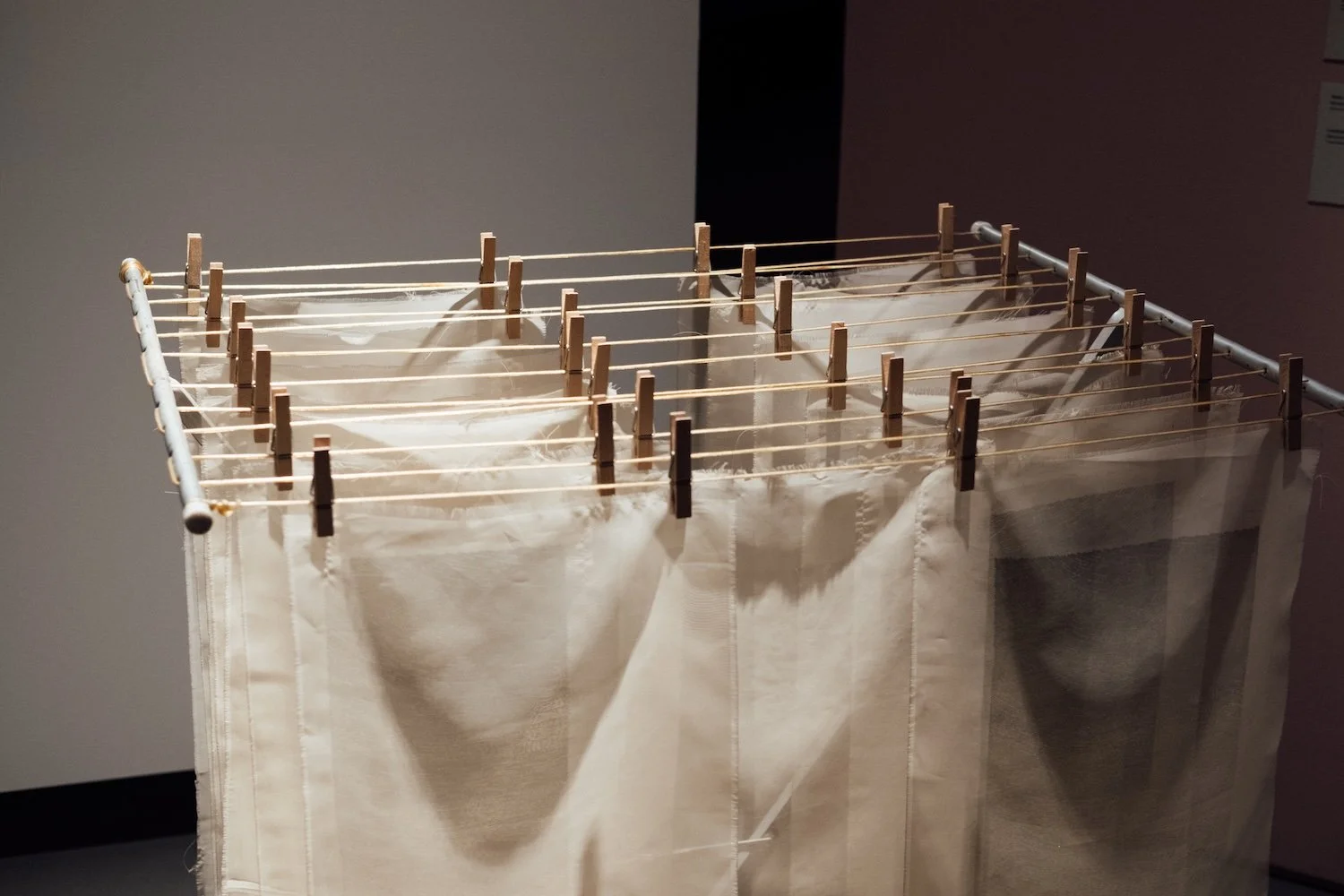
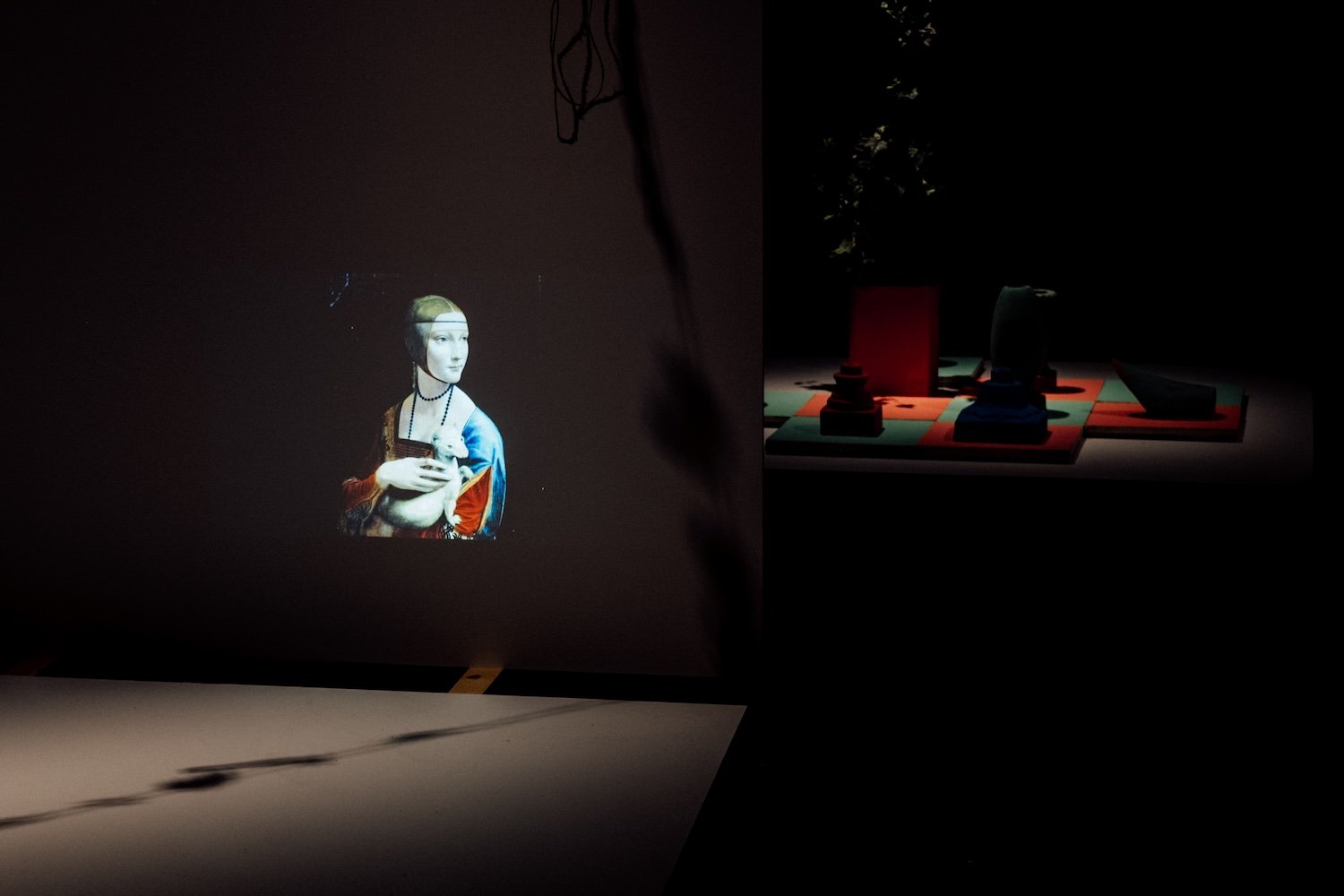
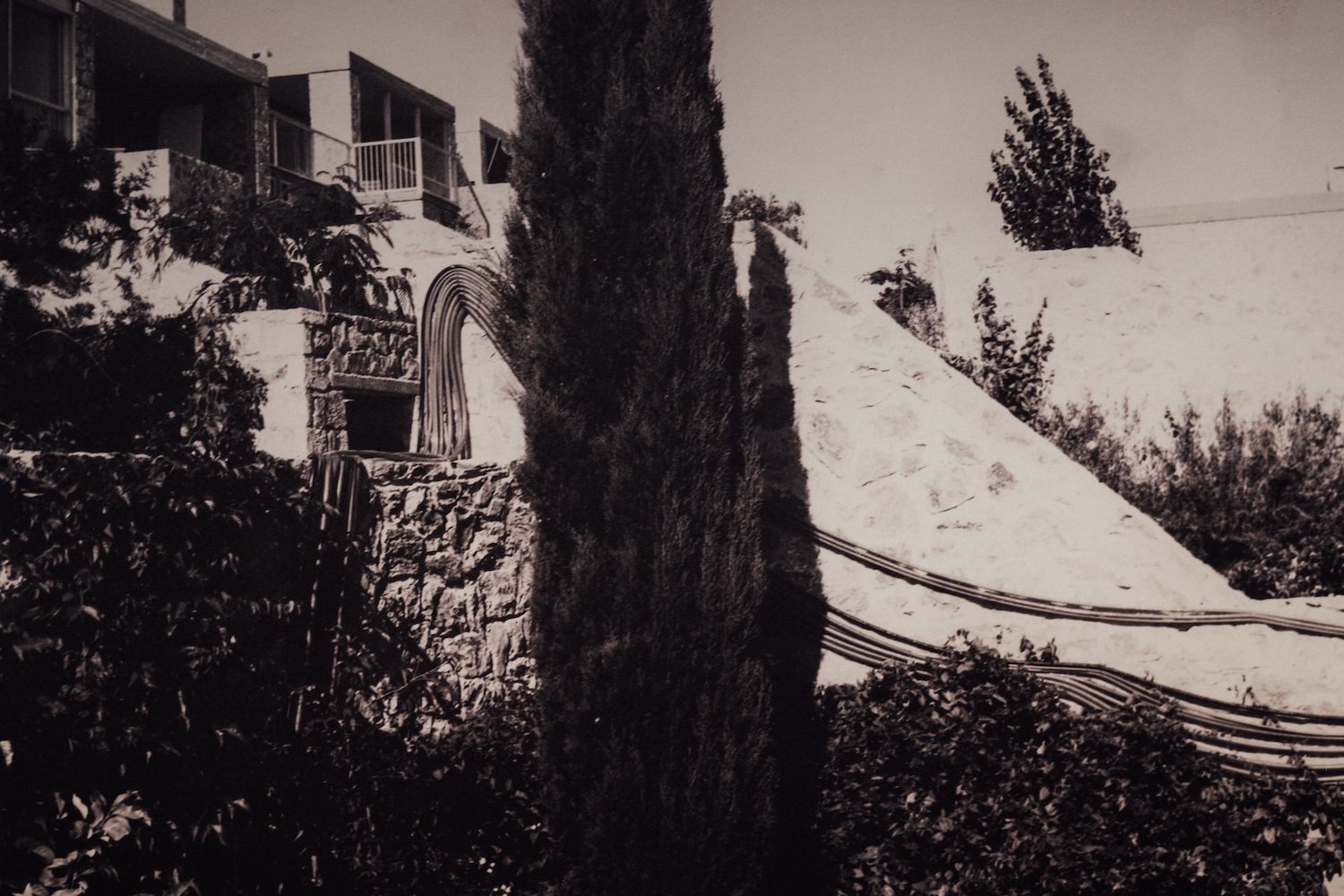
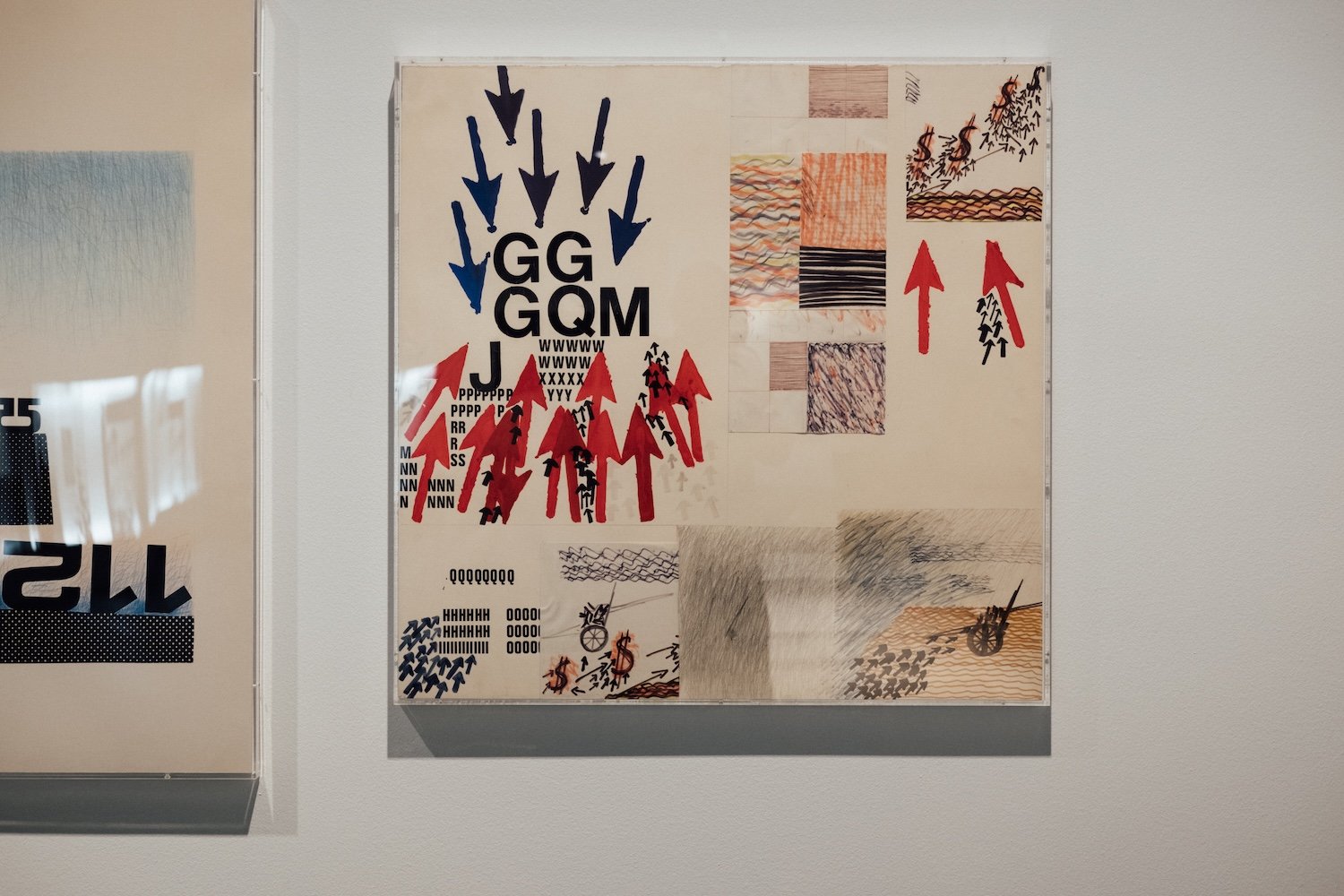
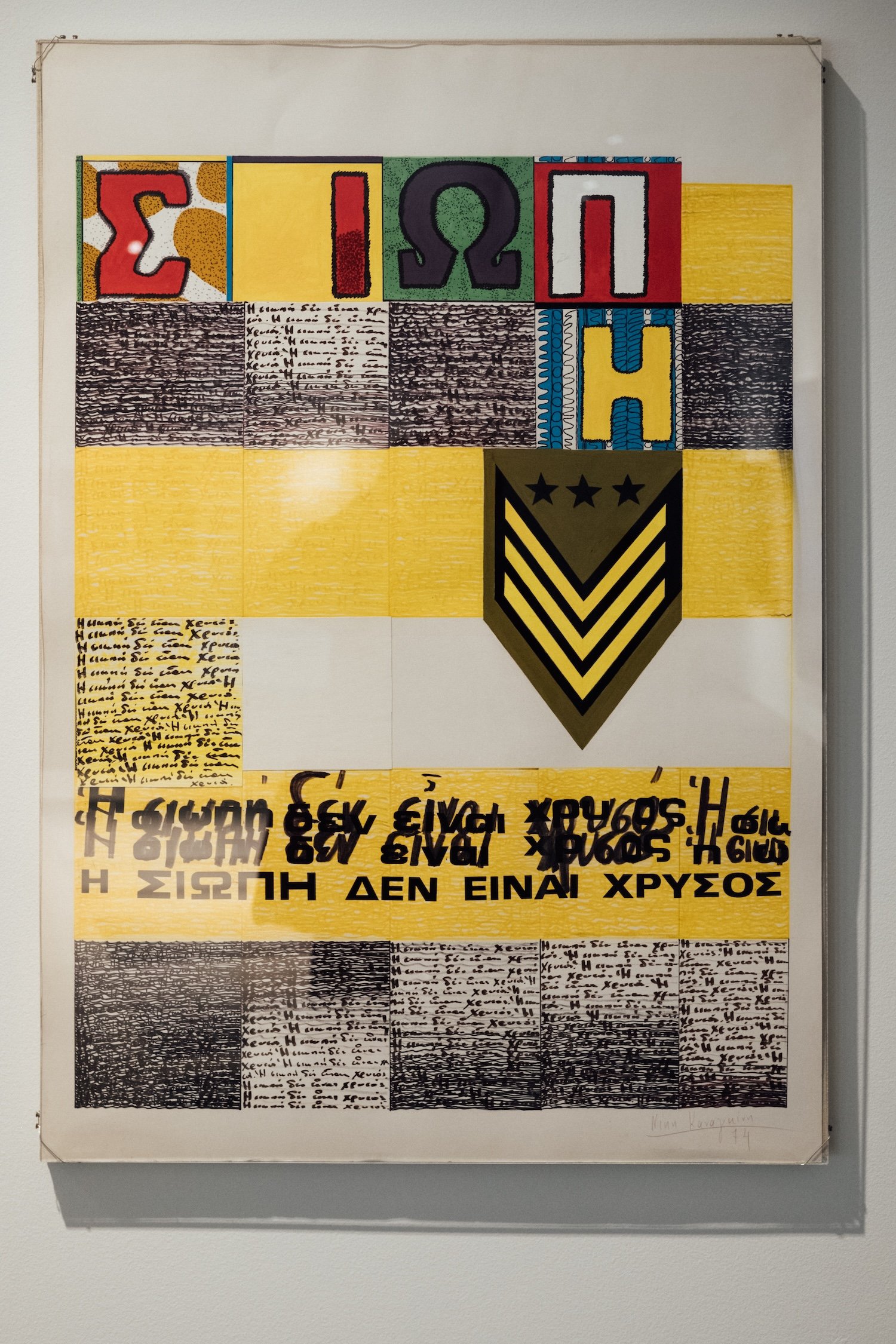
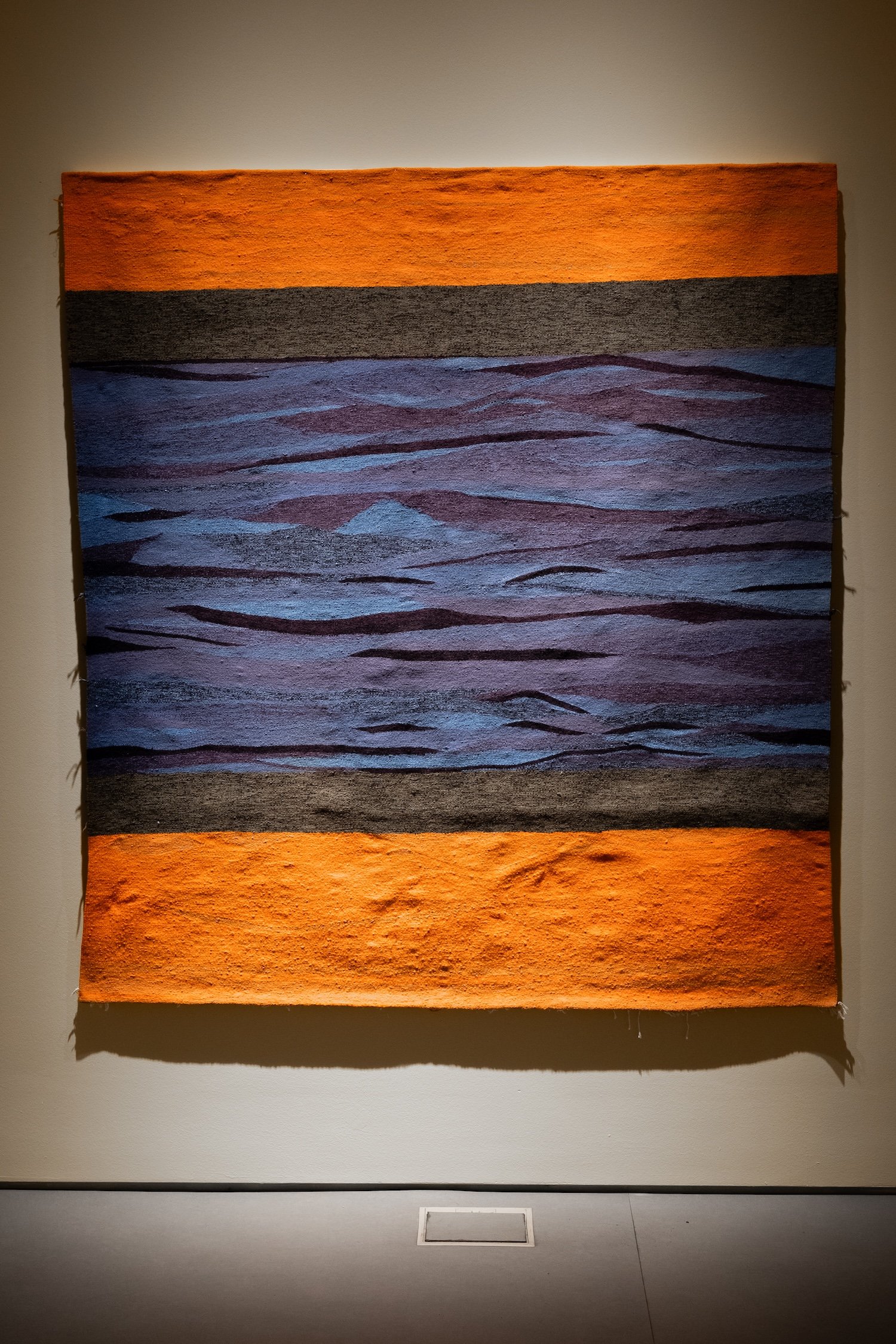
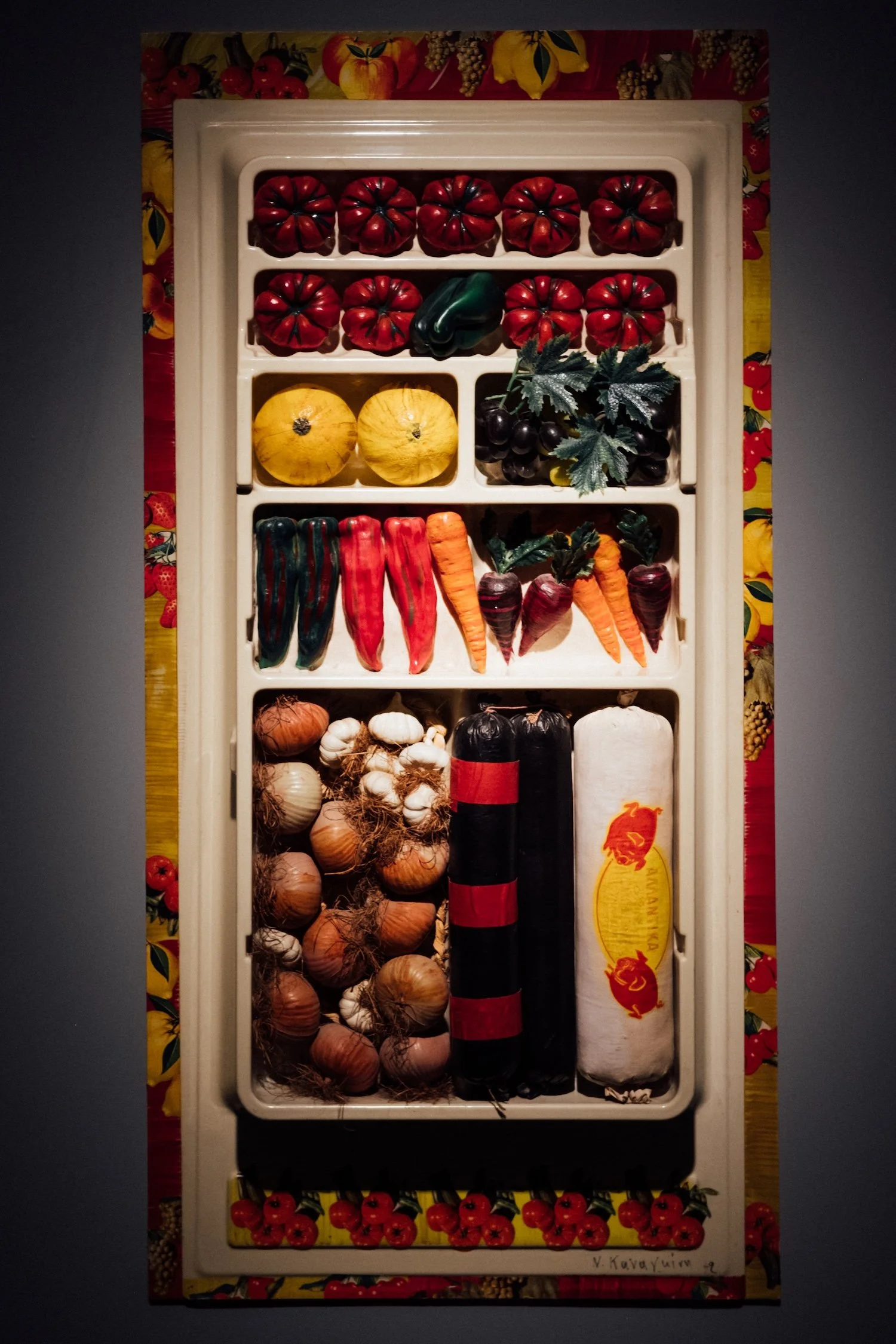
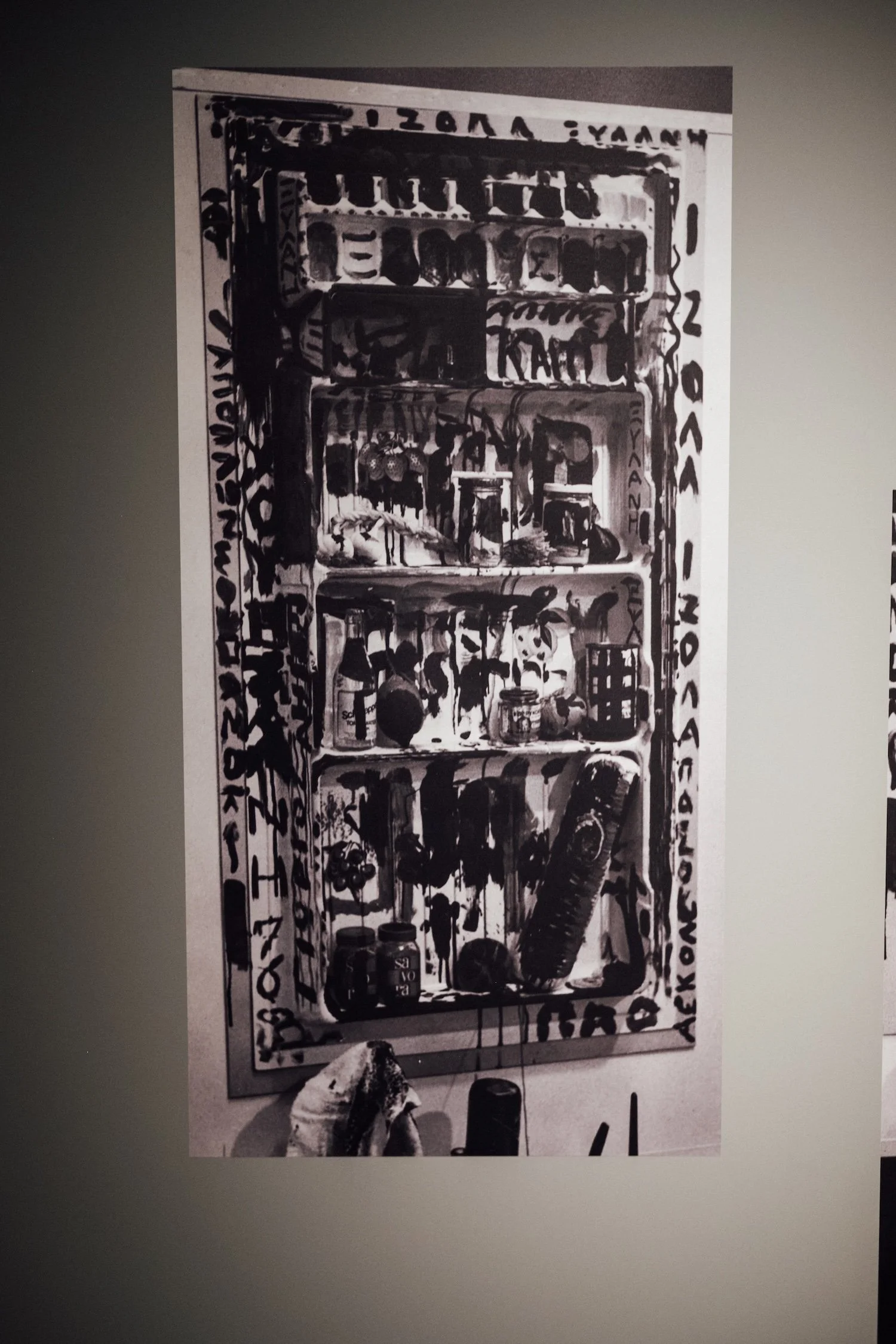
Niki Kanagini at the ΕΜΣΤ
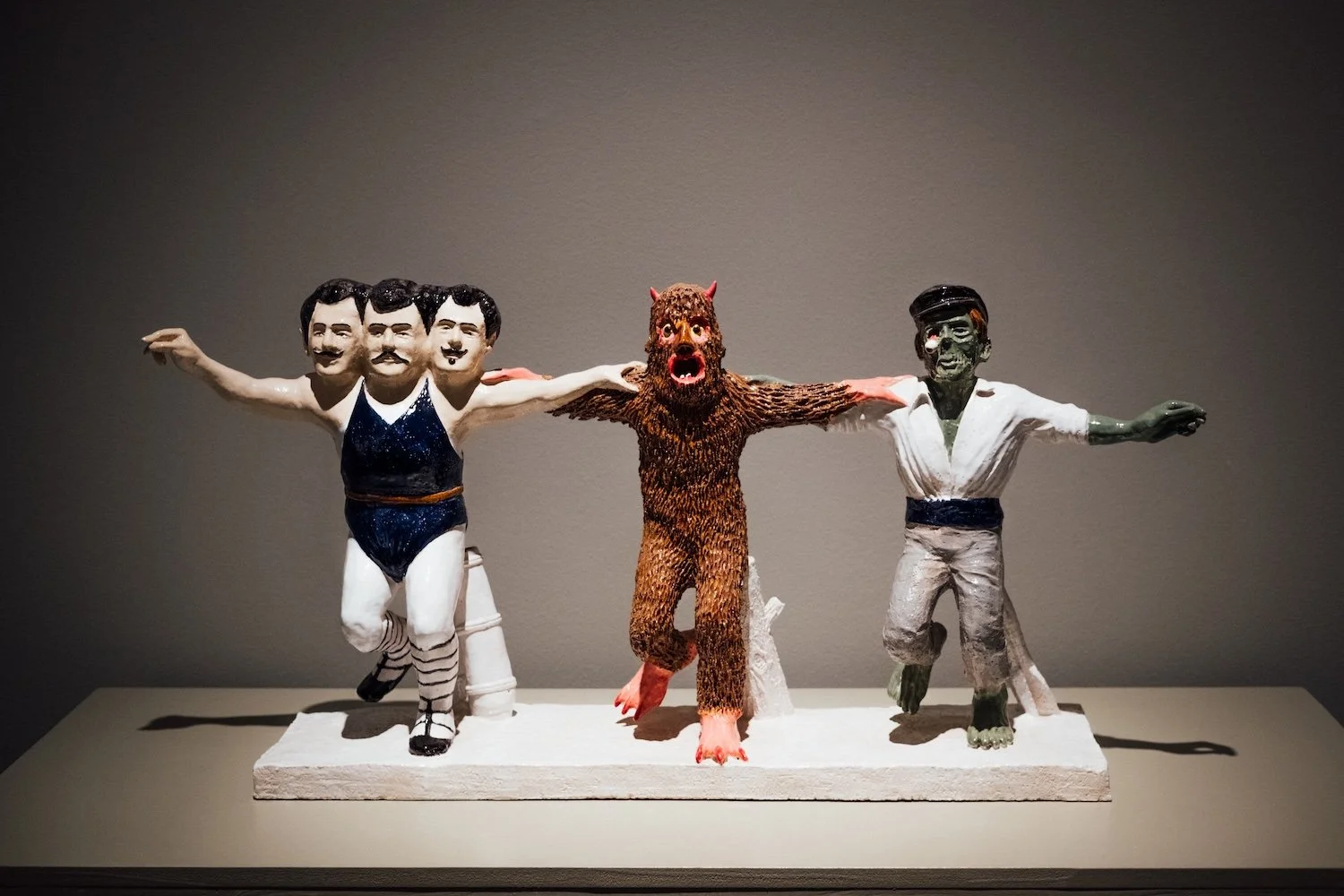
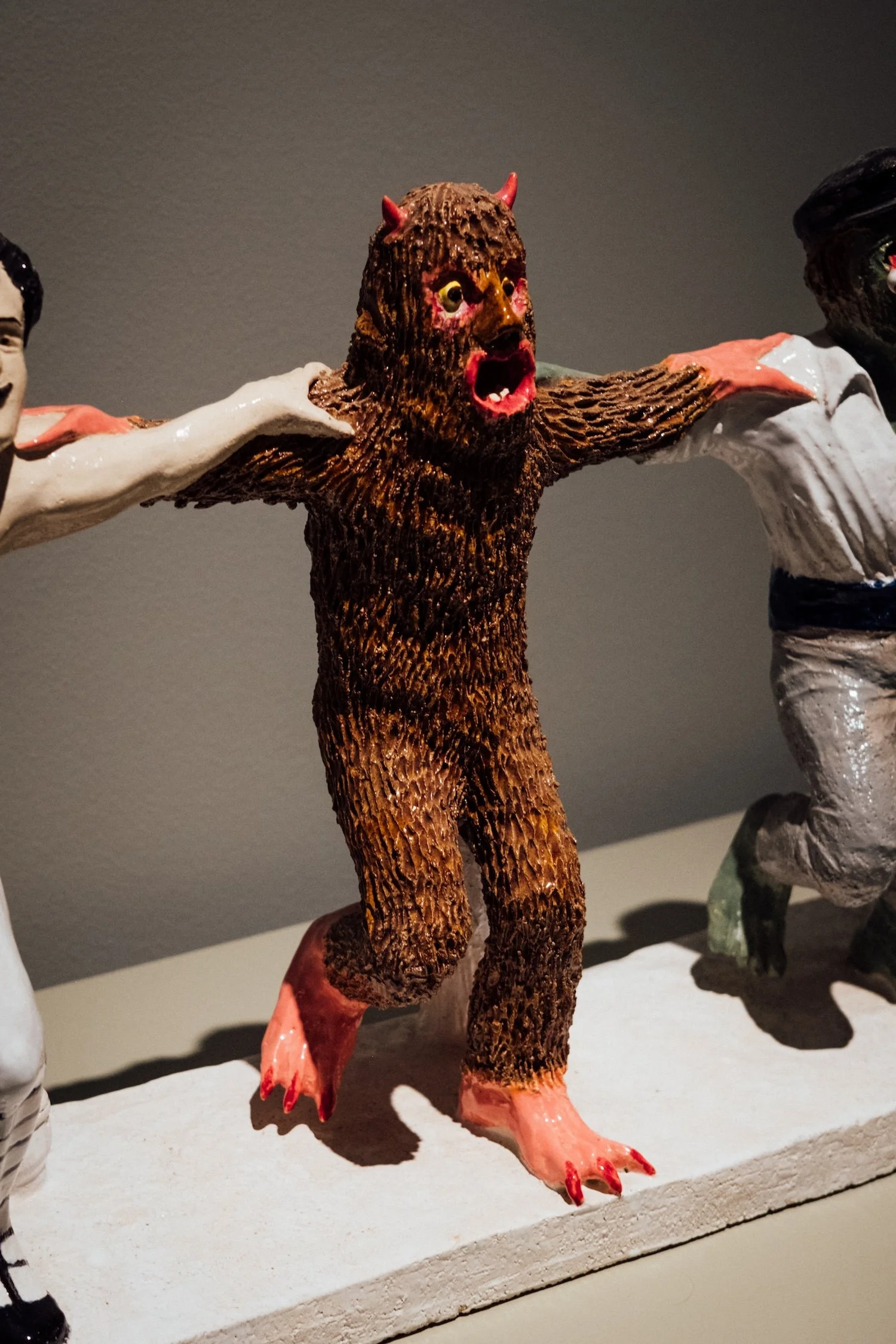
Dionysis Kavallieratos at the South by Southeast: Re-Orienting the Collection joint exhibition at ΕΜΣΤ
After the museum, we headed to “The canteen of Karagiorgi Servias (The Cretan)”, a laid-back restaurant at the top of an old office building, the one recommended by Fare.
After leaving the elevator at the top of the building we had a 30 minute wait for our table. It was not possible to photograph the place as I would like, as the owner gently reminded me to respect the other patrons' privacy when seeing my camera. But still, I’m happy with the result, a bit of mystery is always nice.

At the Cretan, I had a reality shock. The food was just superb. The salad was perfectly seasoned, tasty meatballs, incredible sausages, a feast for four with the best views and just for 11 euros per person. Are you kidding? We, as Portuguese, used to be the ones who were afraid of travelling, always scared of the foreign price tag, but now we have to think twice before eating out in our hometown. In Porto we would pay at least twice for all this food, in Lisbon even more than that, and we are not and probably will not be in the foreseeable future in the premier league of European salaries.


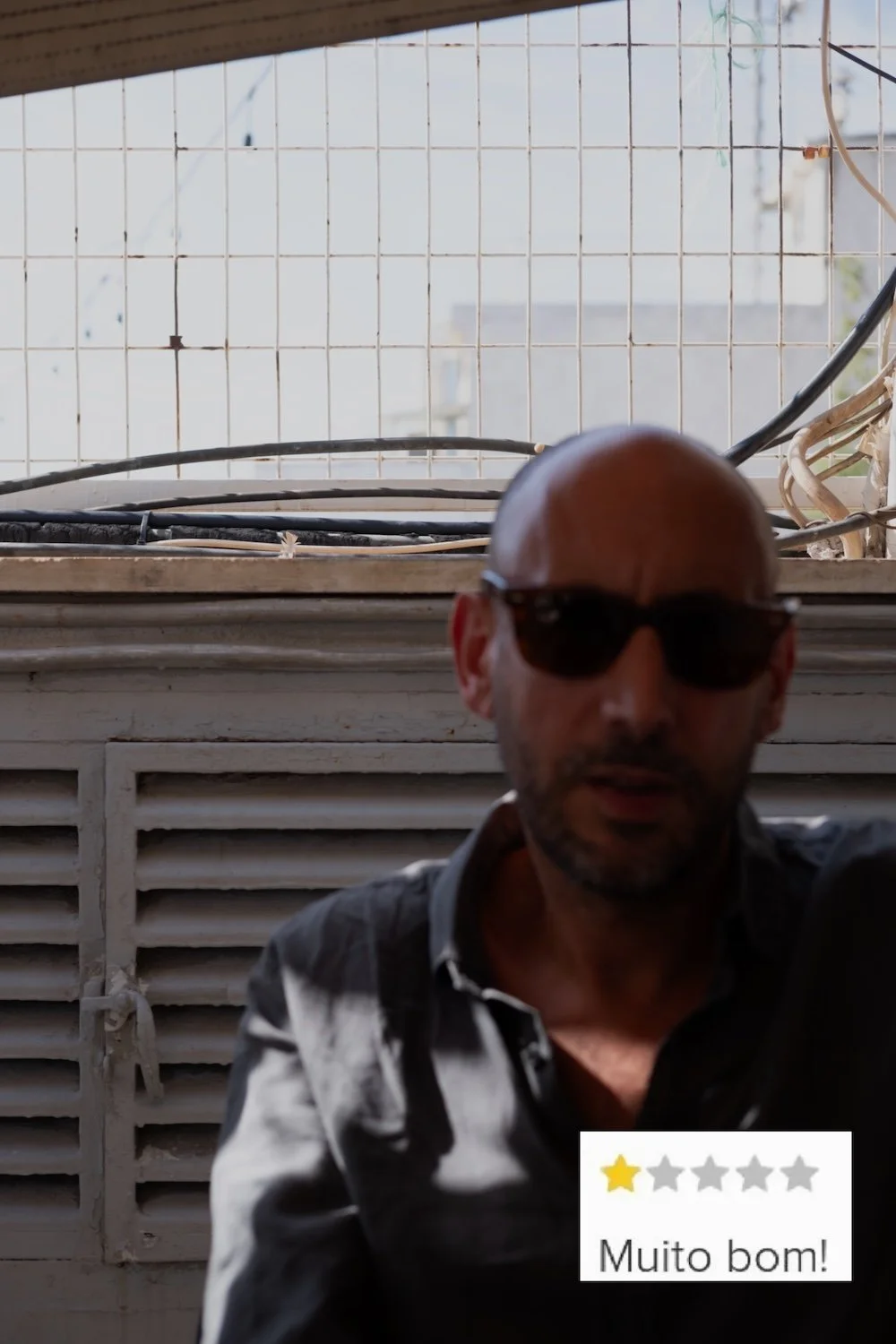
At “The Cretan”, I asked André to take a photo of me with my camera. He is as very talented photographer.
Checking-in at Romantso, a State of Mind and Dörte
My first ‘official’ ECHN stop of the trip was at Romantso, to meet Esra who didn’t join us during the day and had arranged a room there for a common project meeting. Esra’s Originn Creative Hub is a partner in our project TransparencyChain, and this trip to Athens was the perfect excuse to arrange a meeting with Loonatiks Design Crew, a local partner.
Dimitris arrived with his usual charm and calm, contrasting with the chaos of that particular side of town. It made me think about Ikaria State of Mind, a festival organised by common friends, the Cypriots Martha and Constantinos from ABR. It is a festival on the Greek island of Ikaria and they don’t call it a festival, but a “state of mind”, just a different wavelength.
After the meeting I was cheered by my dear friend Dörte de Jesus, founder of The Lissome magazine, co-conspirator of many different endeavours and a recent member of ECHN.
Dörte is one of the most extraordinary people I have ever met, with a not very common capacity of listening, processing, and translating other people's work and ideas into words. I recommend reading her account of a recent visit to Porto on her substack The Lissome Letter: Move slow and build things.
When we met, she was preparing the Bautopia exhibition with the materials she used in an event held at our school earlier this year. During the rest of the Athenian week we met now and then, assessing each other's opinions and trying to tame the overstimulation of an event crowded with creative minds.
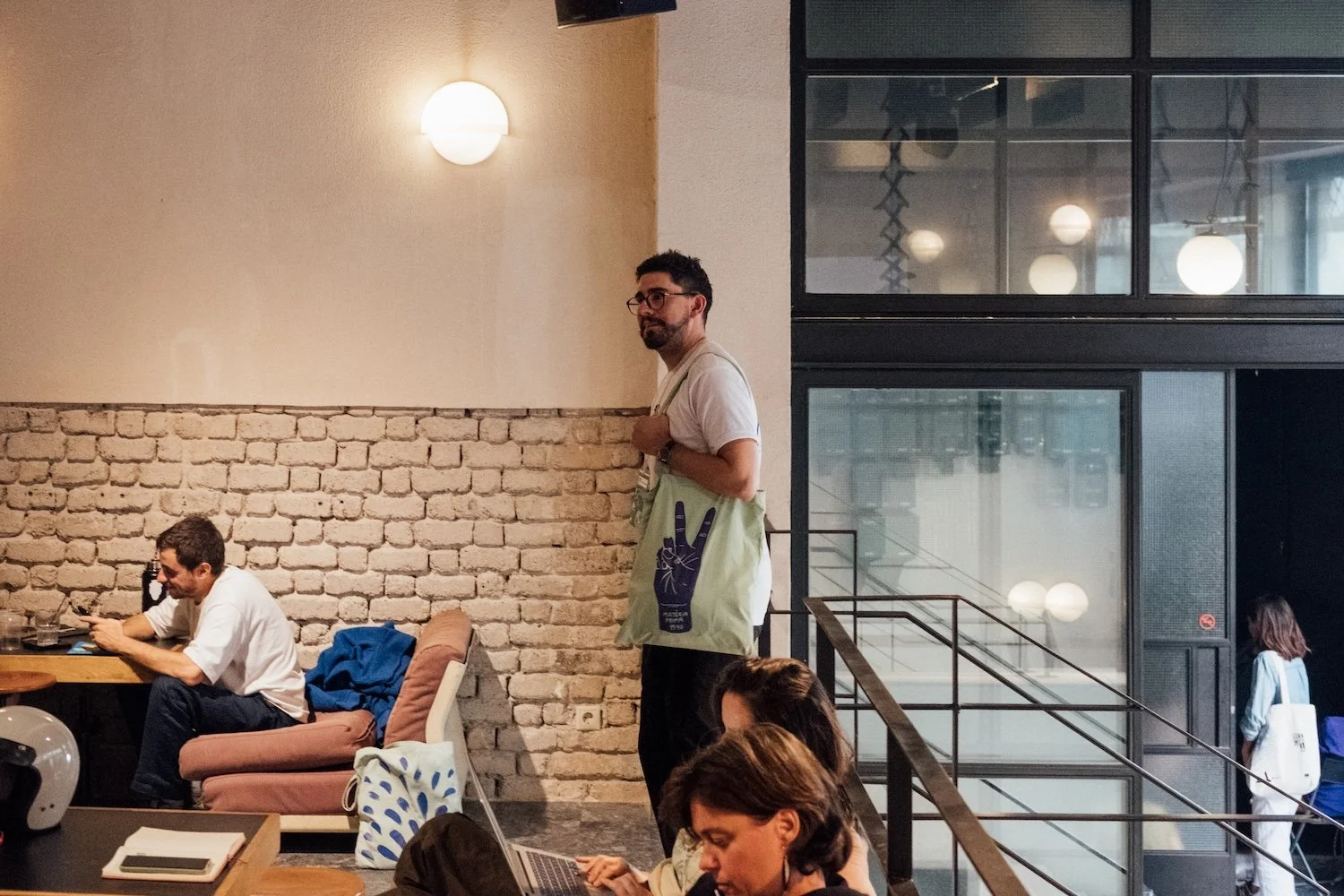
After Romantso, we headed to Bios, where the main event would take place. It was amazing feeling the energy, seeing so many friends and familiar faces, and once more realising the importance of ECHN and the work of the team, which with only one or two big network events a year, manages to nurture such a cohesive and supportive group of members.
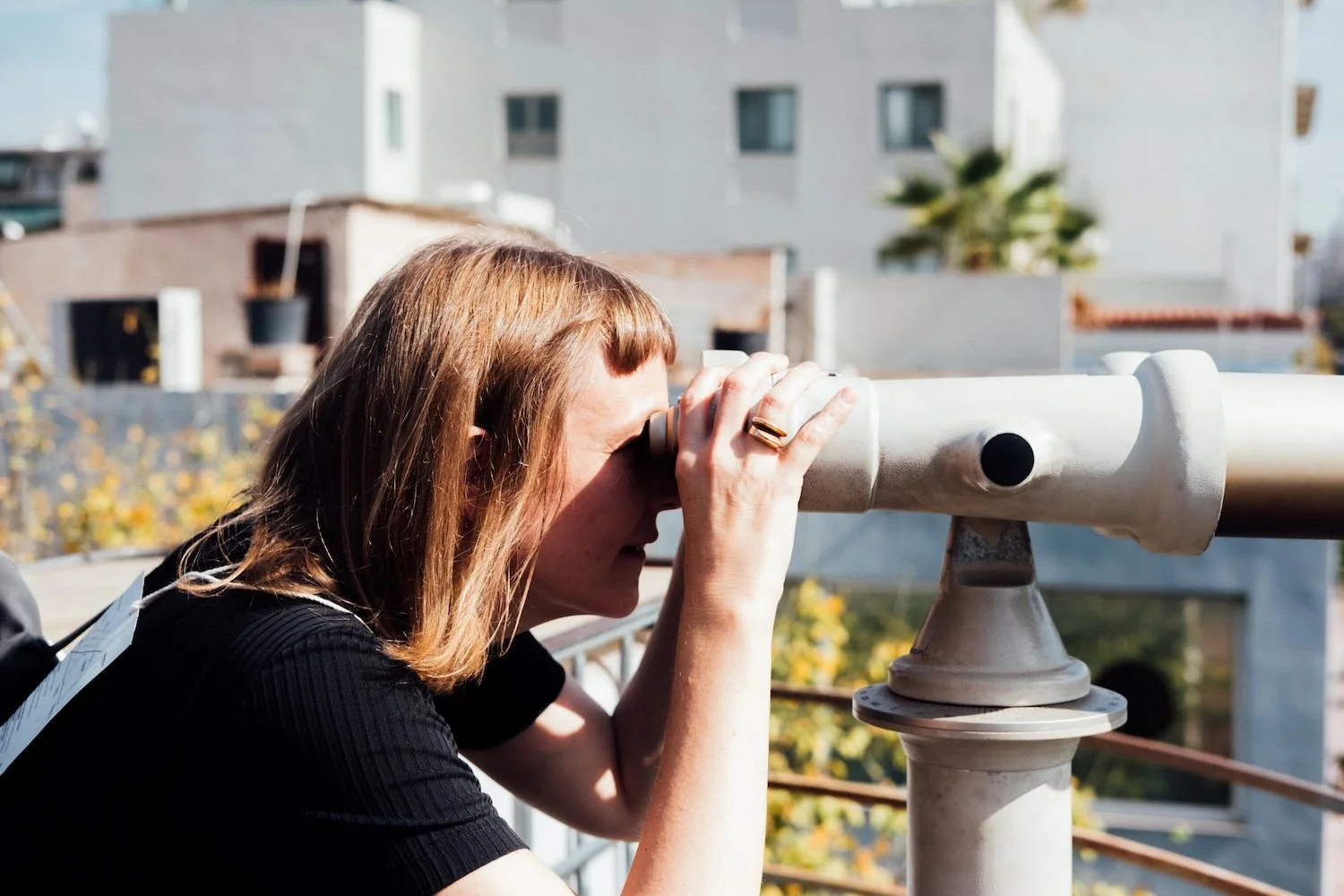
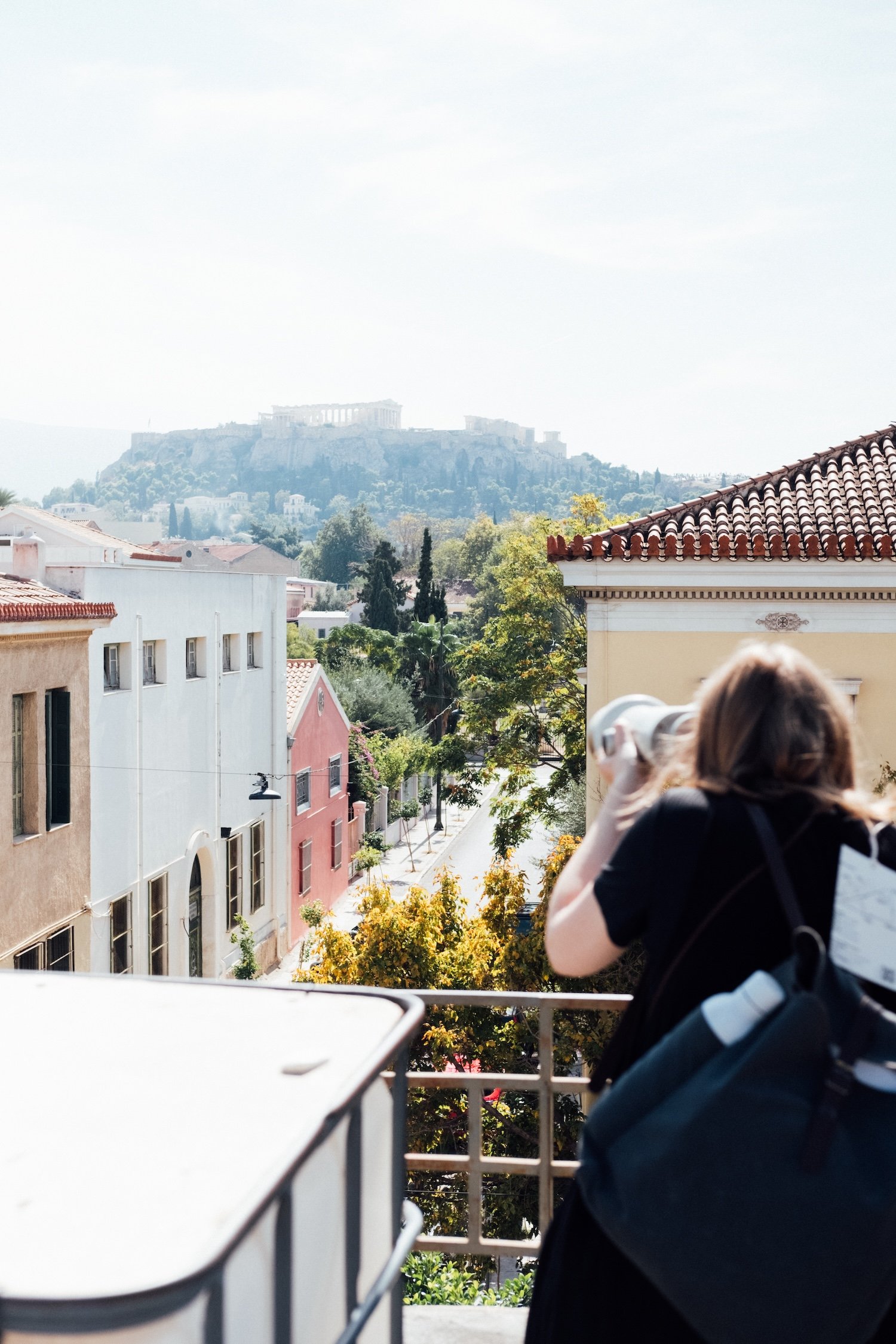
Dörte searching for inspiration for The Lissome’s upcoming challenges.
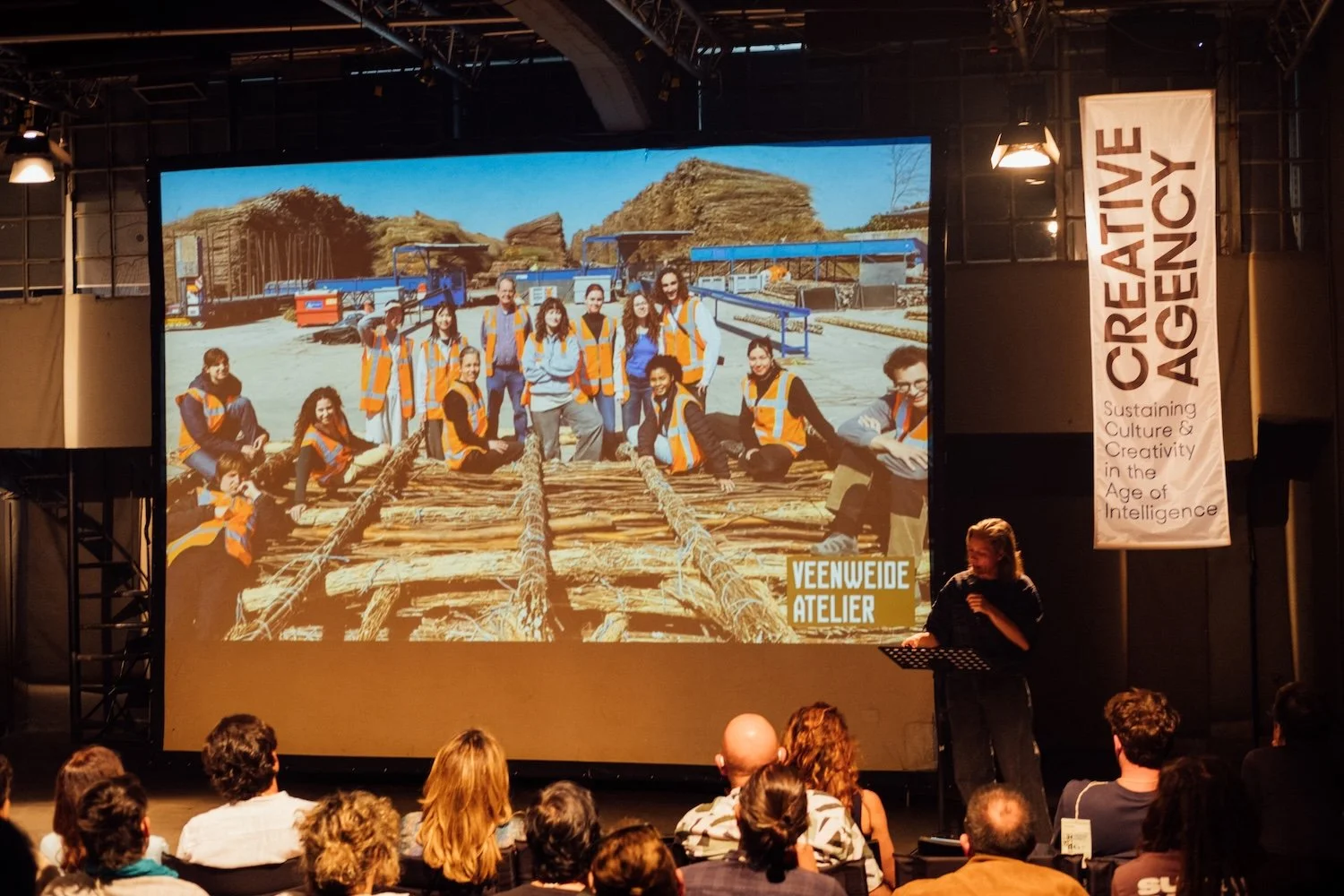
Henriëtte Waal (Veenweide Atelier) at Bautopia
After the welcome address by ECHN’s Secretary General Tom Pope (The Making Rooms), the conference started with keynotes from Simone Rebaudengo (studio oio), Henriëtte Waal (Veenweide Atelier) and Vladan Joler (SHARE Lab).
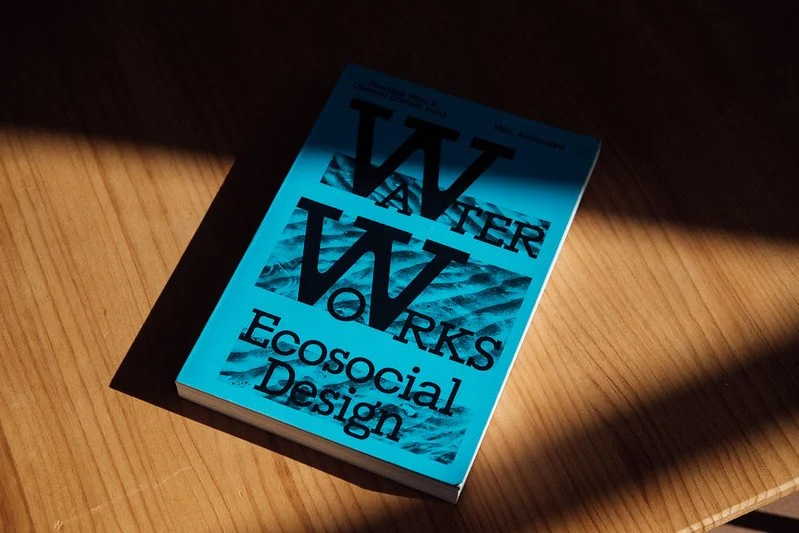
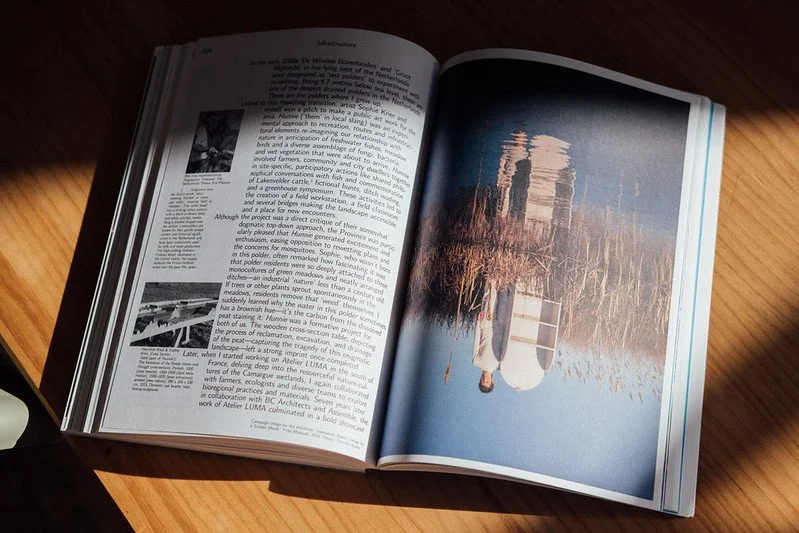
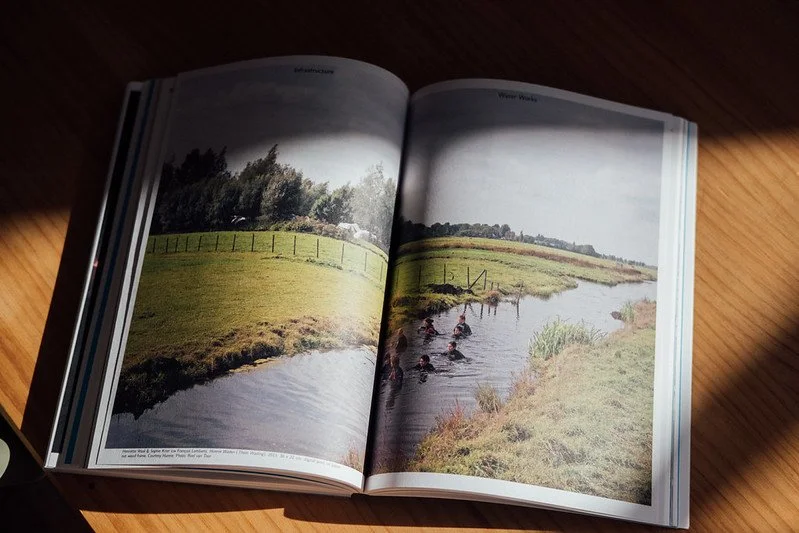
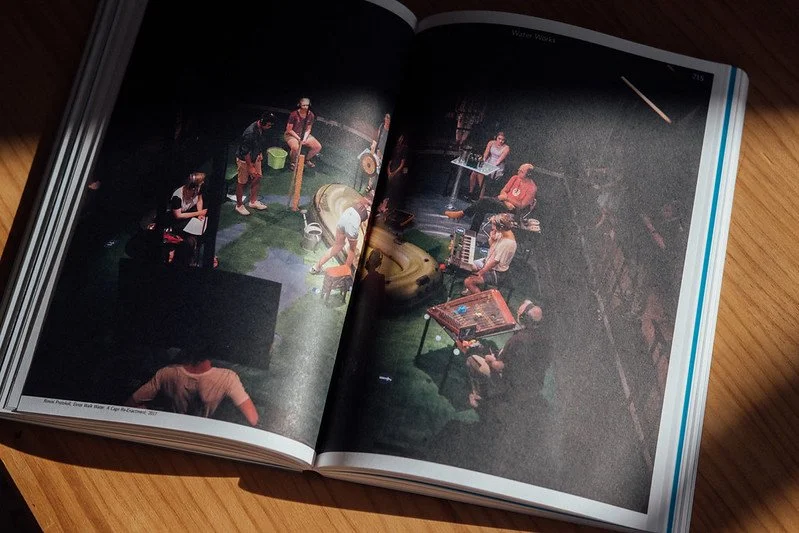
I was particularly enthusiastic about Henriëtte’s presentation. I had recently purchased her book Water Works: Ecosocial Design, a collection of essays and case studies on our relation with waterways. I got my copy at Matéria Prima in Bombarda, the most brilliant book and record shop you have to visit on your next trip to Porto.
In her lecture, Henriëtte presented a few of her projects, which have many intersections with our own research at Saber Fazer and shared concern about local natural resources and knowledge and their importance in a world in climate stress.
Mucho Vino, little food
The opening day ended at the Bios’ rooftop, with amazing views of the Acropolis (omnipresent on the central Athens skyline by the way) and one of the first opportunities to connect to old and new acquaintances. I don’t particularly enjoy crowds, so avoided the queue at the generous food buffet and headed to the by then empty bar for my vino blanco.
One glass led to another, and when I noticed, there was almost no food for me. I had to walk back home on my liquid dinner, which proved to be a horrible idea in the upcoming days.
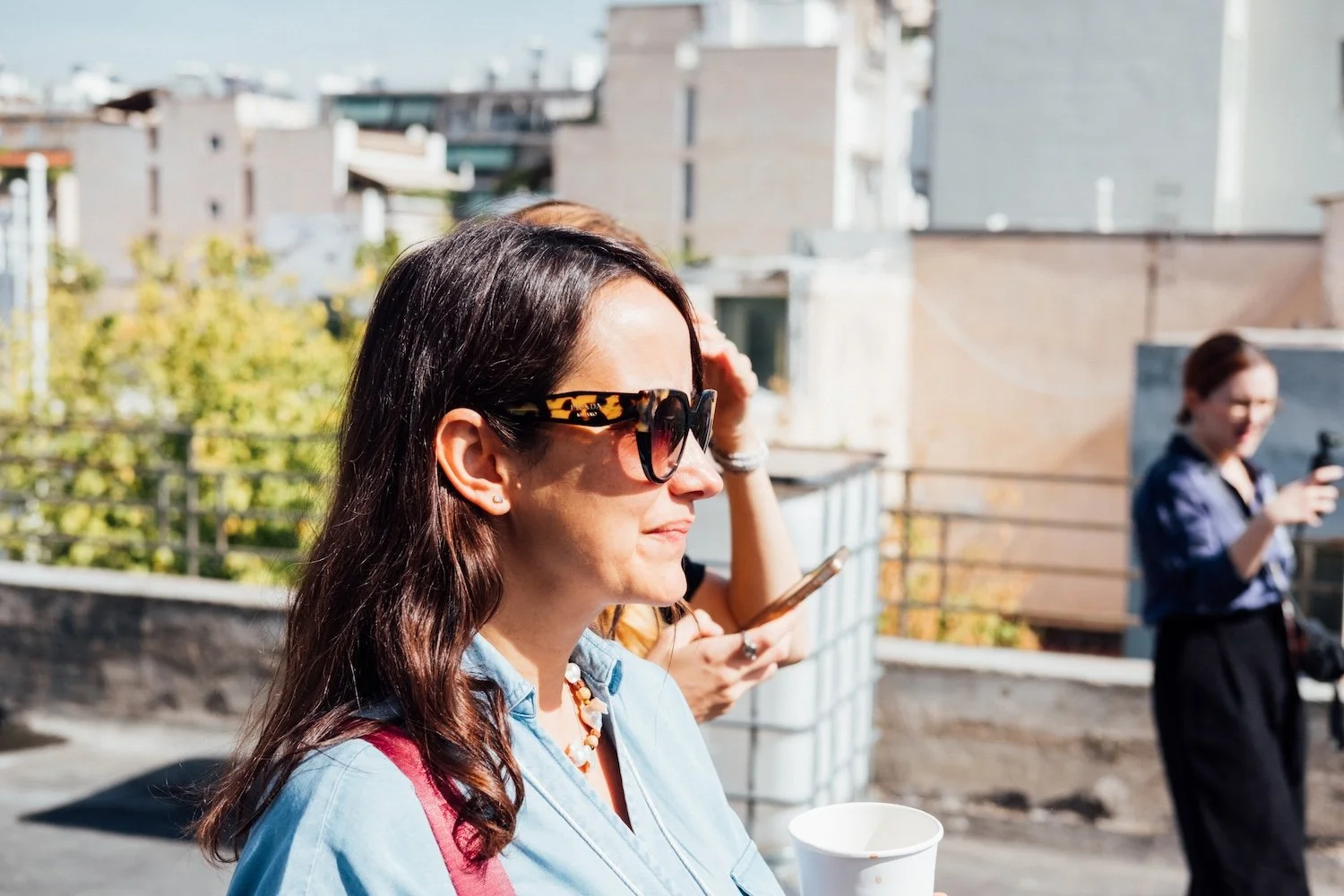
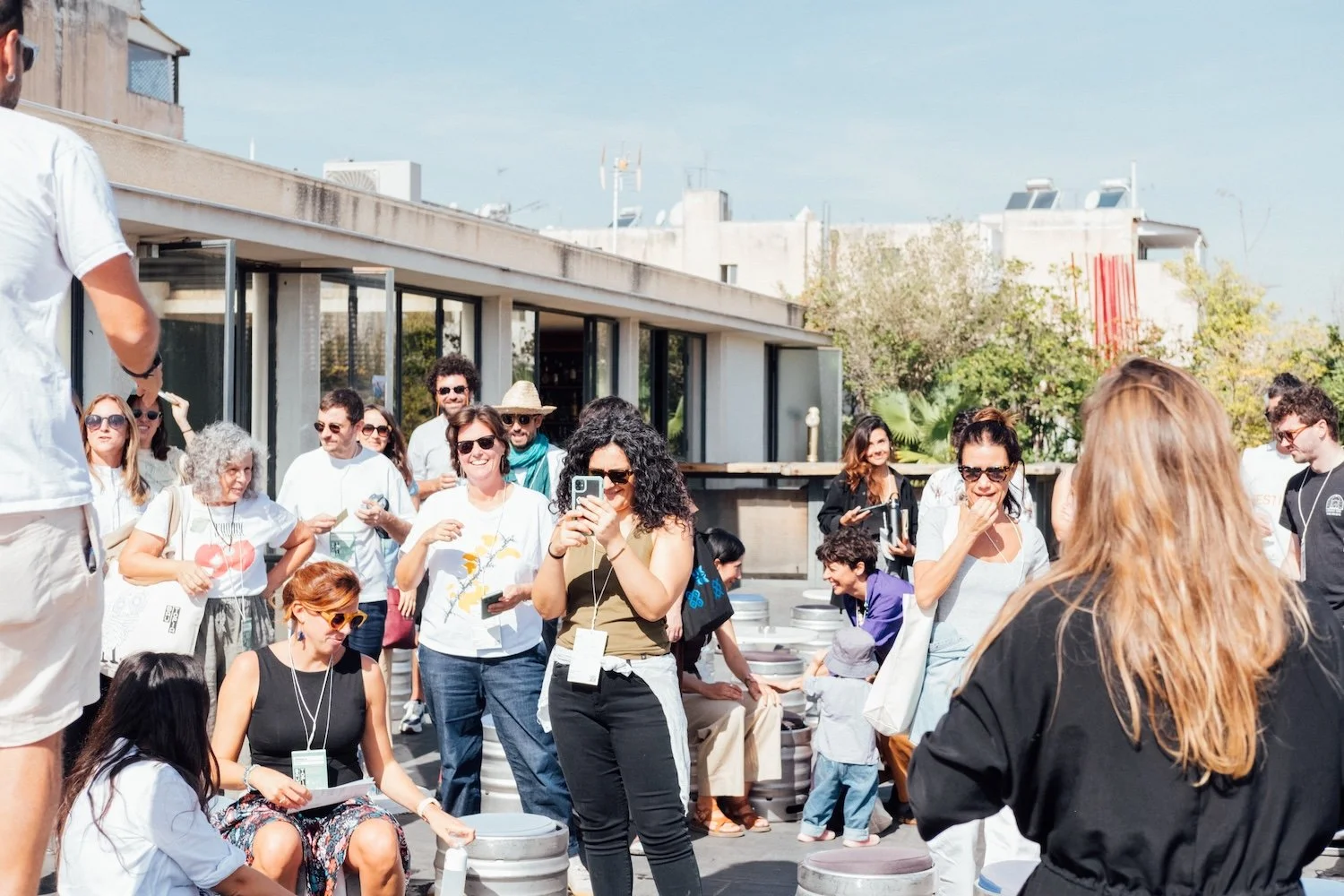
Esra and the crowd at Bios’ rooftop.
The General Assembly
Thursday started with ECHN’s General Assembly. After a summary of the year, Vassilis Charalampidis, our Athenian host and ECHN’s long-time President, summed up the main aspects of the next EU funding cycle for culture under the proposed AgoraEU programme, combining Creative Europe (Culture and MEDIA+ strands) and Citizens, Equality, Rights and Values (CERV) into a single framework.
Vassilis voiced his concerns about what this will mean for cultural agents and briefly discussed the ideas and planned safeguards for fairer access to funding by smaller organisations and artists, something that should have been in place years ago.
During the Assembly, we talked about the thematic clusters and discussed ideas for a cross-innovation cluster, focused on transferring and combining knowledge, ideas and technologies between sectors, or bringing them to the sphere of the creative hubs, and for a learning cluster, which has strong parallels with the first but focused on the hubs’ learning communities rather than the hubs themselves. Both ideas were welcomed with enthusiasm and I was particularly happy with the alignment with the ideas I had before the event.
After the event I couldn’t stop thinking about this. On the plane I read the marvellous Hans Ulrich Obrist’s conversations with Marina Abramović in one breath, which inspired me, when back in Porto, to re-read his conversations with Rem Koolhaas.
In the Koolhaas book, after a long dialogue about Europe, the EU brand and what it means to be European (it was 2003 and Koolhaas had some visionary ideas by then which turned out to be true more than 20 years later), Obrist asks if there should be a new European Black Mountain College. This was just a perfect insight.
Why not assume part of the network as a bottom-up decentralised, interdisciplinary group of cultural learning hubs, congregating many thousands of creative professionals, as an opposite to the top-down centrally-organised New European Bauhaus or other EU initiatives?
Rural hubs galore
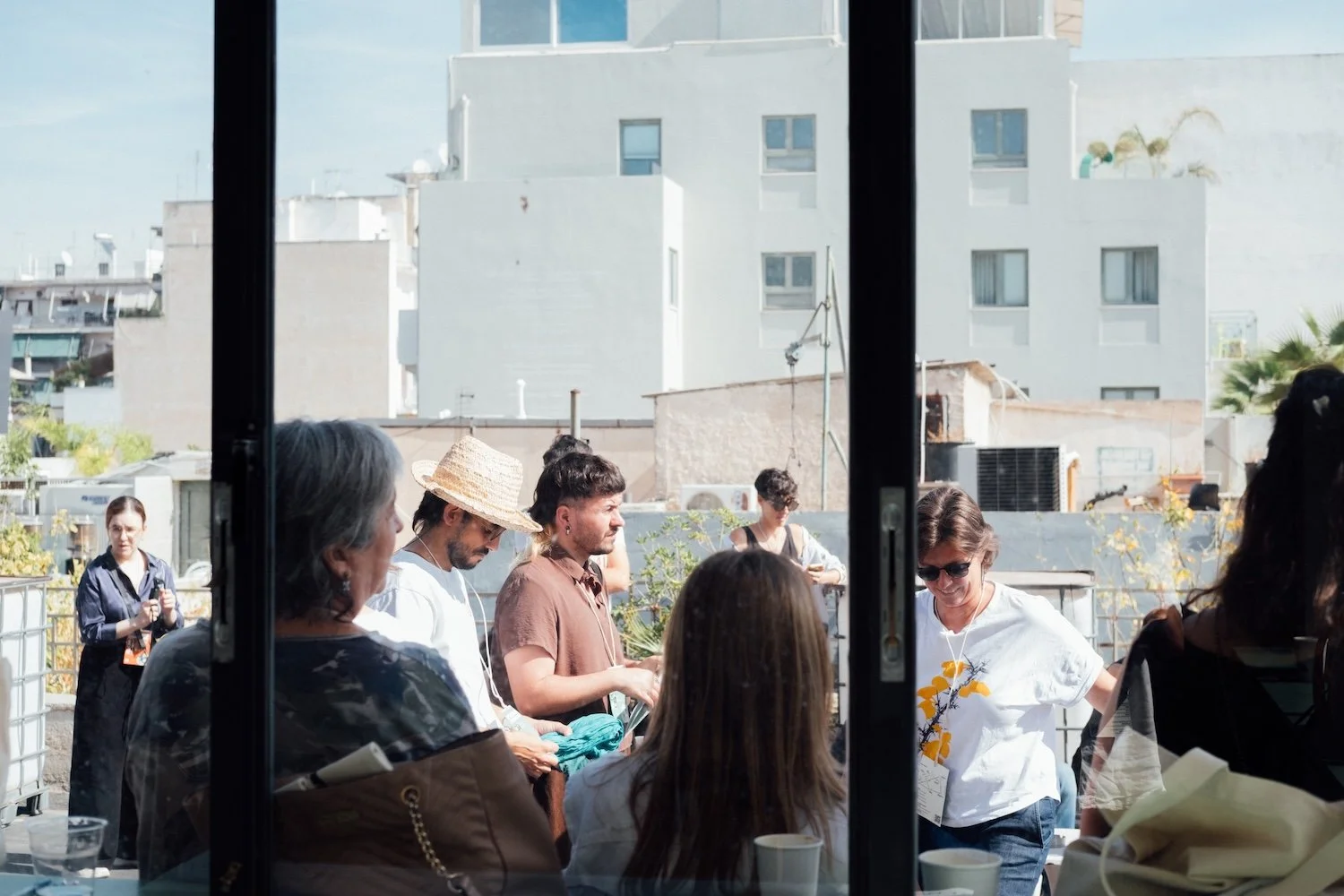
After the General Assembly I headed to the Rural Hubs thematic cluster breakout session, held on a packed and sun-soaked Bios rooftop. I would have expected such a specific cluster to be less popular, but was proved wrong!
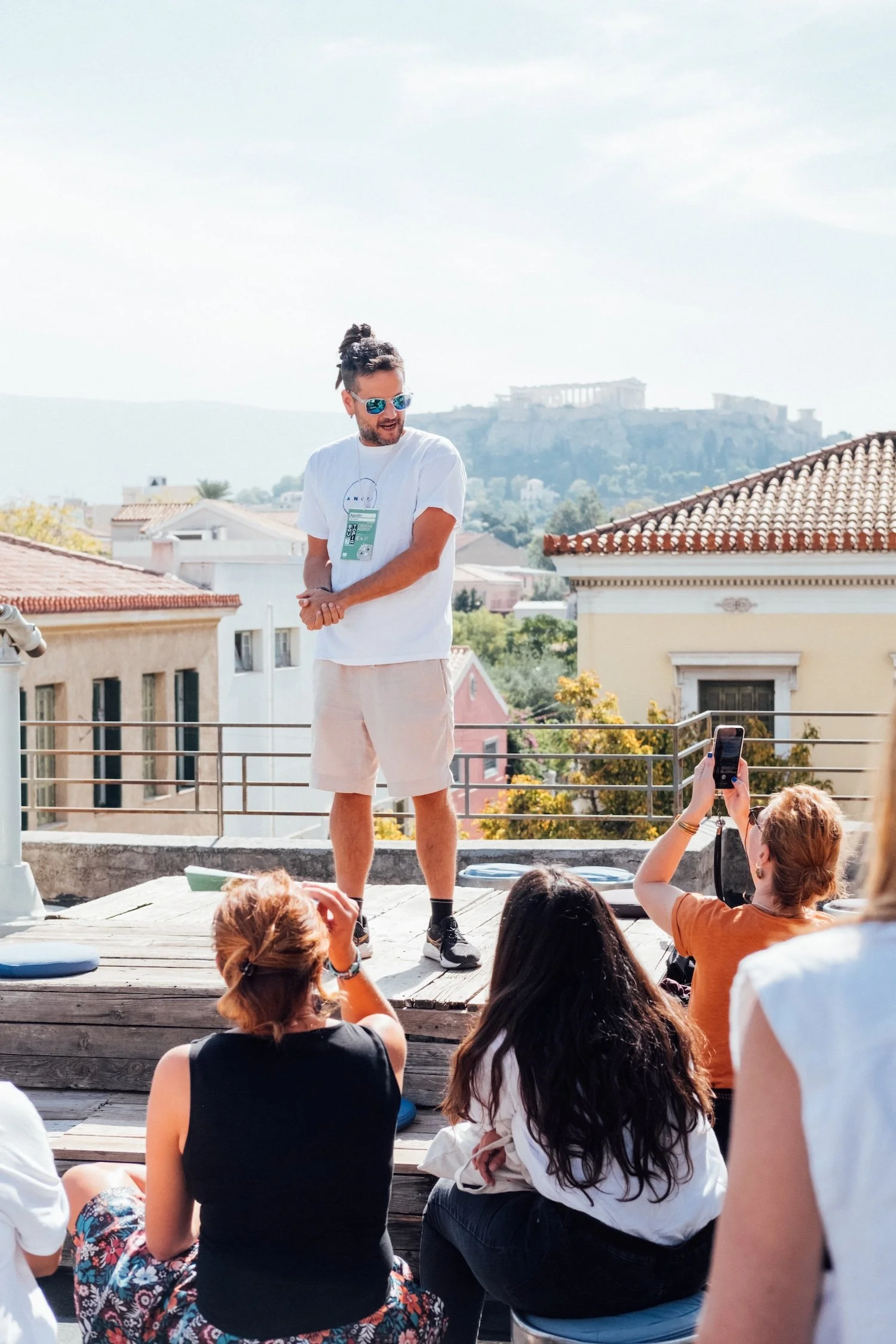
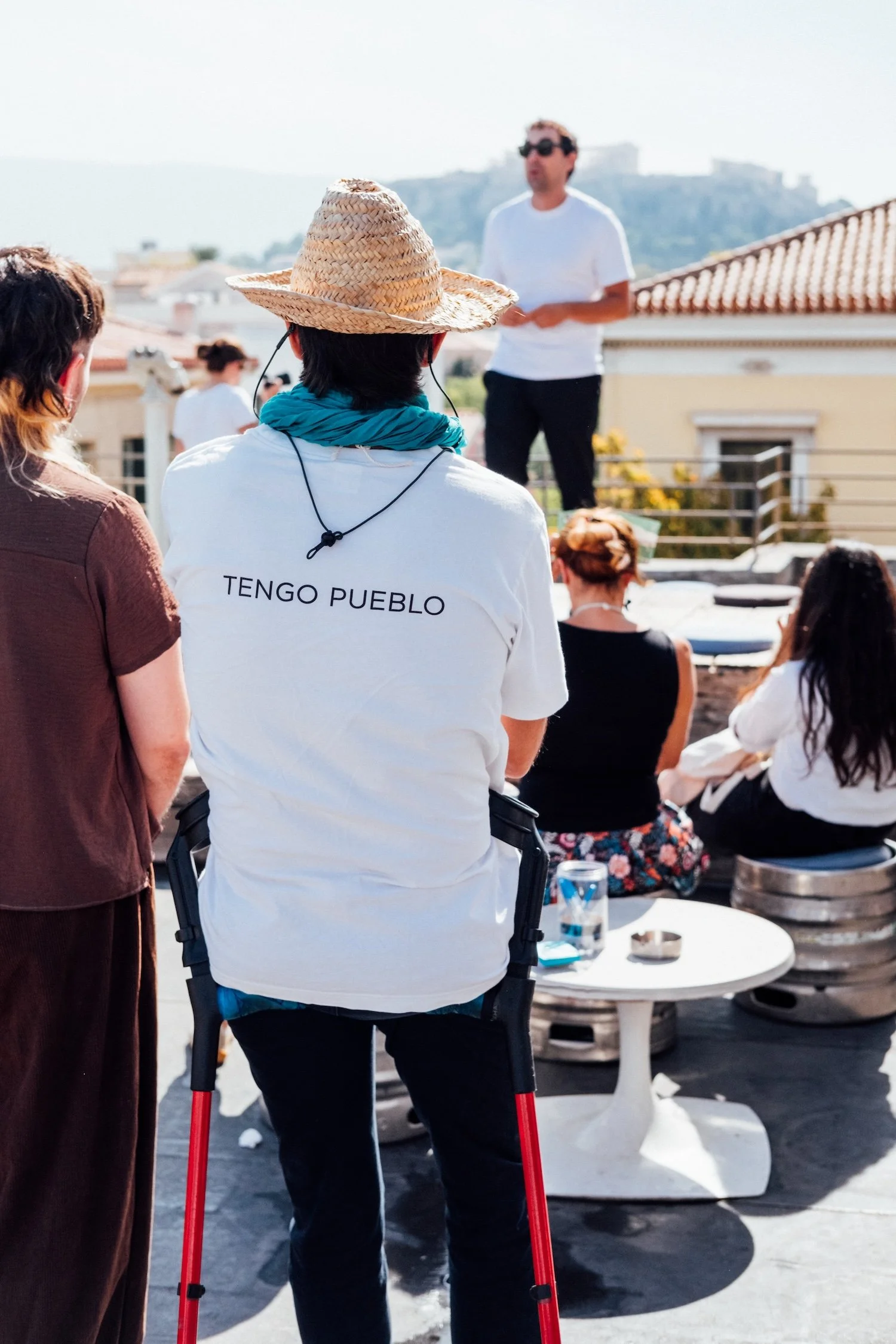
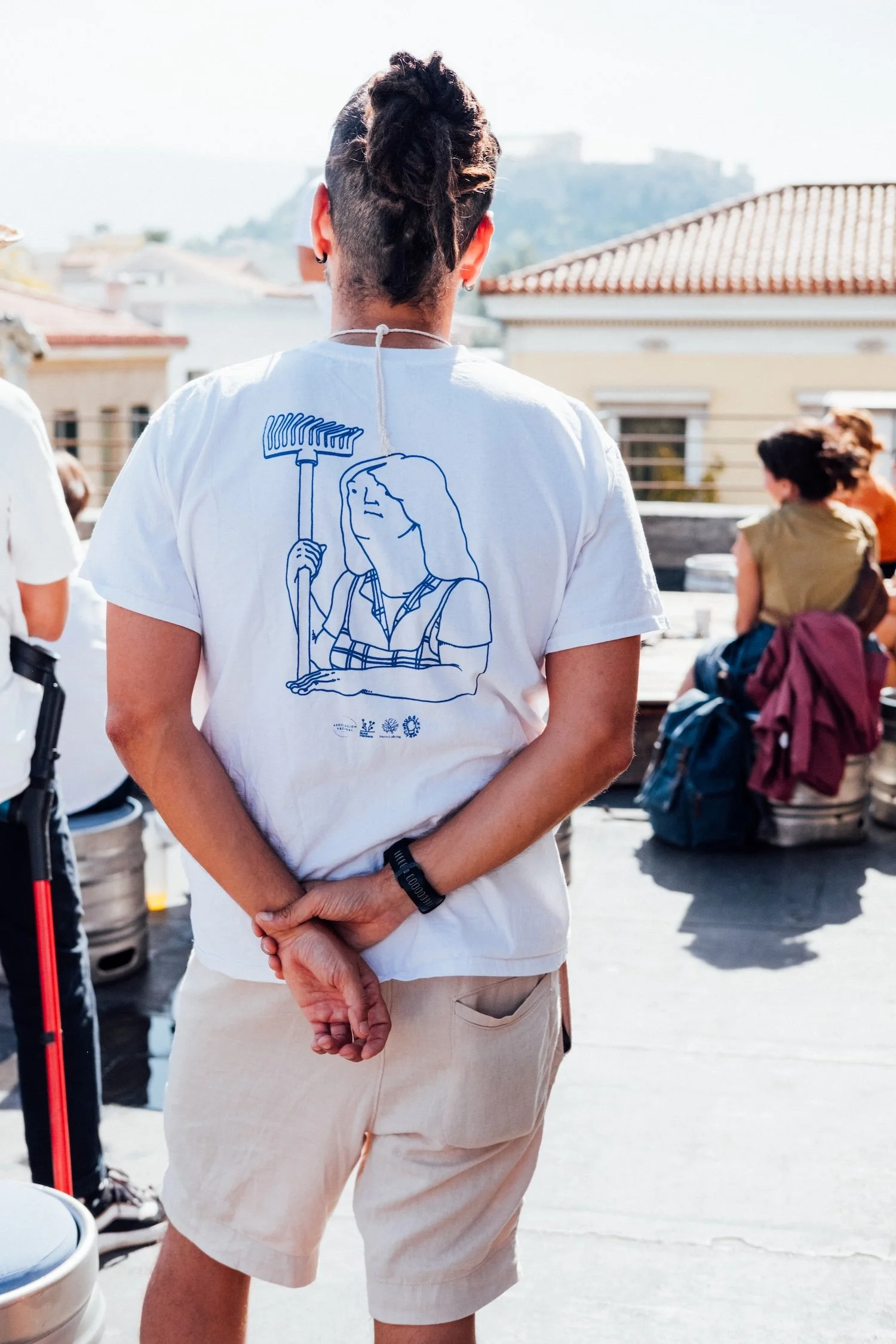
After a quick introduction to the session, the crowd was divided into smaller groups.
My group was quite homogeneous, with members stretching from one corner of Southern Europe to the other: Spanish, Italian, French, Romanian and Portuguese, all under an implacable sun that rushed our souls inside for shelter.
At this point, I still owe an apology to our host Nacho, and fellow members of the group, because I very probably overtalked, which is a very white(ish) middle-aged man thing to do.
Anyways, in our conversation I shared our concerns about the need for decolonising urban views towards the rural and a certain metropolitan-gaze we recognise in many actors in our line of work. We talked about engaging from bottom to the top with local communities and learning with our local counterparts and about methodologies that empower communities and endogenise knowledge. So many important topics, so little time.
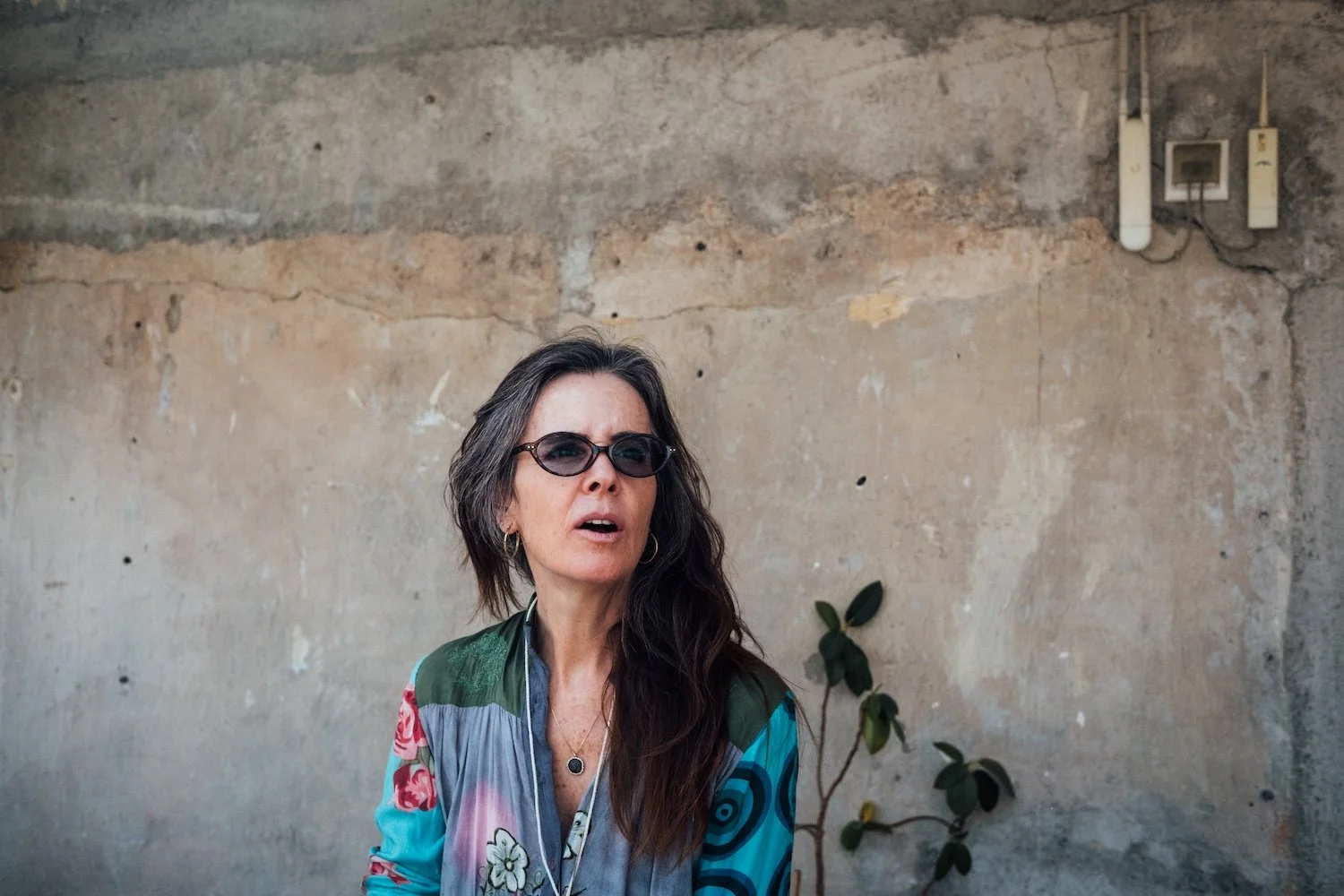
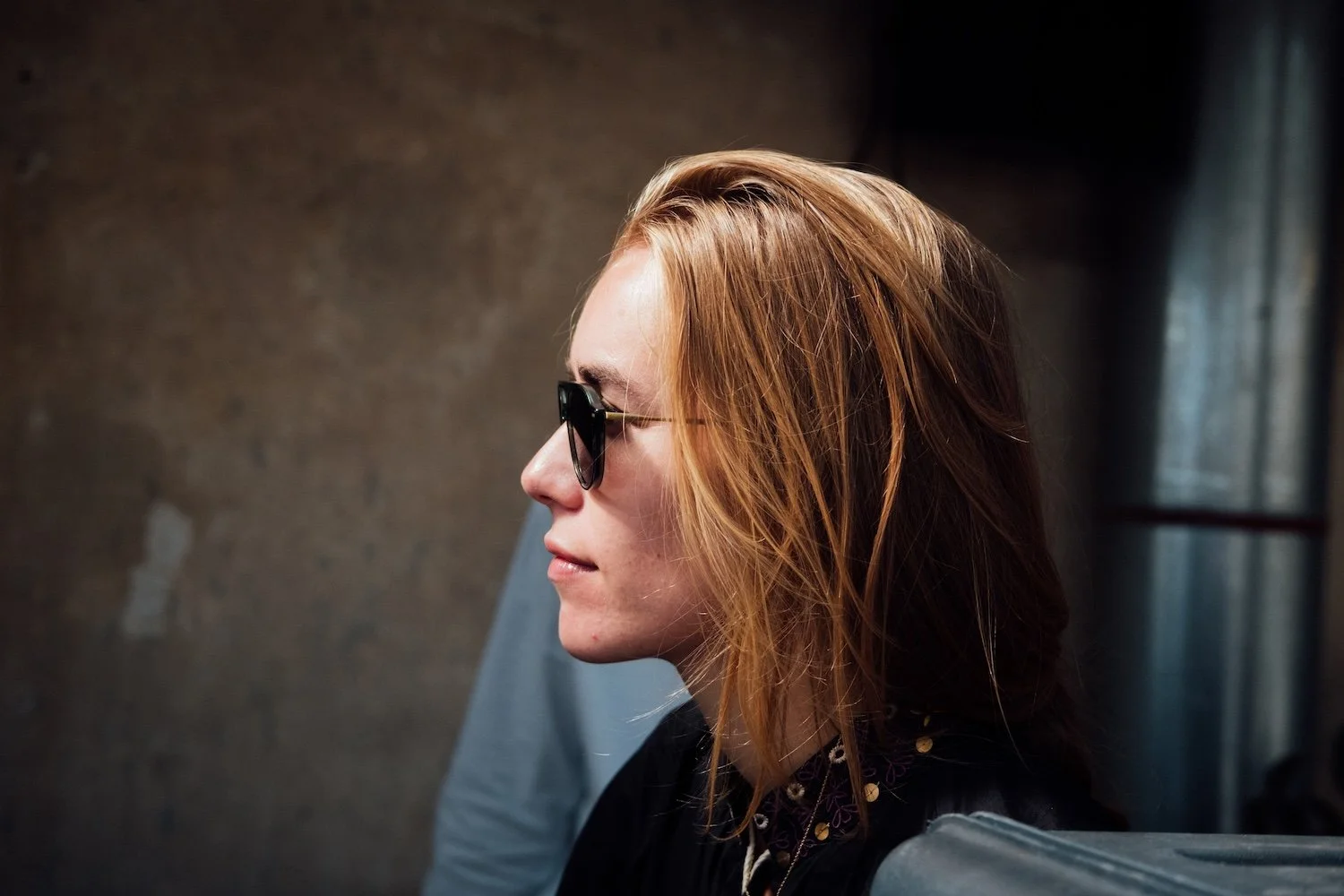
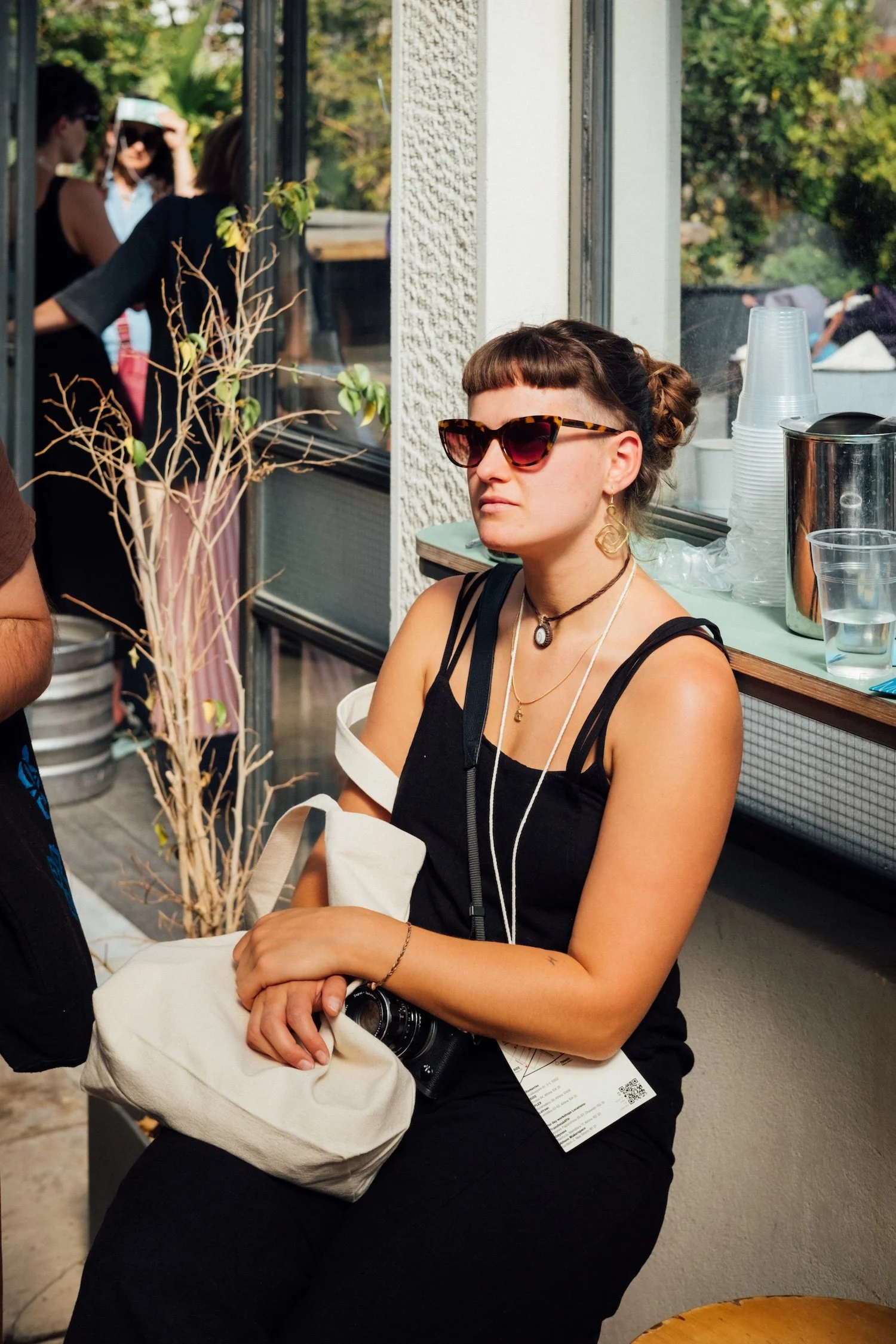
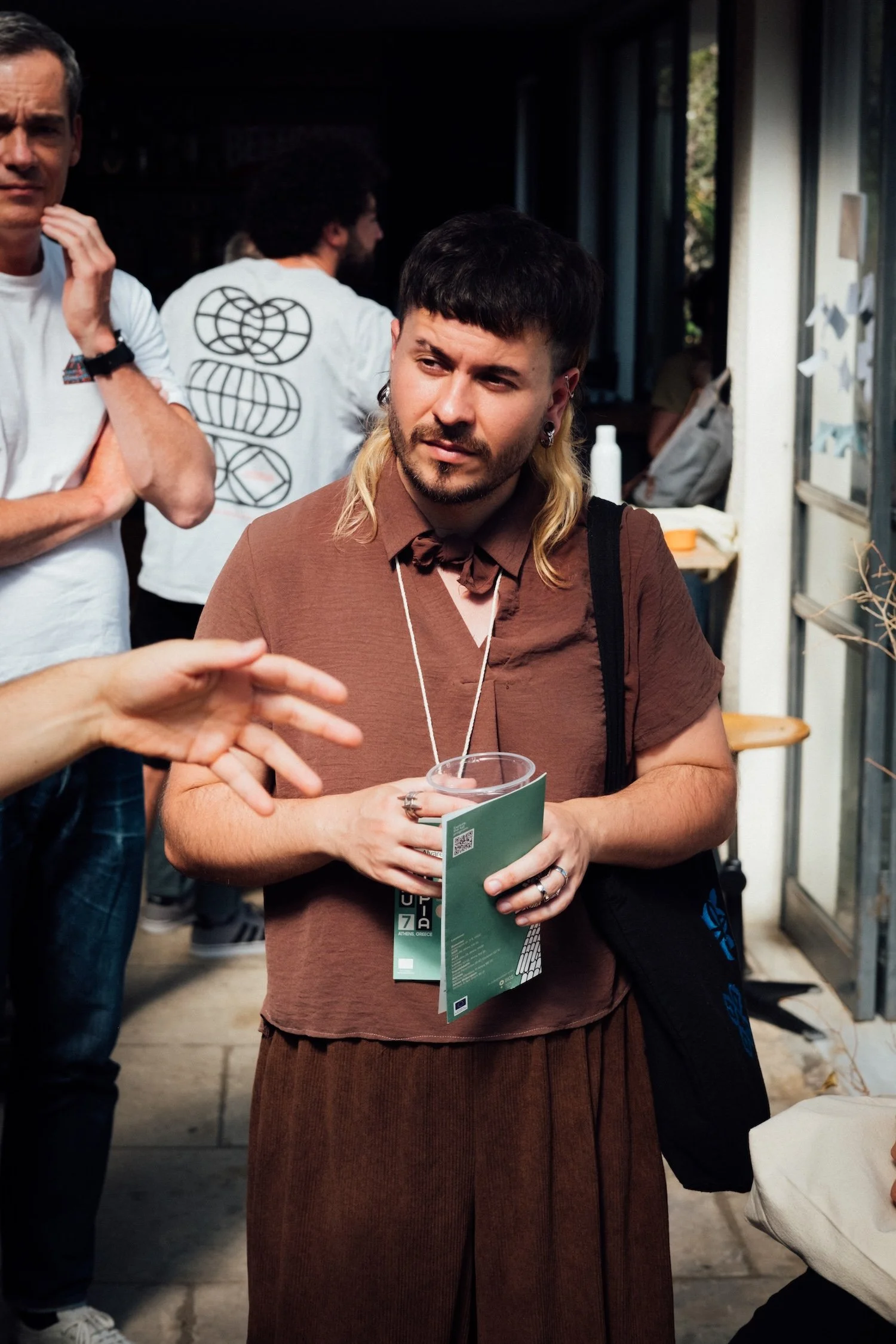
The Man in the Corner
After lunch I pulled everybody to my usual coffee side-quest. I had read something good about a place in the Central Market surroundings, which has a good rating at the European Coffee Trip app. When there, it was a sort of corner kiosk, very old school, very adequate to the context.
Like the market itself, the kiosk had a sort of Mediterranean vibe a bit alien to me. The Med has never been my cup of tea. I’m quintessential Atlantic, don’t live without my regular cold water swimming and learned to really enjoy our neverending winters: this is one of the rainiest places in Europe, not your “Sunny Portugal”.
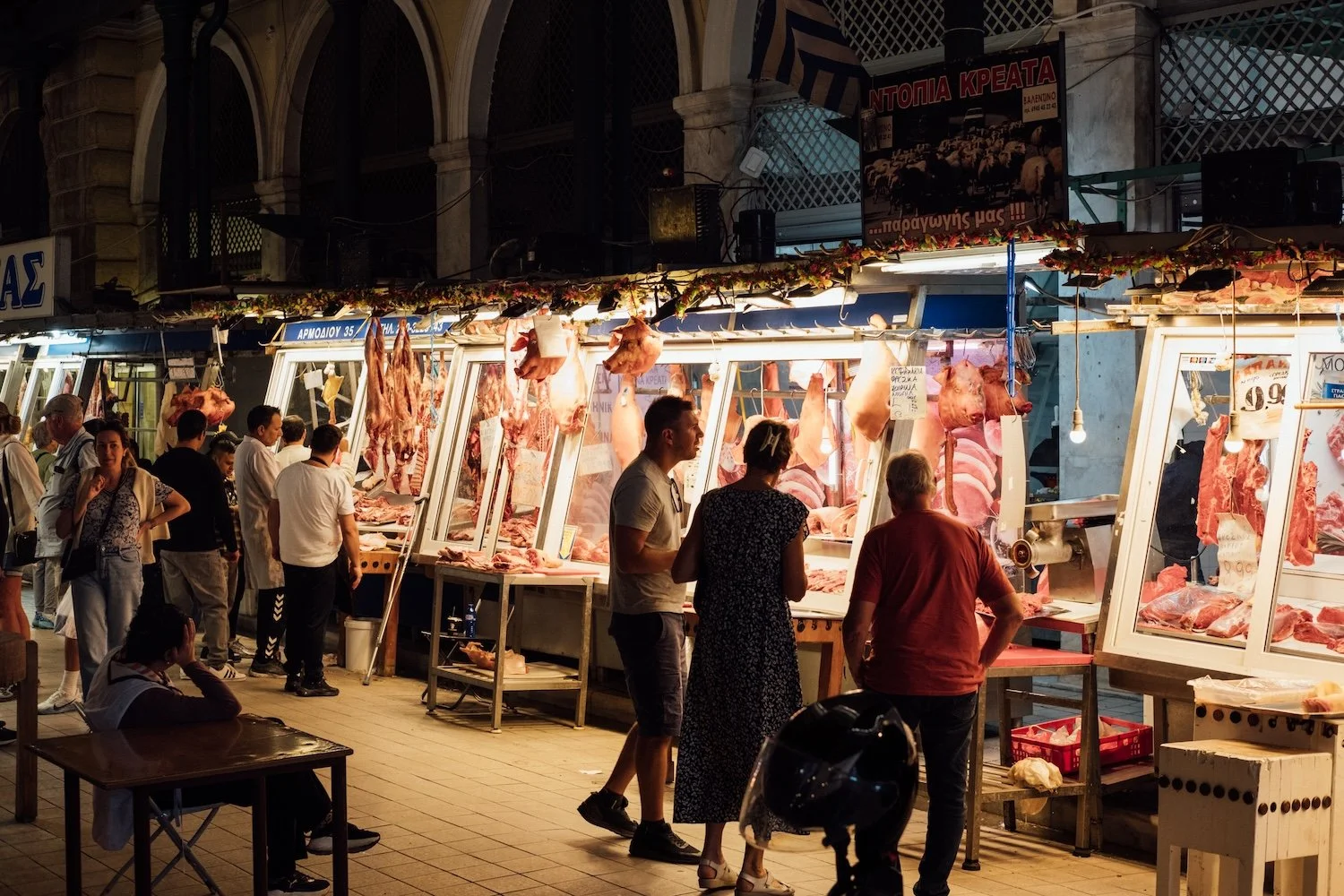
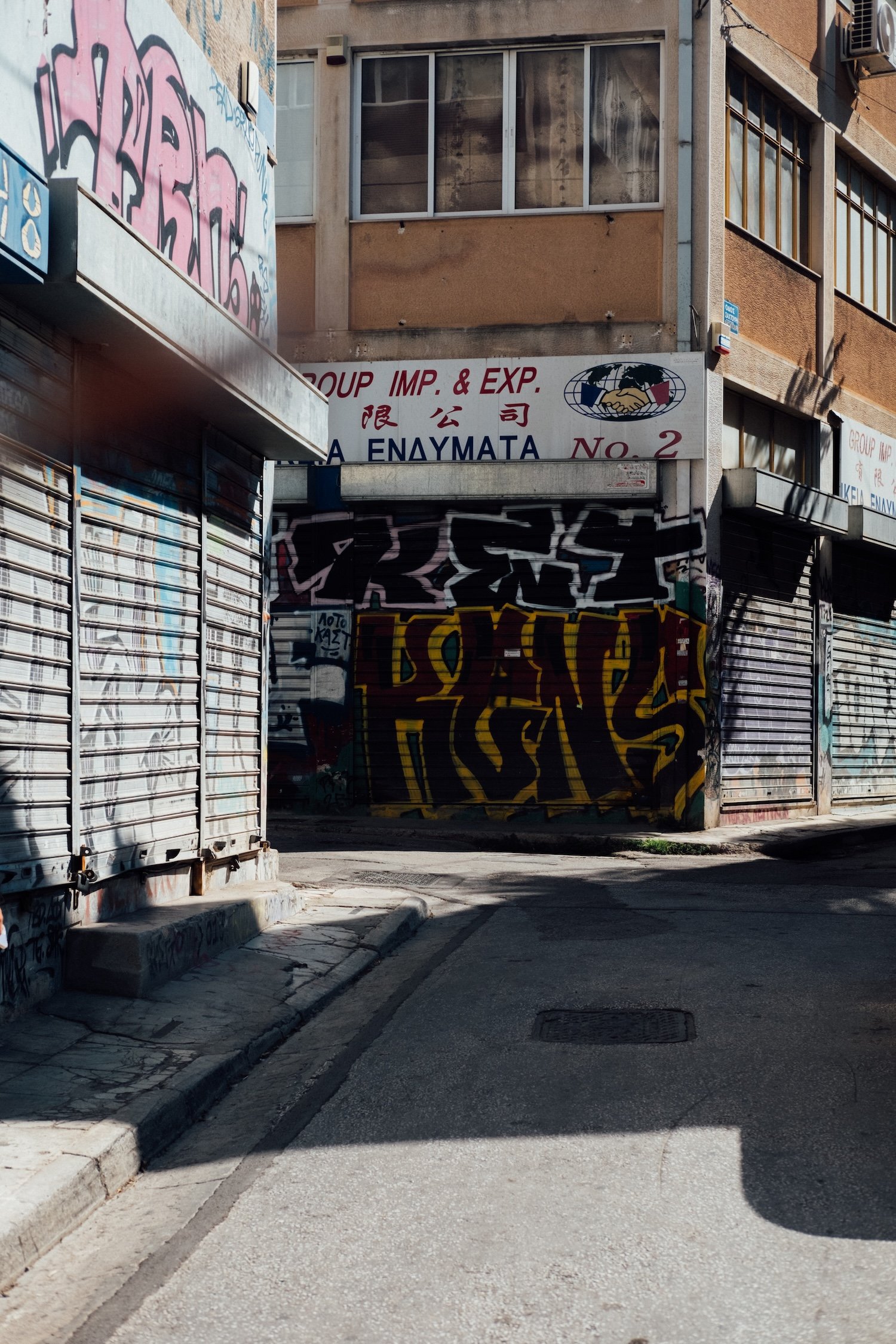
Photos? One euro for the butcher’s beer.
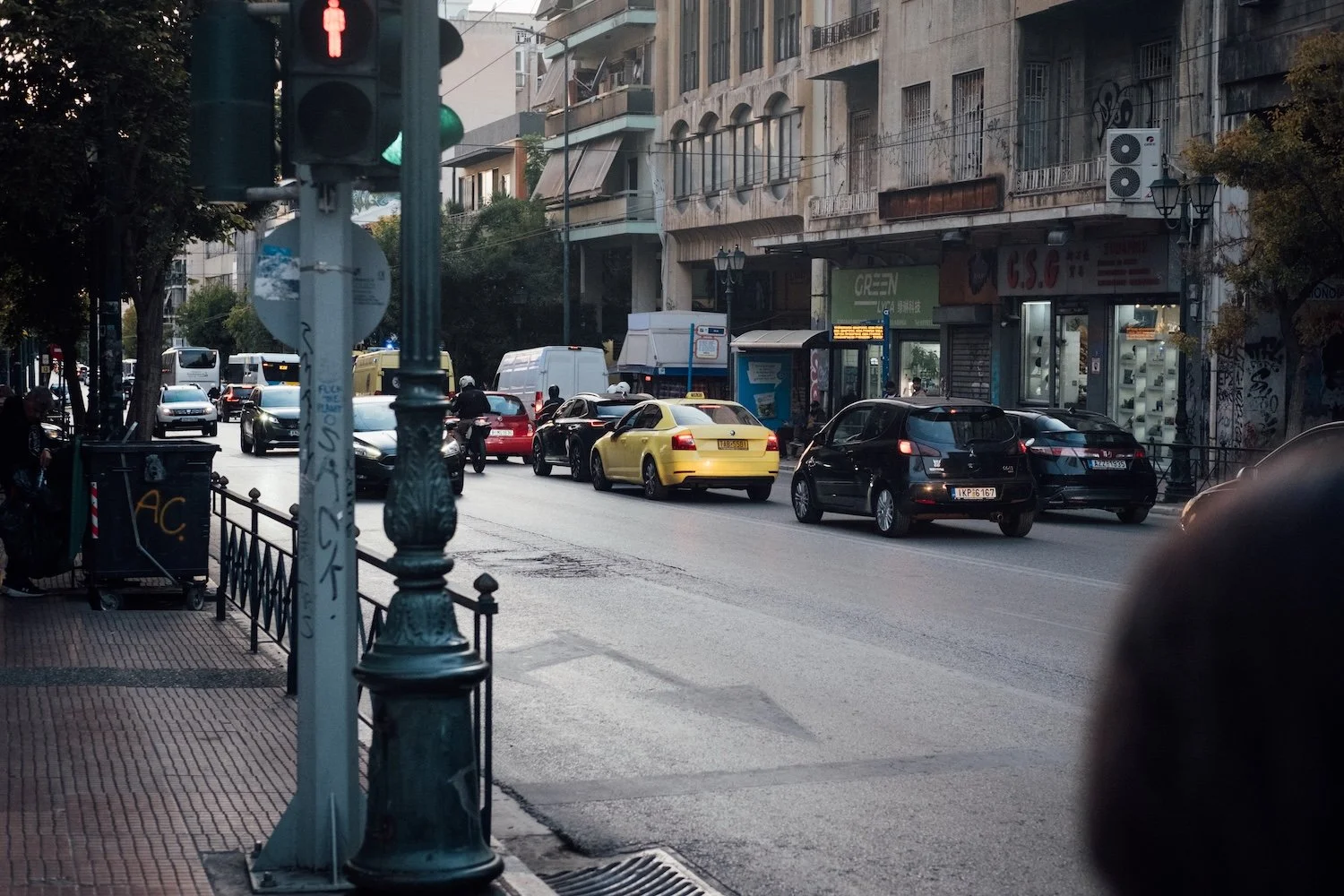
On the way to the Central Market
The weather was steamy and hot, feeling well above 30º, asking for something cold. Taking a quick glance at the looks of the espresso machine, I decided to go for something safer and ordered a cold-brew. The man behind the counter was the most gentle person ever and recommended an iced espresso instead: “It will be the best thing you will have today, trust me my friend”.
Tânia, on the other hand, asked for a pour-over: she carried to Athens an Aeropress, portable mill and coffee as usual, but there wasn’t a kettle in the apartment. After having a very satisfactory experience earlier with Boken’s V60, here she was, looking optimistically at the different origins available at the kiosk.
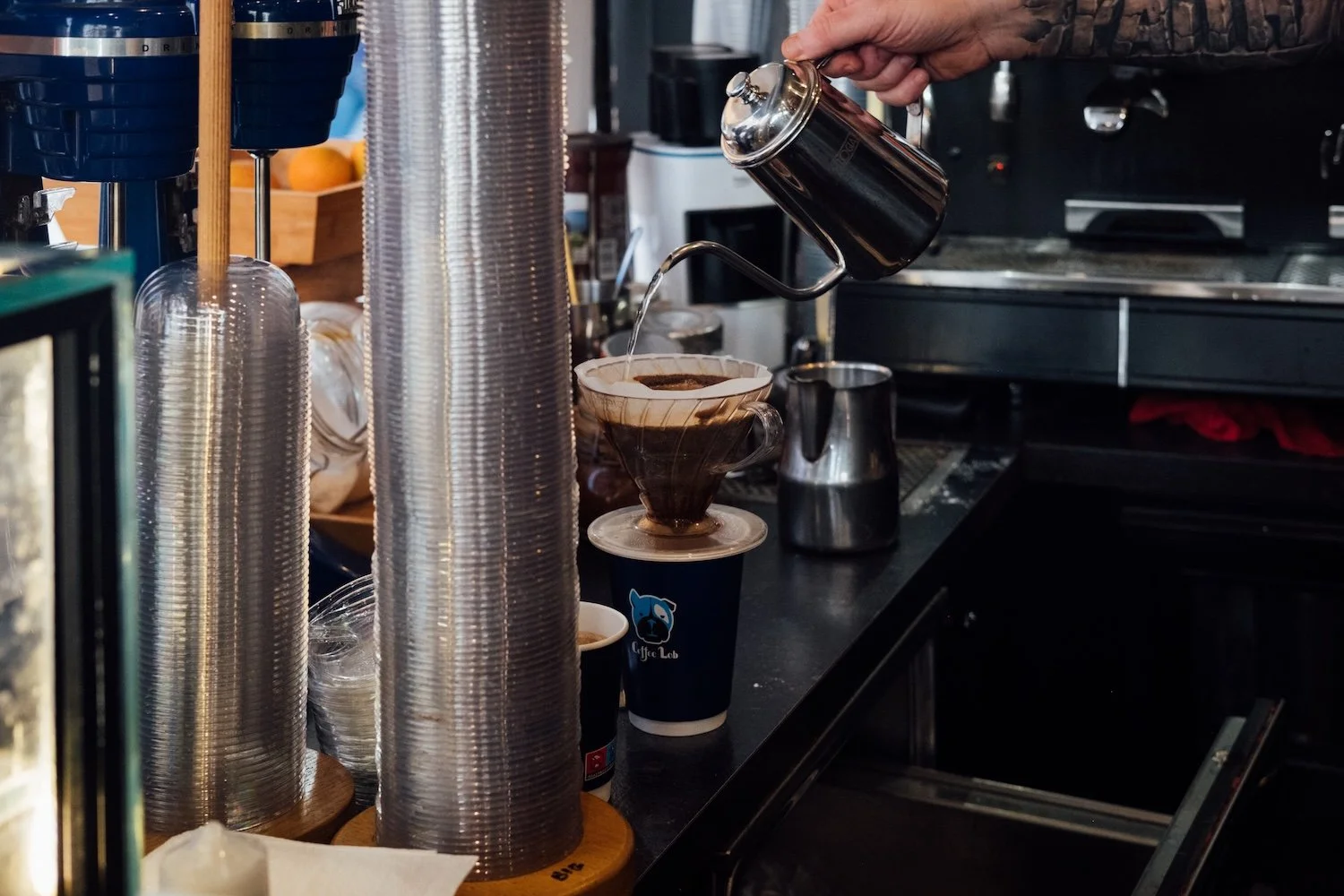
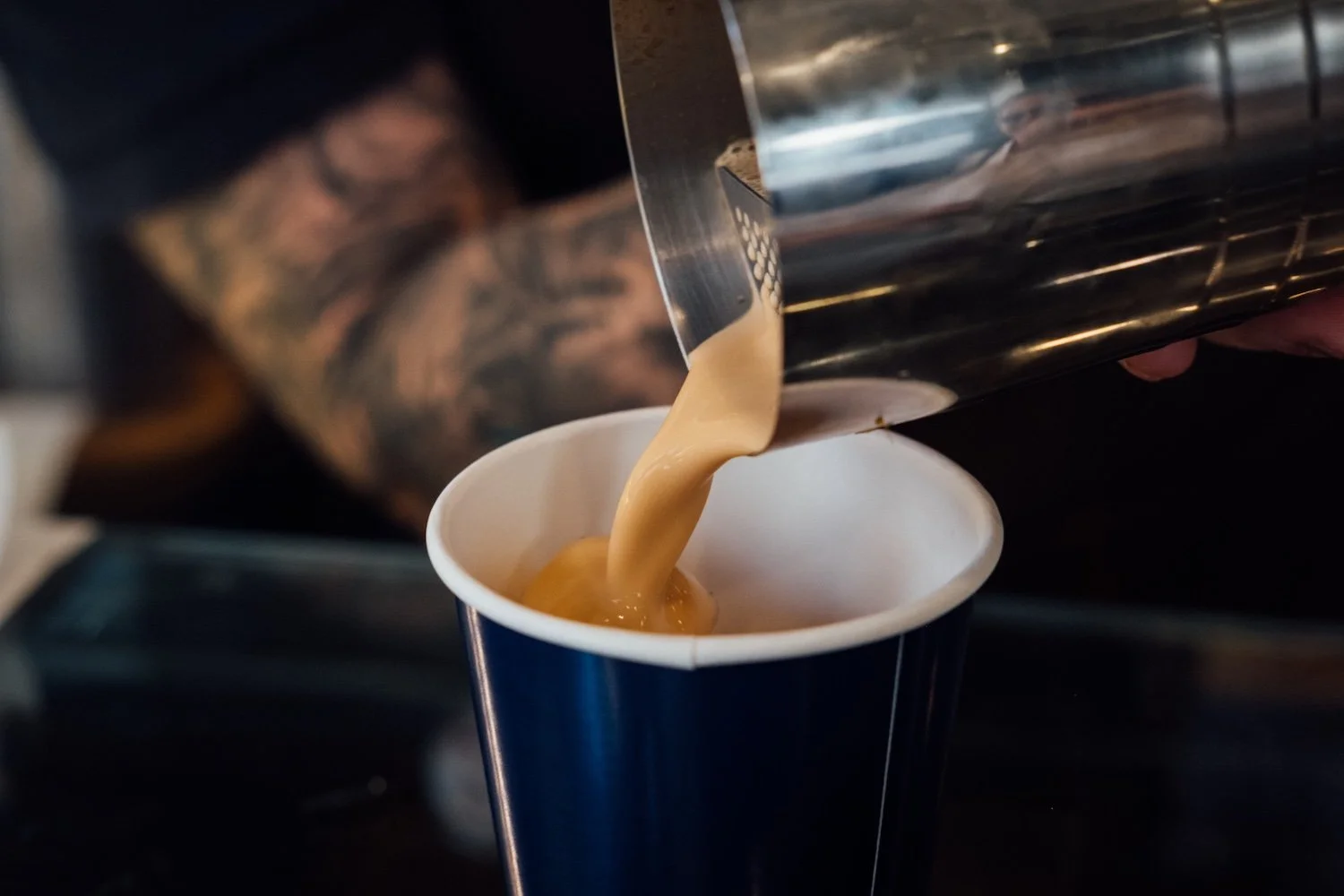
Meanwhile, a patron seated in the corner, started asking questions. “Where are you from? Portugal? I love Portugal and your language!” and started talking about music.
I was feeling a bit battered, with the heat, last night’s vino still in me and in desperate need of my coffee, so, as per usual, outsourced the talk to André, who goes coffee-free these days and was just staying there waiting. “Listen, my friend here is the one you want to talk to about music. Did you know he is a Lusophone-African music expert?” The man at the corner, an Armenian, happens to have discovered some obscure musician from the Cape Verdean diaspora in the Netherlands, well known to André, which left him hooked in the conversation. The talk later led to the inevitable Armenian-Portuguese favourite topic: Calouste Gulbenkian, extractivism, and how petro-dollars can sometimes be controversially a positive force.
And the coffee? Nothing special in my opinion. It was also almost like back home, very similar to the over-roasted flat-tasting espressos my fellow compatriots sip at every hour with loads of sugar in it, just a bit better. I mean, taste is personal, so are ratings, and the owner is just the sweetest person and so committed to his craft, the vibe of the kiosk is way different from your standardised hipster place and there was a very cool and cultivated gentleman parked in the corner, so, the solid four-point-something stars are well deserved.
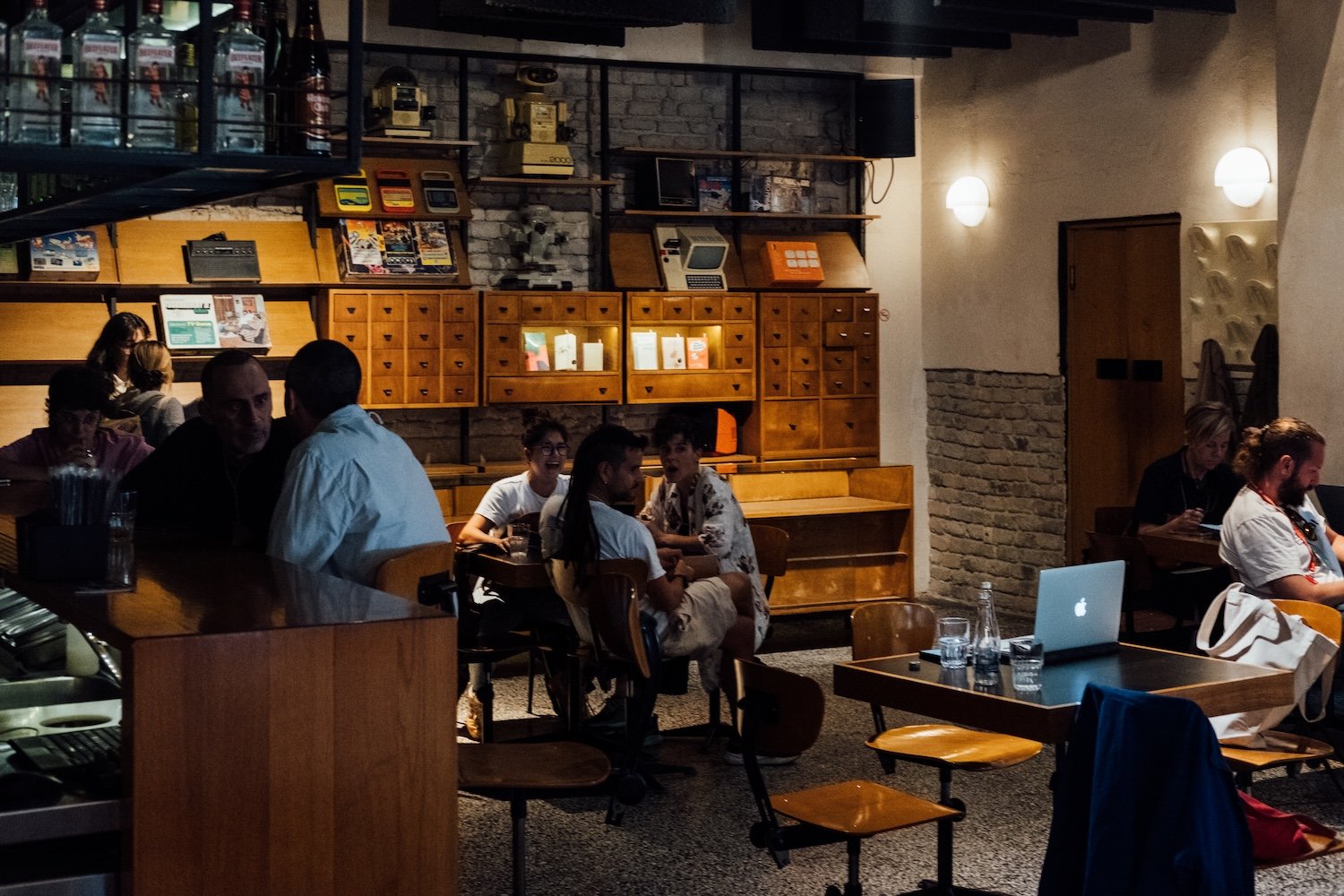
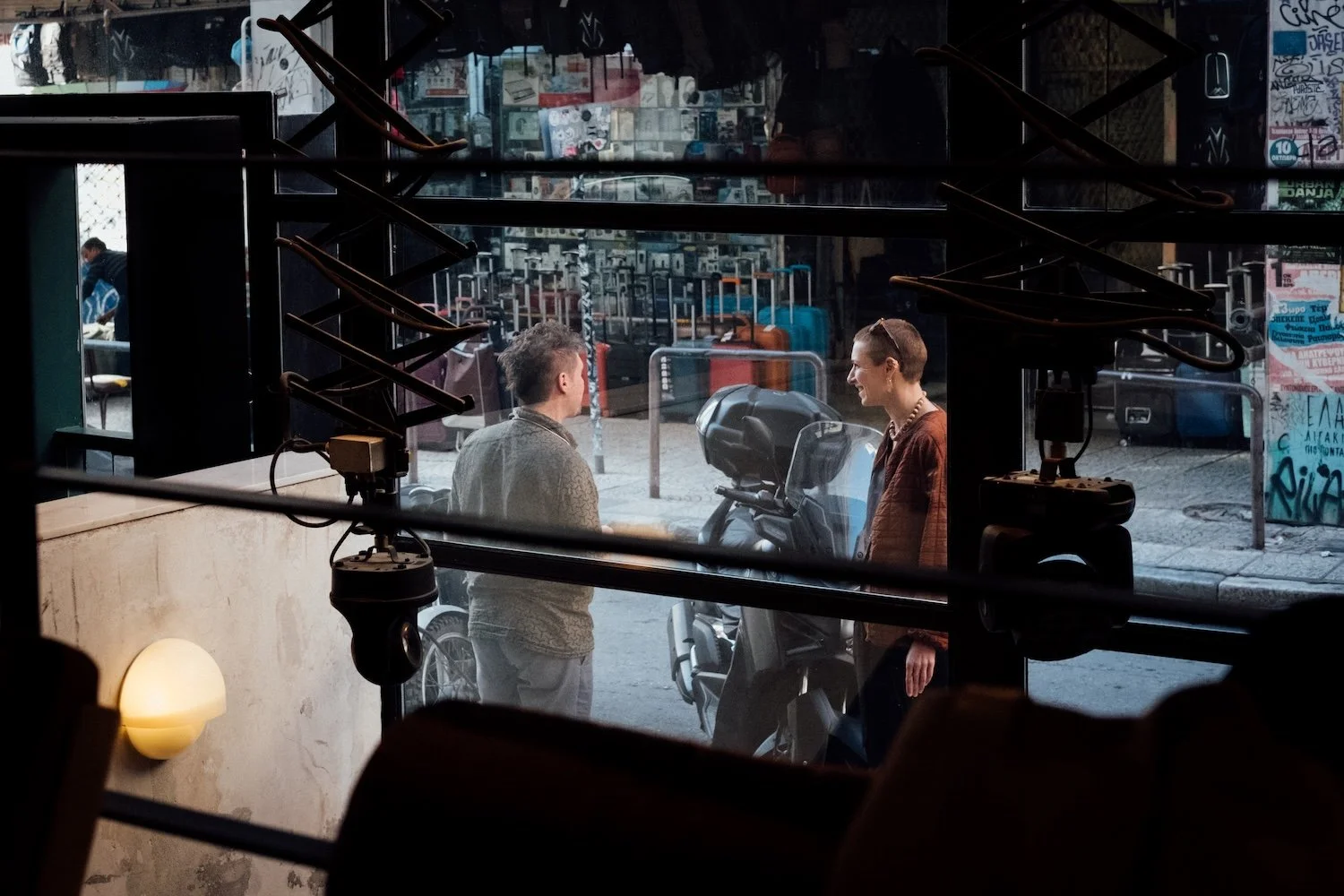
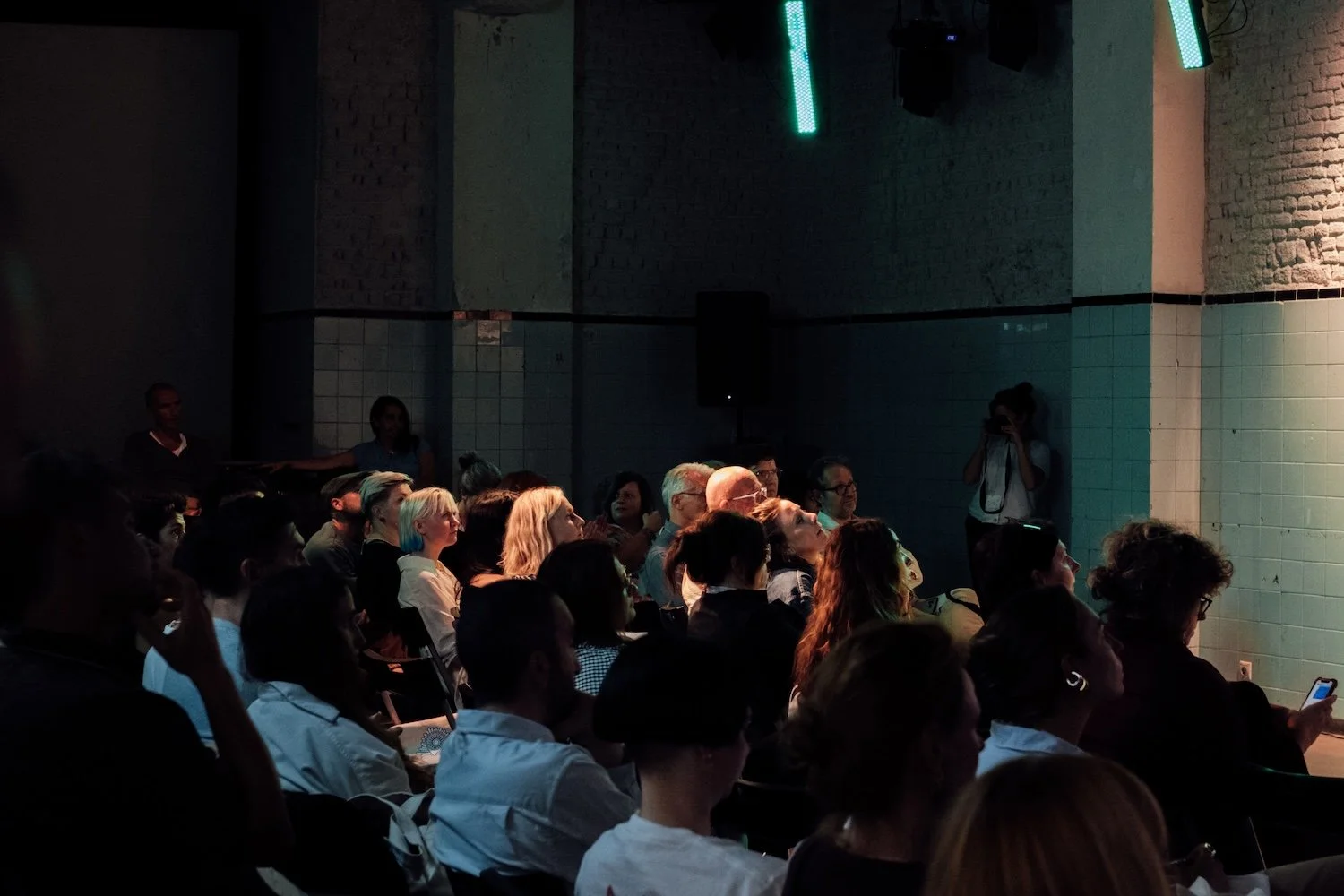
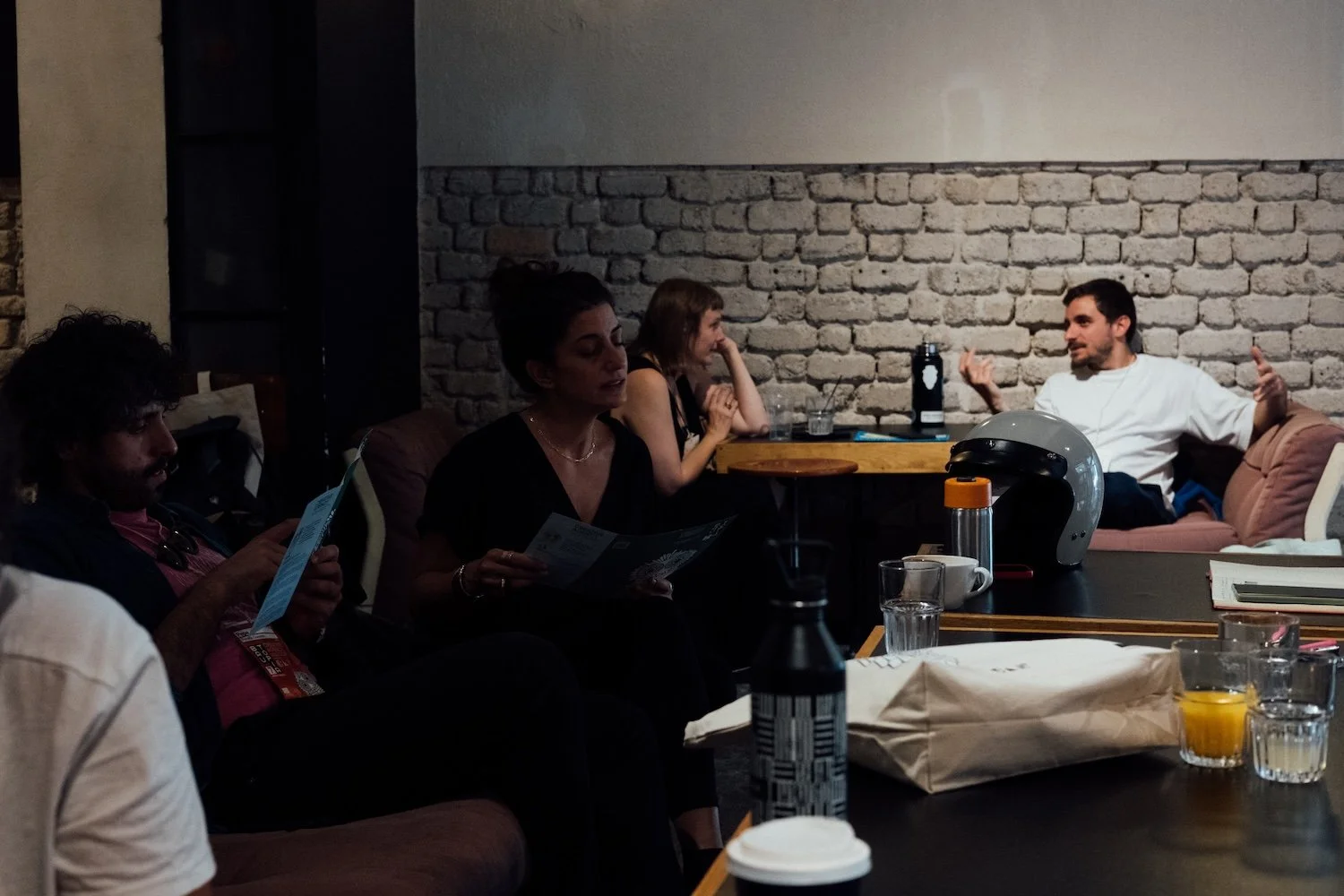
Bautopia vibes at Romantso
ECHN Veterans Esra (Originn), Tânia (CRU), Marina (Culture Hub Croatia) and Nana (Nova Iskra)
Sonotopia kicks in
After the afternoon events at Romantso, I headed home for a little rest before rejoining the crew for the SONOTOPIA evening agenda. We were particularly excited with the prospect of the Pierre Bastien gig at Bios and Jay Glass Dubs and K.atou dub sets at Romantso.
After walking back to a restaurant just a few steps from our apartment, to join a group of ECHN veterans for a feast of small plates (17.5€!!!), we rushed to Bios just in time for Pierre’s gig.
I confess I wasn't overwhelmed, I mean, it was very good, don’t get me wrong, but not just my thing I guess.
By the end of the show, and perhaps with arriving late for the Bethnal Greener gig in the back of my mind, I decided to leave the venue and join André already on his way to Romantso. It was a walk of shame, leaving the concert before time and passing in front of a crowded room. To my regret, the show ended less than one minute after I closed the door behind me.
At Romantso things were still warming-up when we arrived. There were just a few of us, with most of the crowd staying in Bios for Ivanol (our fellow ECHN member Ivan who, like many other members, is a musician), but slowly the room got filled with party-goers. Our friend Steven from Lisbon’s Arroz Estúdios, in town for a different conference, joined us there.
Closing days, cassette-tapes and small-town vibes
Friday was the closing day, with more events at Bios and Romantso. In the afternoon, I joined Tânia and Rita on a side-quest to find an imaginary open-air market, buy some souvenirs and have dinner in a neighbourhood restaurant more on the posh side (25€).
Tânia and Rita flew back to Porto on Saturday and Esra would stay a few days more and would be moving to a different hotel, so I had the morning more or less to myself.
After packing I headed to my usual flat-white and banana bread at Boken, where I met Linn, from ASA Armenia. We crossed paths with each other a few times during the week, but hadn't talked before. It was a perfect opportunity to do so.
By then, the first post-Bautopia open-calls started arriving to our WhatsApp group: taxi arrangements for the many trips back to the airport!
After a quick exchange, I arranged a shared ride with Katja from C-SPACE Berlin, having more or less one hour to meet her at her hotel.
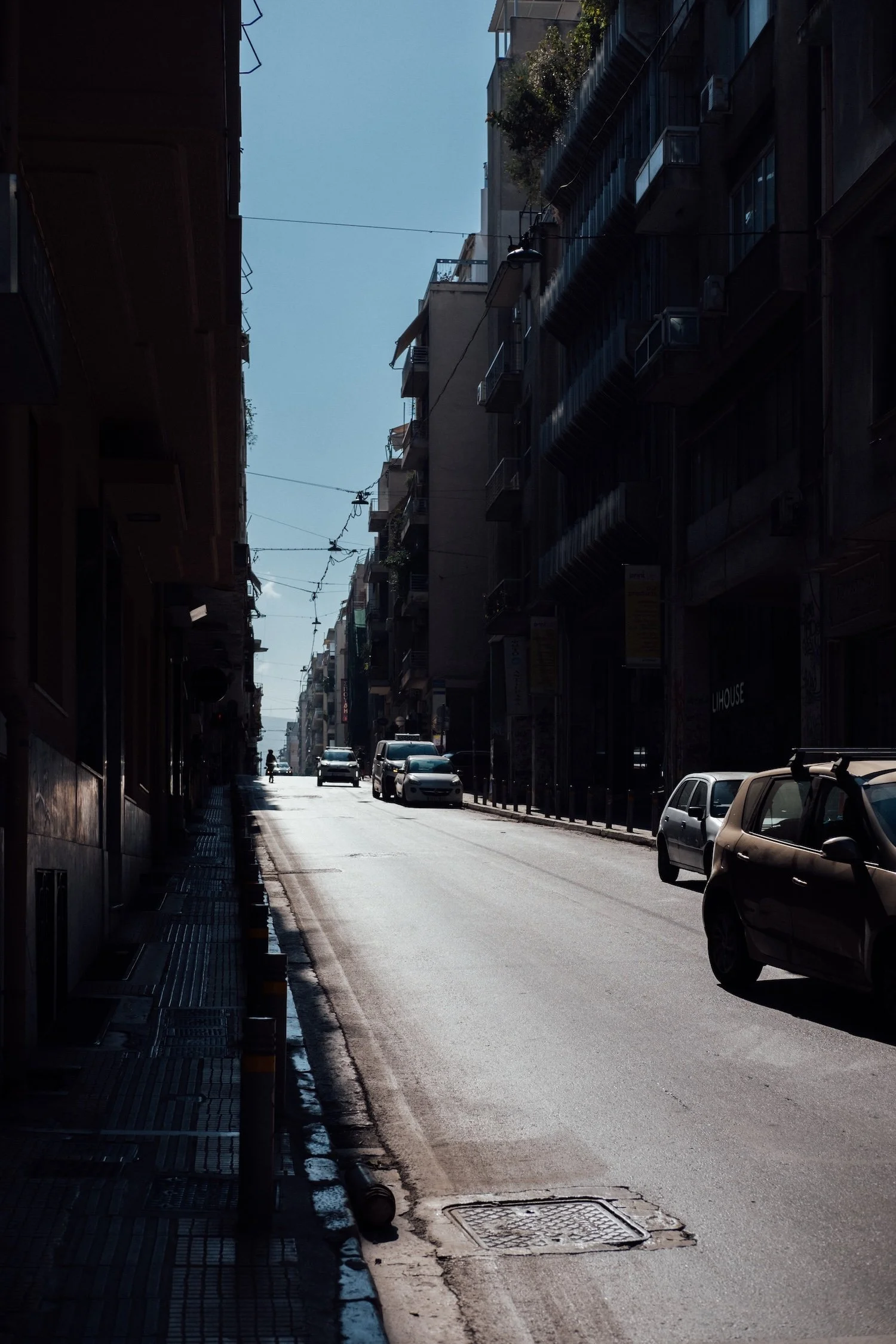

With some time to spare, I decided to take a recon walk in the neighbourhood and slowly move to meet Katja. Wandering towards the Central Market area, I found a small record shop, Liotropia, where I purchased two new old stock tapes (5€ both), with the price still in drachmas and the only souvenir I brought home.
Lately I’ve been listening to a lot of tapes. Cassettes are way less expensive than vinyl, whose purchase I nowadays reserve to the things I really want to add to my collection, and are a fun way of financing and getting to know new music from more underground artists. I chose these two tapes, remixes from two then-popular pop acts, driven by a certain nostalgia, taking me back to pre-teen years in the late 80s, when acid-house turbo-charged an entire generation’s hormone development. The shop owners were a Greek-Cypriot couple, and I stayed a bit to chat and talk about the lovely Nicosia, where I had been last year for the ABR Festival.
Back on the move, I bumped into Hugo and Arthur, the Franco-Romanian connection, who were having breakfast nearby, with time for a quick farewell before rushing to meet Katja. Small-town vibes I guess.
When I arrived, one minute earlier than planned, Katja and the driver were already waiting for me. The hour-long trip to the airport was perhaps one of the most rewarding moments of the entire week. In one of the sessions I listened to a Katja’s talk about her experience in Asia under an ECHN exchange programme, which kept me dreaming and thinking long after it was finished. During the trip, we didn't stop talking, finding parallels in our work and mutual interests, leaving with the promise of keeping in touch. If you haven't yet, I strongly recommend reading her marvellous LinkedIn personal summary of the Athenian Bautopia.
I finish this post a bit nostalgic and longing for the next Bautopia, but profoundly energised with the prospect of contributing to a deeper connection between our communities. More on this soon!