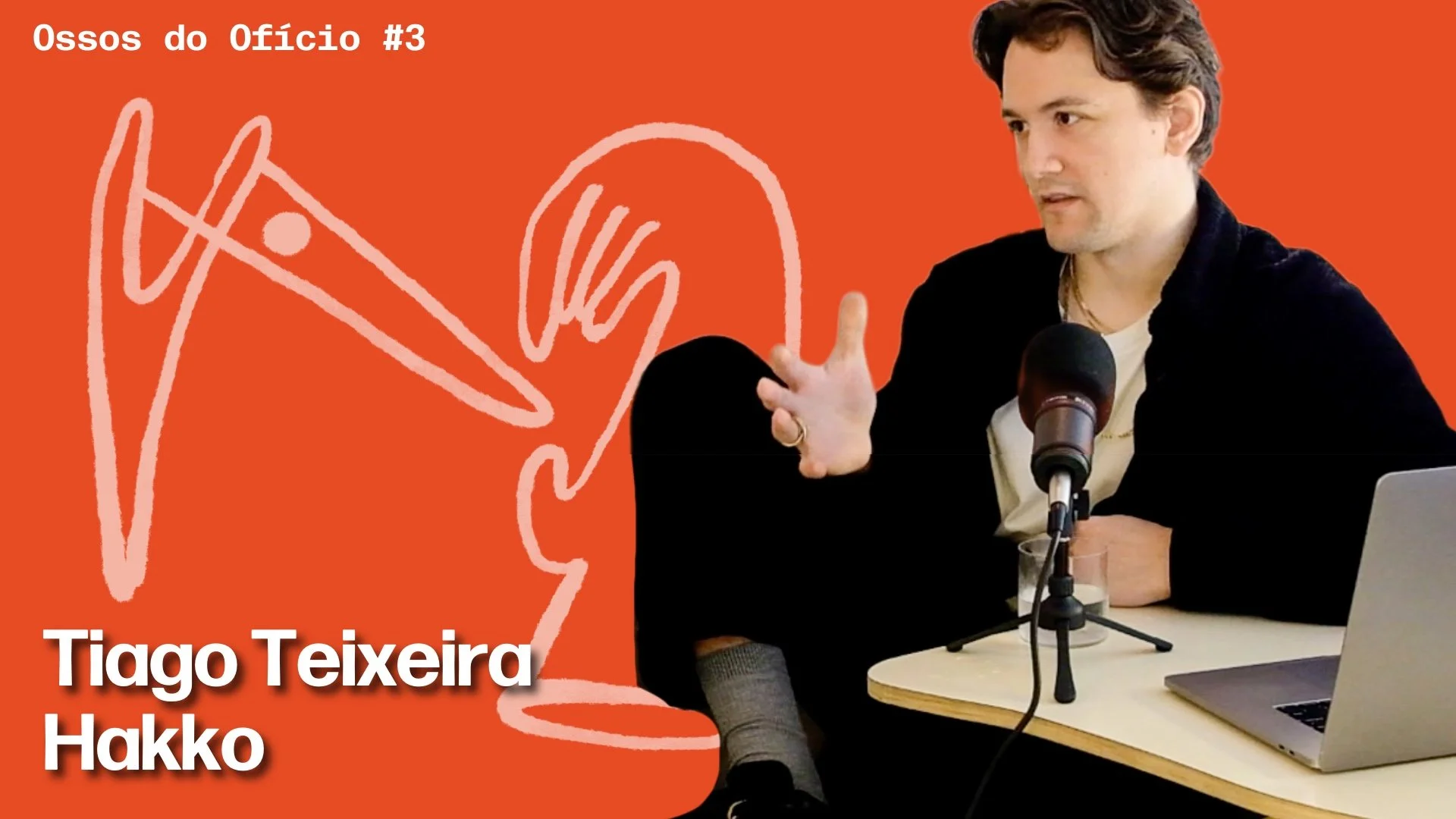
This post is a translated transcript from the third episode of our recently launched podcast, Ossos do Ofício (< click to listen).
In this episode, Miguel Barbot talks to Tiago Teixeira, chef and founder of Hakko (you can read ou business case with them in this post), about the hard work and the passion it takes to grow a restaurant business that opens only five days a week and runs a single shift.
Hakko opened in 2022 on Rua do Rosário, right in the heart of Bombarda, Porto’s creative quarter. It is a café, bakery and restaurant. Almost everything is made in-house, including the coffee, which Tiago roasts at his own Avalanche Coffee Roasters.
Over the episode we talk about the business decisions behind a small space with its own production and tight margins, and about the plans for the years ahead.
You’ll hear answers to questions such as “to scale or not to scale?”, “how do you invest in quality without the ‘fine dining’ label?” and “how do you train and manage a team in a sector marked by extractive and toxic practices?”.
You’ll also get to know the very particular working model Tiago has chosen for Hakko.
And there’s a little gossip thrown in: Tiago tells us how a boy from Arcos de Valdevez, a small town in northern Portugal, bored in a summer job while deciding which academic path to follow after secondary school, fell in love with cooking on YouTube and decided to build a career in it.
Here you can find a Portuguese transcription of this episode.
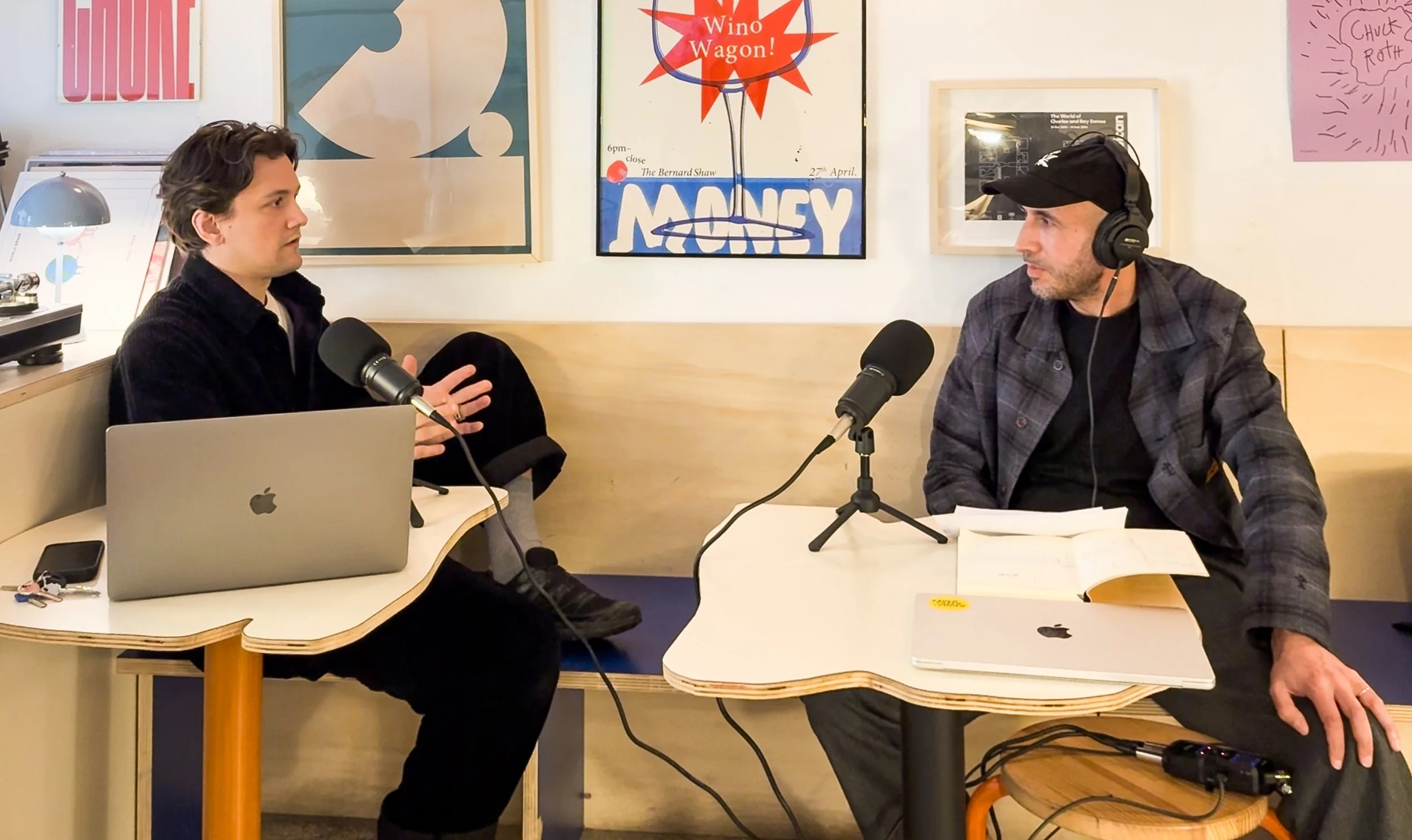
MIGUEL Welcome to Ossos do Ofício.
TIAGO Thank you.
MIGUEL I'm really pleased to have you here. In fact, this is also a project I watched being born. We already knew each other from the days of Época, we already knew each other from Velo Culture, and I've been following what you've been doing over the last few years closely, with great pleasure and with a great, great deal of admiration. So, Tiago is the person behind all of this, from imagining it to getting it to where it is now. Would you like to talk a bit about your path? What happened before?
TIAGO Going quite a way back: when I was at secondary school, I took a gap year because I didn't really know what I wanted to do with my life. I was torn between Mechanical Engineering and Architecture, which are still two things that interest me today, but that I don't pursue. During that break I was working as an administrator at a language school, and there was a very long stretch when I had nothing to do, but I had to be at the school in case someone came in. During that time I started watching cooking videos, specifically Gordon Ramsay. I found it really fun at the time. I started printing out the recipes, organising everything neatly, and I started cooking almost every day at home for my parents. That went on for almost a year. Towards the end of that year, someone told me I could make a living out of this, which wasn't something I'd ever considered, because Arcos [de Valdevez] is a small town and the mentality is quite different from the city's. Normally, the people who end up working in kitchens are people with fewer qualifications, and the work is much more traditional. The style of food… and it's very hard work. Often from morning to night, because restaurants open for lunch and dinner.
MIGUEL And that whole range of split shifts ends up being a bit… And it's not just in Arcos, is it?
TIAGO Yes, yes. It's a family system, family ecosystems, and not only that. Big restaurants run by famous chefs also play that game a bit, which is a bit… How do you say it? I can't remember now.
MIGUEL Exploitative?
TIAGO No…
MIGUEL Toxic?
TIAGO Toxic. Yes, yes, yes. In terms of hours, too.
TIAGO I came to Porto, I studied here in Porto and then I went abroad to do an internship.
MIGUEL What did you study? Why did you come to Porto to study?
TIAGO Well, it was what they told me I could study, and I went along with it. I had no idea. But I wanted to come to Porto, it was also close to home and I had family here. They had a flat where I could stay, so I was lucky enough to have much more affordable rent. It's more or less in Matosinhos, and I came into Porto every day. At the end of that period I did my internship, which was what interested me most: going abroad. I thought I was going to emigrate. I went to Stockholm, it was my first choice. I did my internship there and came back. I didn't want to stay. Then I looked for work here, before trying again to go to Copenhagen to do a few short internships there. At the time an opportunity came up to go there. In that in-between year, I don't know, I got job offers that, looking back now, are absolutely ridiculous. I won't name the places. I got a job offer of nine hundred and something euros. As a first job, it seemed like a dream to me. This was seven, I've no idea… ten years ago... More than ten years ago. And I thought: wow, first job, I'm already going to earn nine hundred-odd euros, how cool! But then, during the interview, they explained what the job and the hours were like. Basically, you came in at nine in the morning to do prep and you did lunch service, as part of a team. Then there was the afternoon break, which right there in the interview they told me they didn't usually take, because there was a lot of work. So the idea was for me to work from nine until midnight, one in the morning, straight through, with only a break for lunch and dinner. Then I did my sums and it came to something like two euros twenty an hour. So the nine hundred euros weren't actually worth that much after all.
MIGUEL That was three shifts, basically.
TIAGO Essentially, yes. And I didn't take it. But someone did, you see? Because there's always someone who falls into that trap.
MIGUEL Yes, but those are the stories you hear. And it's not just here, it's everywhere.
TIAGO Yes, yes, yes, yes. It's the kitchen. There are better kitchens and worse ones. And it's also up to us, as professionals, to fight against that a bit, although it's hard, because sometimes you simply need the money at all costs. But it's important to report these places and make them visible, because that visibility ends up cancelling out the possibility of them carrying on doing it. In fact, Noma is blowing up right now because of that very situation. Not just for not paying people, but for the environment being extremely toxic and violent, which is quite sad. But maybe this bubble bursting, which is now starting to include other restaurants, and which is becoming a kind of black hole, will lead to better workplaces. Funnily enough, hospitality, at least mine, maybe my bubble, isn't what we keep reading about and what I keep hearing on podcasts.
MIGUEL But this is something we'll talk about later on: a somewhat different way of looking at the kitchen, at the toxicity of the kitchen, at the attitude and at what the business itself is. In other words, questioning the foundations of the industry, of what is supposed to happen.
TIAGO Yes, yes, absolutely. Absolutely.
TIAGO And then I came back to Portugal because an opportunity also came up, which was opening Época.
MIGUEL Working for yourself.
TIAGO Yes. It was a mutual decision with my partner at the time. I think it was because of that and also to try to add something to Porto. And daytime hours give a better quality of life for us and also for the people who worked for us. Well, then that phase passed, I opened Hakko and I've kept that mindset. We open five days a week. We close for two consecutive days. The staff's days off are two consecutive days, and not a day and a half off for every five and a half days of work, because that's still something that exists in the law. I don't really understand how, but it does: you get a day and a half off. There are no split shifts. Everyone works their hours in one block, with the appropriate breaks. I'm very flexible about that too. Sometimes they even work fewer hours than scheduled: instead of working eight, they work…
MIGUEL You already had that at Época, and it's the model that has now carried over here.
TIAGO …and that's fine by me. As long as the work is done and the quality is there, I don't need to demand more, because people have to manage their own time, don't they? We have to be adults and be able to organise our lives a bit that way. So, as long as that's there, if they leave an hour early and manage to do everything to a good standard and as expected…
MIGUEL Looking at the ethic with which you ran Época at the time, and which still carries on, you bringing this here to Hakko also has to do with values, with the way you approach life, doesn't it? And a wider group of people increasingly thinks this way.
TIAGO Yes, there are more and more places with this way of thinking.
MIGUEL In 2022, months later, we were coming out of the pandemic. You thought about it for a while beforehand and decided to open Hakko. Was there a vision, at the time, of what it would be?
TIAGO The initial vision was quite minimalist, in the sense that I wanted to really explore the bakery side. It was something I'd become more and more interested in, and I was realising that I really liked working that way. It started in a micro kitchen I built inside the flat I was living in at the time, and it worked with weekend sales, for people who took a few things home, or some cafés that resold our products. That went on like that for… not a year, but almost a year. Meanwhile, this shop came up. The rent was affordable and it was something I could pay for with what I was doing at the time. So that was it. Then I started splitting my time between production and the building work, and eventually getting the economics to work: building the space in one go and then focusing on that alone. And then launching Hakko, once again in a very minimal way, on a very tight budget. We didn't have half the equipment we have today. So Hakko has been a reinvestment year after year. Initially it was supposed to be just the bakery. I had a very glamorous idea of running a bakery, being able to do the production and the service, serving in wine glasses and being really laid-back. Out of my own necessity, but also because I think the business model maybe wasn't that sustainable, or maybe in my head I was living in another city, I had to adapt a bit.
MIGUEL I don't think the models are that balanced, at least in Europe. Costs are high everywhere, there's a lot of competition, it's very difficult. You have specific models. It's easy if you own the space.
TIAGO Exactly. But yes, it's hard to take just one thing and do only that. It's also hard for me, because I need lots of different things in my life creatively. This way, I have everything that interests me: I have the coffee and drinks side, I have the bakery and pastry side and I have the kitchen side. All of that interests me.
MIGUEL It's a story very similar to that of many other clients we have, actually. This creative drive behind it, which makes a place like this come into being. It's very professional, but very do it yourself too. You're putting a lot of yourself into this, whether in the processes, in the kitchen, in what you offer, in what's essential in a restaurant, which is what people eat and drink, right down to the decoration of the space and the building of all this. In other words, there's no investor alongside with lots of money, there's no architect coming in to design the place, there are no consultants looking over the menu all the time.
TIAGO Yes. It's been a long process of improvement, day after day, month after month. Looking for where we can now take the next step in investment within what we have, which is a small space. I don't make the money to say: I'm going to open a second one next door, then I'll open a third and scale up incredibly. I'm not interested in that either. It's not the kind of expansion I'm interested in.
MIGUEL So the real fermentation isn't just the name…
TIAGO Yes, yes. The various ways in which I can expand Hakko, but at the same time taking into account the input of the people who come here. Sometimes I ask friends or closer customers, or I try to work it out myself, from a satisfaction point of view, what I can improve here. Then there are also personal sensitivities. We put in acoustic insulation that was absolutely unnecessary. However, for me it was very necessary, because I have that sensitivity. So we made that investment because we thought it would make sense, and I think it makes sense for the comfort this space is able to offer. And many other things: the way we think about the lighting, the food, the dishes, how things are served and presented. It's all of that. And that creative side then moves into a more demanding and more disciplined side, like the cost of things and the prices we charge, which also have to come into play, don't they? There are lots of things I'd like to do, but when I go to work out the prices, suddenly: I'd have to sell this for seven euros? That doesn't work. I can't do all of that. It doesn't make sense at the moment.
MIGUEL Later on I'll want to talk a bit about that side, not more technical, but more specific, about processes and costs. This is a low-margin industry, cash-intensive, people-intensive, labour-intensive.
TIAGO Yes. And even so, to keep specialised people…
MIGUEL Yes, who are even harder to find, with competition in the human resources market. It's a labour market with practically full employment, isn't it?
TIAGO And I think that, going back to the question of how most restaurants operate, over time people also get a bit fed up with and wary of the job offers. So it gets really hard to find people, because they simply aren't up for it any more, or they've already left the sector. People who were amazing cooks and no longer feel like cooking, because they can't live that life, because they don't know anything other than those restaurants that really do have that more harmful environment.
MIGUEL And are these people new to hospitality, people wanting to leave, or people who have never worked in hospitality and want to get in?
TIAGO Of course there are all the others in between, but there are a lot of people starting out, especially people coming from other fields, already a bit older, who no longer have the energy of a nineteen- or twenty-year-old kid…
MIGUEL Absolutely.
TIAGO …and who also don't have the experience of someone who knows how things work, who has been through it.
MIGUEL Your case is a bit unusual, isn't it? Because you had little time working for someone else... It was a lot of self-teaching, and you did most of the journey on your own, didn't you?
TIAGO I think it's fine to learn things on your own. I think it's great. There's no doubt the learning process ends up being longer. But I think what matters is the judgement you have to recognise: this is now good enough to go public. Until then you have to give it everything and fail over and over again. If you have someone come in and say "look, this is how you do this", and it's done, it's handed over, one day, when you have trouble making that recipe, you won't know how to fix it. The advantage of learning by yourself is that you'll fail so many times before you get there that, when you have a problem, you know exactly what it is. Or you'll be very good at figuring it out, because you've already made every possible and imaginable mistake to get there. So I think there's a certain advantage in not learning everything from a book, or in people not handing you everything on a plate, because that way it's easier to absorb the information and do it well. Even so, I really value someone who doesn't have the knowledge but has every desire to learn.
MIGUEL Is that part of these hybrid models? Well, not exactly hybrid, but these models that are a bit different, or quite different, from what people are used to. On the face of it, they're businesses for tourists. But when we get to know the people, that isn't what drives them.
TIAGO Yes, especially in this scene, in this small community we're part of.
MIGUEL The desire to do things for the people here, the desire to do things well, the desire to develop the city. It's very interesting, because these are people from a generation that has travelled and that has high standards, isn't it? But at the same time, it looks as if this place is only open for a few hours. People walk past and it hasn't opened yet, or it's already closed.
TIAGO Yes, yes, yes. We hear that a lot: "it's already closed, it's three in the afternoon". But we've already been working for eight or nine hours, I don't know, it depends on how busy it is. The team is organised that way. In reality, if I'm not mistaken, we're open for seven of the eight working hours in the day.
MIGUEL So, if you think that you have to serve the people who come in that day and produce for the people who are still to come, how do you organise that? In terms of the day before? Does it take a very good system and a lot of organisation?
TIAGO We pay a lot of attention to what we put on the menus and to how the dishes fit together in terms of how intensive their preparation is. If there's a dish that needs a lot of attention or many hours of preparation, the others have to be prepared in a more passive way. I don't know, maybe one requires cutting lots of things in a particular way, and that takes attention. Or it requires attention during service, because everything is prepared very much to order, whereas a roast is a bit easier to manage. So we always try to plan almost a kind of invisible layout, which helps us avoid falling into black holes. That's happened many times, mostly on my part, because sometimes I have this habit of being very creative and I really want to make these specific dishes, because that's what I feel like eating today and this week. And then, when I start service, I'm there, I won't say with my head in my hands, but with my heart in my mouth. I'm being honest: I don't have enough time or enough hands to serve this. Of course I manage, but then I start to feel: OK, this isn't affecting the quality of the food, because I'm making sure of that. However, maybe it's affecting the customer's experience, who instead of waiting five, ten minutes, waits fifteen, twenty. And that isn't ideal for me. So I have to manage that a bit: what's OK, what's my comfort level for someone waiting, so that I can be creative or not. And I manage the dishes a bit along those lines. And the same with the pastry, in terms of managing the oven schedule for pastry and bread.
MIGUEL So you have to have everything thought through.
TIAGO Yes, everything. It all comes down to that. It's a bit about rules and priorities, and you keep managing those things.
MIGUEL And which is more intense, lunch or breakfast?
TIAGO It depends. It's very random. Real Russian roulette.
MIGUEL That must be very strange for the kitchen, when you're thinking about lunch starting at noon.
TIAGO Yes. We try to have everything as prepared and organised as possible. For example, I don't have a specific job in here. I do the back office, I cook, I make coffee, I bake, wherever I'm needed. I lay flooring, I paint walls, I don't know, whatever's really needed. I run electrical cables. That's more or less it. For example, tomorrow, Tuesday, we're launching a new menu. Tomorrow I already know I'll mostly be in the kitchen making dishes and helping out the kitchen. Maybe by the middle of the week I'll be a bit freer: we'll taste new coffees we want to have here at Hakko, or I'll help develop a new dessert or a new pastry we want to have. So my week rotates like that. That's how you manage it. I keep trying to plug those intensity gaps that sometimes appear. Because sometimes that's how it is: you think Thursday is the quiet day of the week and, suddenly, Thursday feels like a Saturday. And then you have to come in and sort that out and prepare for the next day, to make sure it's consistent for the customer.
MIGUEL And there are no ups and downs for you?
TIAGO There can be for us. For the customer, ideally there aren't.
MIGUEL It's complicated to have everything organised.
TIAGO I think it's a process. A stability that isn't stable.
MIGUEL Nobody manages to have a completely stable team.
TIAGO Yes, yes. I think it's very important to have protocols and systems behind everything. However, it's very much a question of time: you keep pace with the growth and you grow that way. That's why sometimes it's not even good to grow too fast, because you won't have time to put those things in place, those foundations. That can later affect your business as a whole, or even make it fail. So it's important to be able to grow in a disciplined way, to understand the costs of growth, when you should take the step and in which direction you're growing. I think that's more or less it. But yes, it takes a lot of organisation. Every day I focus on one more thing I can write down, organise and communicate.
MIGUEL Are you able to delegate yet?
TIAGO Yes, yes, yes. I think it's important to do that. It's not easy, it's very difficult. It took me a long time to manage to do it in the way I now think is right. I could still be wrong. I've done it in a very small way, thinking I was delegating, but in reality I was being a total control freak. I've done it in a very extreme way, which was: let's see how this works without me being here, I'll just do back office and come in to say hello. I even spent a period abroad. I left everything organised with the team, but it depended one hundred per cent on the staff being organised and managing to deliver. And it went well. But there you go, everything has its costs and you have to think about that a lot.
MIGUEL And the advantage?
TIAGO The advantage, the importance of doing that, of sometimes stepping back and delegating, is also being able to see from a third-person perspective what's happening and understand where you need to act and where you need to improve. Because if you're right in the thick of it, you basically won't be able to see the same things. So I think those step-backs are important, even if only for periods. Like: right, now I'm going to spend two weeks a bit more in the background, doing other things, but I'll keep an eye on it and see what happens to the place. It's about understanding what the customer feedback is, what they feel has changed or not. It's a bit about manoeuvring that and also understanding what expectations people have.
MIGUEL There's a very fine balance here between creativity, organisation and service. In other words, if it's already hard to run your business, having managed to balance all this really takes a lot, a lot of different skills and styles, which are acquired in very different ways when you're delegating. What makes you more nervous: the front-of-house staff, who are the face, or the kitchen staff, who guarantee you consistency? I mean, consistency matters in everything, including service. The experience can't be different, or too different, when you're not there…
TIAGO I don't know if I can pick one. I don't know if I can pick one. If I really have to choose, I think the front-of-house staff end up having a more important role, because, if there are mistakes, they're the people who will communicate or correct them, and they're the ones who'll be the face of it. So it's very important to have that ease and that openness to talk to customers and be able to see: look, this didn't go so well. And try to get round it and turn a potentially bad experience into an excellent one, or at least neutralise a bad experience. I feel that's very important, not least because sometimes I'm in the kitchen and there are things happening in the dining room. If I'm around and can sort it out, I do. But the first impact will always be with the people working out front.
MIGUEL Are there five or six of you now?
TIAGO Six including me.
MIGUEL And different personalities, different egos, creativity. But is that a good thing? Is that mix positive?
TIAGO Yes. As it happens, over the last two years, and especially with the current team, I feel there's a really nice bond in here. It feels like family. There's loads of joking around, but at the same time everyone can tell there are moments when that's not possible. And I think being able to be in the thick of it, do a good job and have a laugh at the same time, that's perfect. That gives the place a great atmosphere, because in reality it's our dynamic that gives the place its atmosphere. Of course having more or fewer people in here changes things, and the kind of customer you have also changes a bit how the atmosphere feels. But above all I think it's the staff. If we were all here in a bad mood, nobody would walk in and leave in a good mood.
MIGUEL The day I walk into the office in a bad mood, it's an atomic bomb in there. When you feel like that about life, something needs to change. Your whole identity has been tied to work for so many years. That's the direction we're heading in, isn't it?
MIGUEL Right, we worked together two years ago, then we became friends. We already knew each other as customers for some time. Back then there were challenges, remember? You had the counter at the back.
TIAGO Yes, yes, I had the counter there, roughly where you are, maybe.
MIGUEL There were challenges. It was very different. We didn't have this community aspect, which was always an important point: connecting people here.
TIAGO Yes.
MIGUEL There were issues with prices and profitability, that concern with understanding… We were at that stage when this was becoming something a bit more hybrid, even more intense, with this overlap of two meals very close to each other.
TIAGO Yes, yes, yes.
MIGUEL There were process issues: which areas to work on, what you wanted to create, precisely so as to be able to scale a bit. At the time you were still thinking about how this was going to grow and in which direction.
TIAGO Yes. And I think I understand that a bit better now. That process we did, of analysing the space and the strategy, was very important, and I still feel its presence today. Maybe I no longer look at those documents and that analysis so actively, but that thinking is very present in my decision-making. Before that, being a somewhat impulsive person when it comes to solving problems, it was like: there's something there, I keep putting it off and suddenly I have to deal with it. But maybe that isn't the priority right now. I think this analysis also helped me understand the business I had, its strengths and weaknesses, plan the future better, anticipate problems or potential problems and already have in place: if this happens, I have a mechanism ready to protect myself or work around it. So it changed the way I think in that respect. I'm a much more planned person and, when I need to sort things out, I can make a list of priorities, or follow a list of priorities. And when I don't know, I go to the sheet and see what I've already ticked off. Basically, the microsite. I go there and look: is this still a weak point I haven't solved, or is this something I have to solve, because there's always something you can do or that needs doing. There you go. And I keep a list of priorities, which is something I didn't have back then. It was a bit like: here's a problem, I'll fix it now. Now it's more: OK, this problem needs solving, but there's this one, this one and this one, which are more important right now. And that happens day to day, week to week. Sometimes I think this week I'm going to do one thing, then something new comes up and, OK, this is what's urgent, so the other thing moves to the following week, instead of abandoning something more important to deal with something I'd rather be doing. So it started to get a bit more organised in that sense, and I felt that Hakko started to evolve, to climb the ladder in a more intentional way. I think things are much more intentional, the way I think and the way I solve them. I have a thousand and one things written down, I have a sort of forever list of things I want to do. I go and pick from it when I can and when it makes sense, and not when I happen to have the right energy for it.
MIGUEL Now, with things more settled, so to speak, with the ideas more structured, how are you going to put your creative power, that drive you have to make new things, at the service of this place, this business, this audience, this community, this pipeline that's already under way? It's not quite the word, but: expanding, or creating scale here in a different way?
TIAGO I think that at the moment, at least, I'm not interested in expanding. Not in the sense of having more seats or more places. It's very tempting, because now, since I already have production set up, it's much easier to take out a loan, or save some money, and get a bigger shop, or open a second place in another location, or something like that. It gets easier because I already have a place where I can train people, I already have more stability. And, financially, it would probably be great. However, that's not where I see the way forward, because I think I still have a long way to go in terms of raising the quality of what we do. I'm still very dissatisfied. Maybe I'll be dissatisfied forever, I don't know. So I think now it's about focusing. That's what we want to do. Possibly the expansion will be more internal: creating new products, improving what we already have, carrying on improving the space. There's a lot here. Just a little while ago I went to sort some things out at the back, I went to put silicone on a window. There's a lot to do in here before I can split myself between places. And that split will also end up having a cost, and I still don't feel that cost is viable: me being split between two places. Potentially, that split would take away the attention I need to give this one, and I'd start to suffer, perhaps, in terms of quality, or in what I like, which is being here, being able to welcome friends, for example, or sometimes, during the week, being a bit freer and someone comes in and I can sit down with them and chat. I think those conversations are important. And if that disappears, because I'm running around from one place to the other, I'm not even sure I'd be as happy in my work.
MIGUEL Your model isn't all that common, for someone who keeps these hours and is focused on top quality. We're not talking about fine dining, but basically about everything being made to a high standard. They're not the same thing, are they?
TIAGO I think people confuse what quality is a lot. Perceptions, very often.
MIGUEL But you bring a large part of the production in-house, which also lets you work your margin in a different way and keep prices more affordable, with much higher-quality products, with only seven tables.
TIAGO Exactly. It's a challenge, those seven tables alone. We even have the idea, possibly, of fitting one more little table in here. There's still room for it, it doesn't become uncomfortable, but it's something that's been very carefully thought through and that I've already been testing. I've been sitting down, walking between the tables and seeing whether people will be comfortable that close together, and this, that and the other. But, in fact, when I do the maths, that table makes a huge difference to the business. So, once again, of course expanding in size works: if I were in a place with fourteen tables, suddenly it's one Hakko and two Hakkos, isn't it? That's a lot. And even so it's still a small space, if you think about conventional restaurants. But I think the essence of Hakko is also this: being small, being embedded here and it being almost like walking into someone's home. That's more or less it.
MIGUEL Being small, do you feel the seasonal impact a lot?
TIAGO Yes, and that's why we want to add a table, to help break up that flow a bit. A single table has a big impact on that. For example, in summer you have tourists and locals, all at the same time, all the time. Winter relies more on locals and more on lunchtime peaks. And when you have few tables, that peak isn't very profitable. Maybe, if I had twenty tables, I'd fill all twenty at lunchtime. But I only have seven. And if you're on a work lunch, you can't stand around here waiting for someone to leave. You've got that hour to eat. So it's like: it's full, and that's that. That plan of possibly adding a table also comes from trying to make the space a bit more profitable in winter. And in summer, by also making that table more profitable, those funds end up carrying over into winter, and it ends up being a bit more stable.
MIGUEL We're already at forty minutes, so let's rush to the final question: what was your fantastically creative moment that turned out to be a terrible idea for the business, if there ever was one?
TIAGO I don't think I've ever had anything that was obviously harmful. But sometimes, out of creative frustration, I really want to use certain products that aren't ideal because they're more expensive, or I want to make certain pastries, or I really want to make that dish with that ingredient that's no use at all. But it's important for us, creatively. So sometimes that cost stays: we have a pastry that doesn't make that much profit, or sometimes makes no profit at all, and we have it for a week, just to have fun and stretch ourselves creatively, personally and technically, and test our abilities. But there you go, sometimes these are things you decide on and they don't go so well, because when we look at it: this is really nice, but it's really expensive. And it also goes beyond our limit, because there's a limit to what we want to charge. If a pastry suddenly tells me it costs six euros, I'll have to set a much lower cap, and I end up cutting into the profits and nothing else.
MIGUEL Very good. I think that was a better closing line than the one we'd planned. So we'll leave it there. Thank you very much, Tiago.
TIAGO Thank you.
MIGUEL So, for anyone who doesn't know it, Hakko is here on Rua do Rosário, in the arts district, in Porto.
TIAGO Yes, it's a street that's constantly changing, with more and more new things. The number of hotels popping up here is a bit scary. Hotels, restaurants, everything.
MIGUEL But you were somewhere on the edge when you opened on this street, and now it's becoming surrounded by new things?
TIAGO Yes, that's true. It's good.
MIGUEL Thank you very much also to everyone who's been watching. We'll be back soon with a new episode.
TIAGO Thank you.