Words: Miguel Barbot Photos: Miguel Barbot
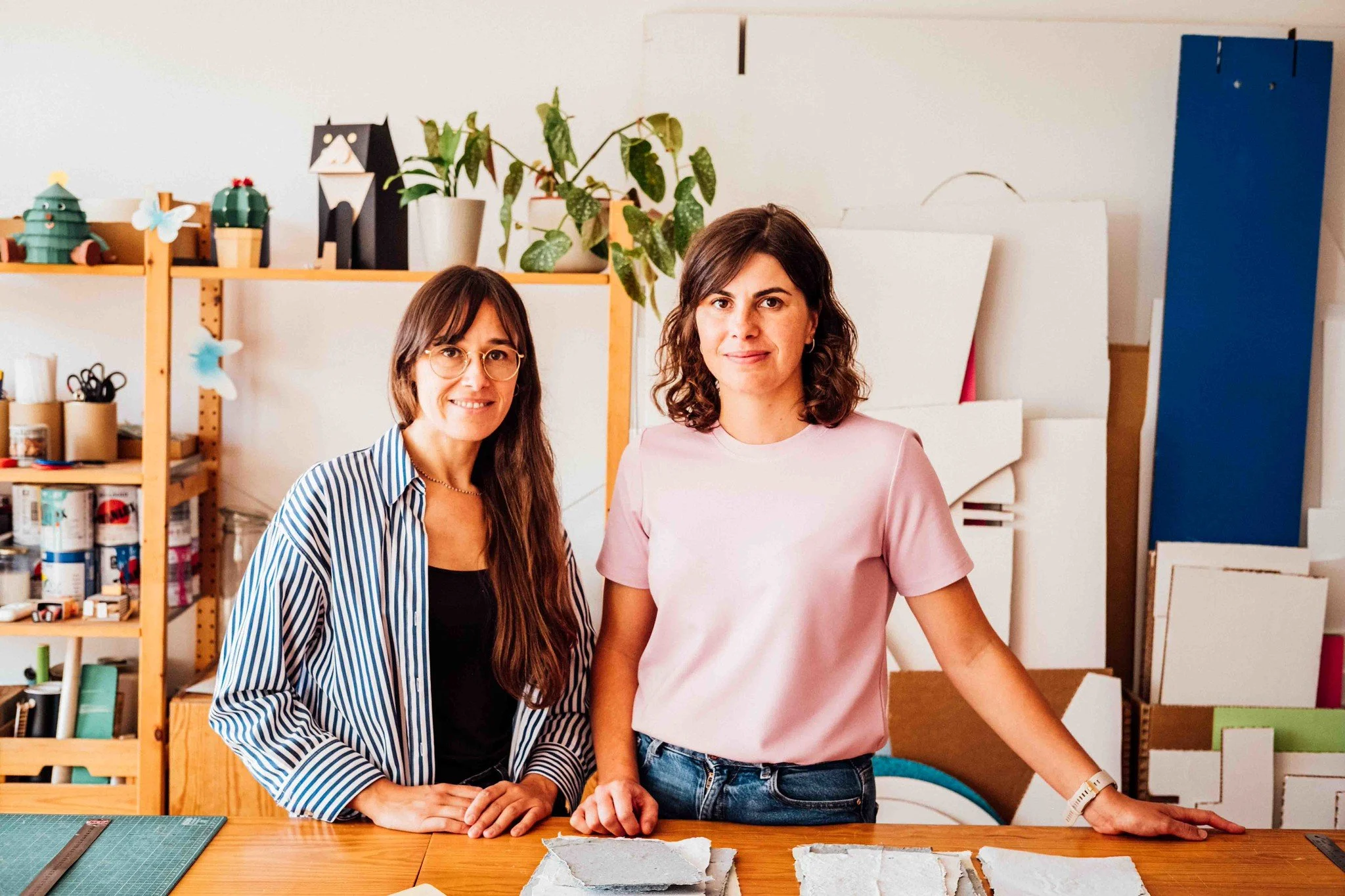
Sofia Farinha Gomes and Cidália Abreu
Early this year, Cidália, Joana, and Sofia, the founding trio of Oupas Design, visited our office to discuss a possible project to help them restructure the company.
The company was turning fifteen and was facing many challenges: Joana, a fundamental part of the trio, was leaving the studio to pursue new projects. Sofia and Cidália felt that this could damage their motivation, leading to extra work and less focus on their individual needs. The hard days of COVID, at this point, are no more than a strange memory for most of us, but are still very present in the company, which had to burn through most of the previous years savings to face two years with almost no work or clients and is still recovering to get to that comfortable position again.
For this interview, I met Sofia and Cidália at their new studio, occupying an entire floor of a modernist office building, just a short bicycle ride from our office.
This gem of a building, which was probably once home to a workers' union, is full of delightful details, such as the stairway's woodwork, the tiles in the entrance, and the spacious interiors flooded with natural light.
At the time of my visit, they were finishing another Hermés window display for Marcolino Joalheiros, a luxury retailer in Downtown Porto known for its exuberant displays and façade decorations during the festive season.
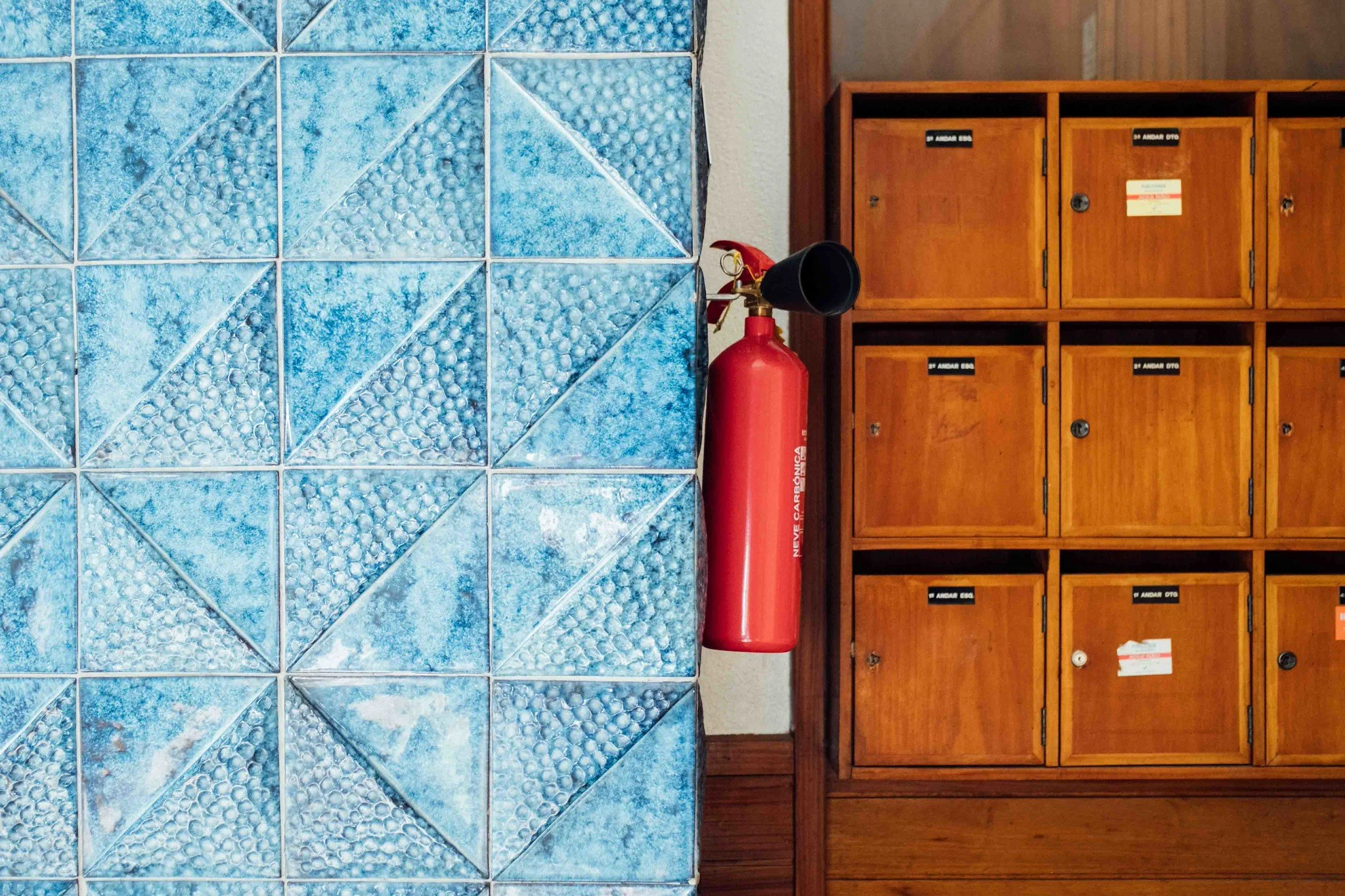
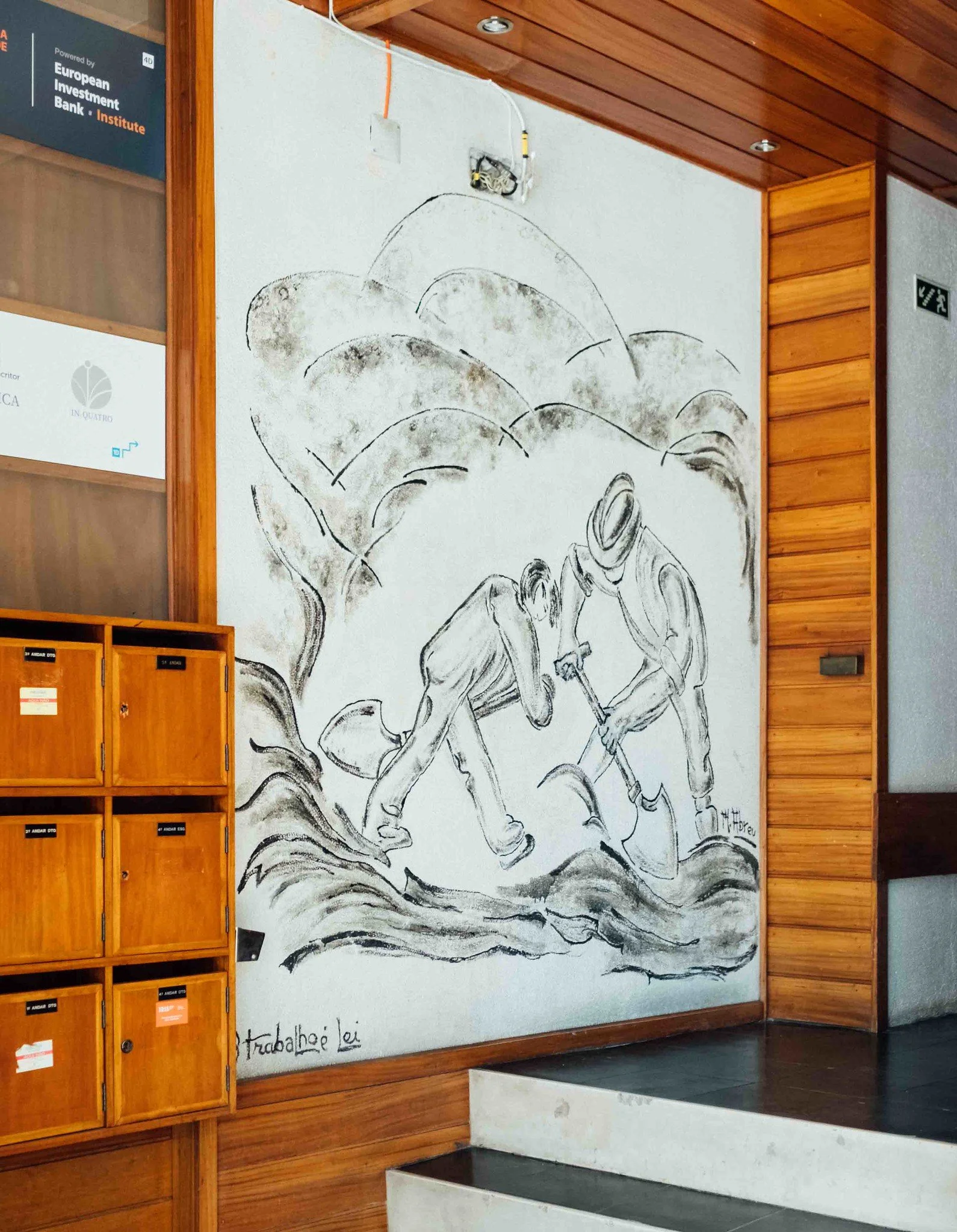
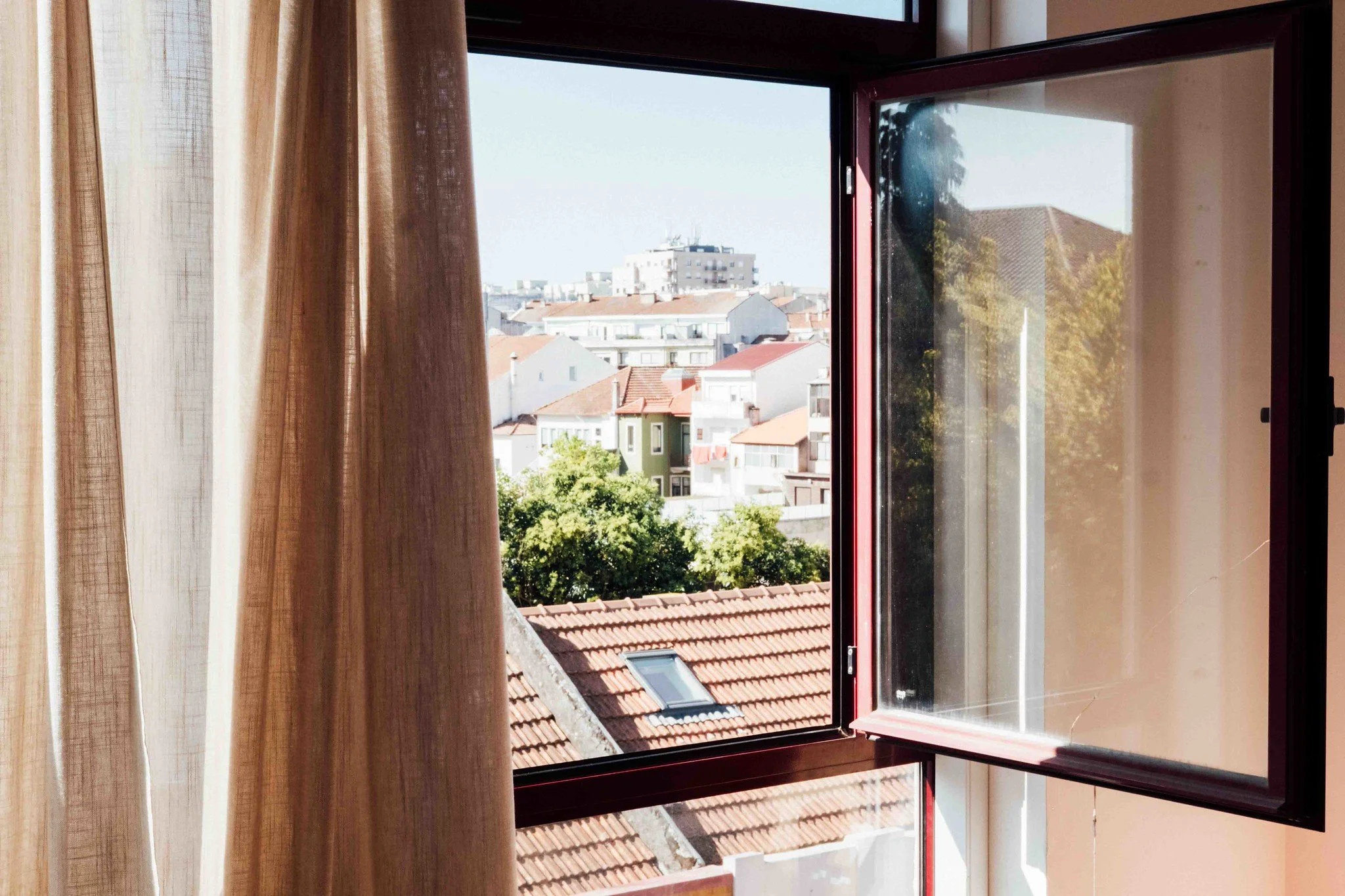
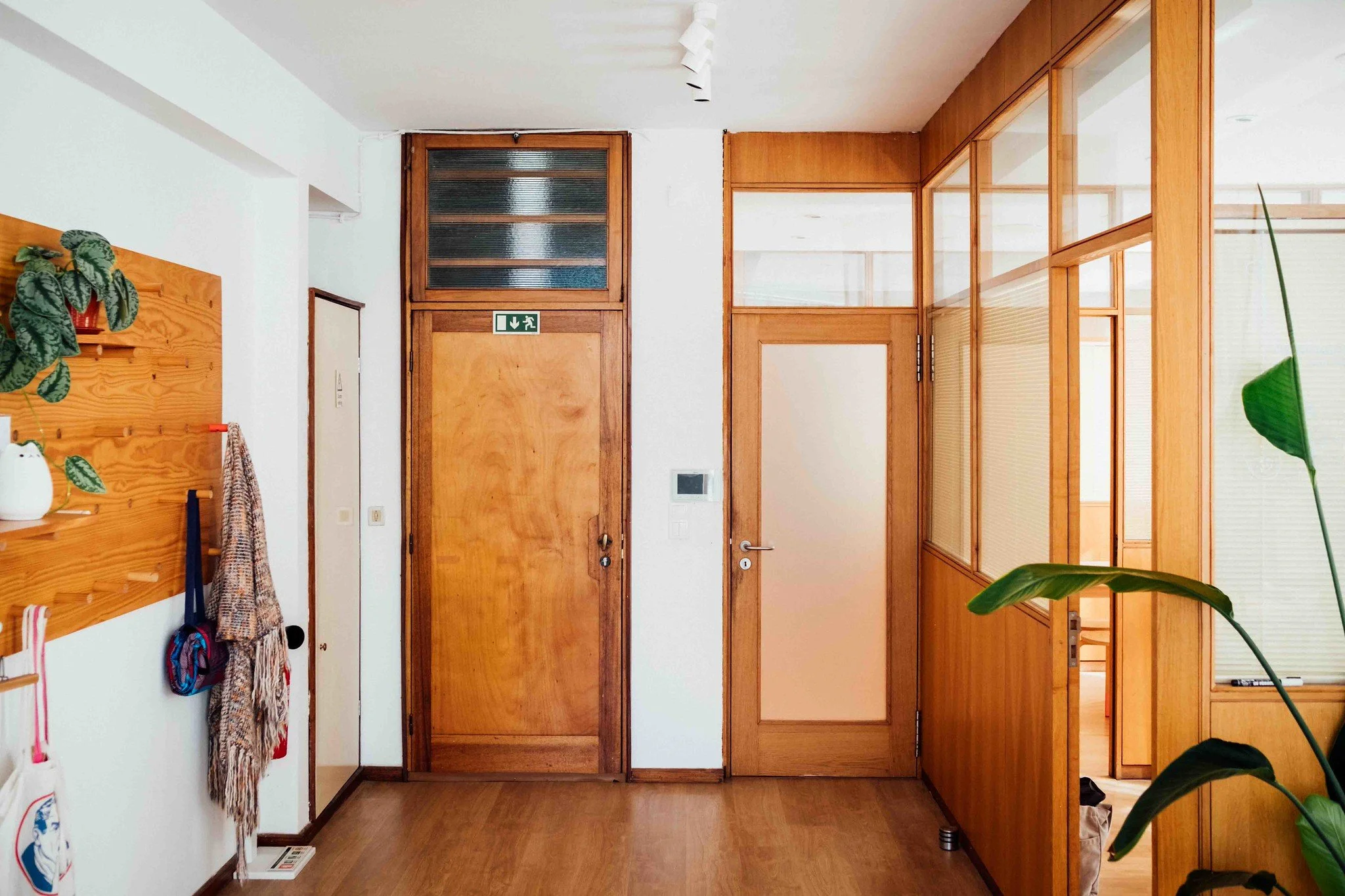
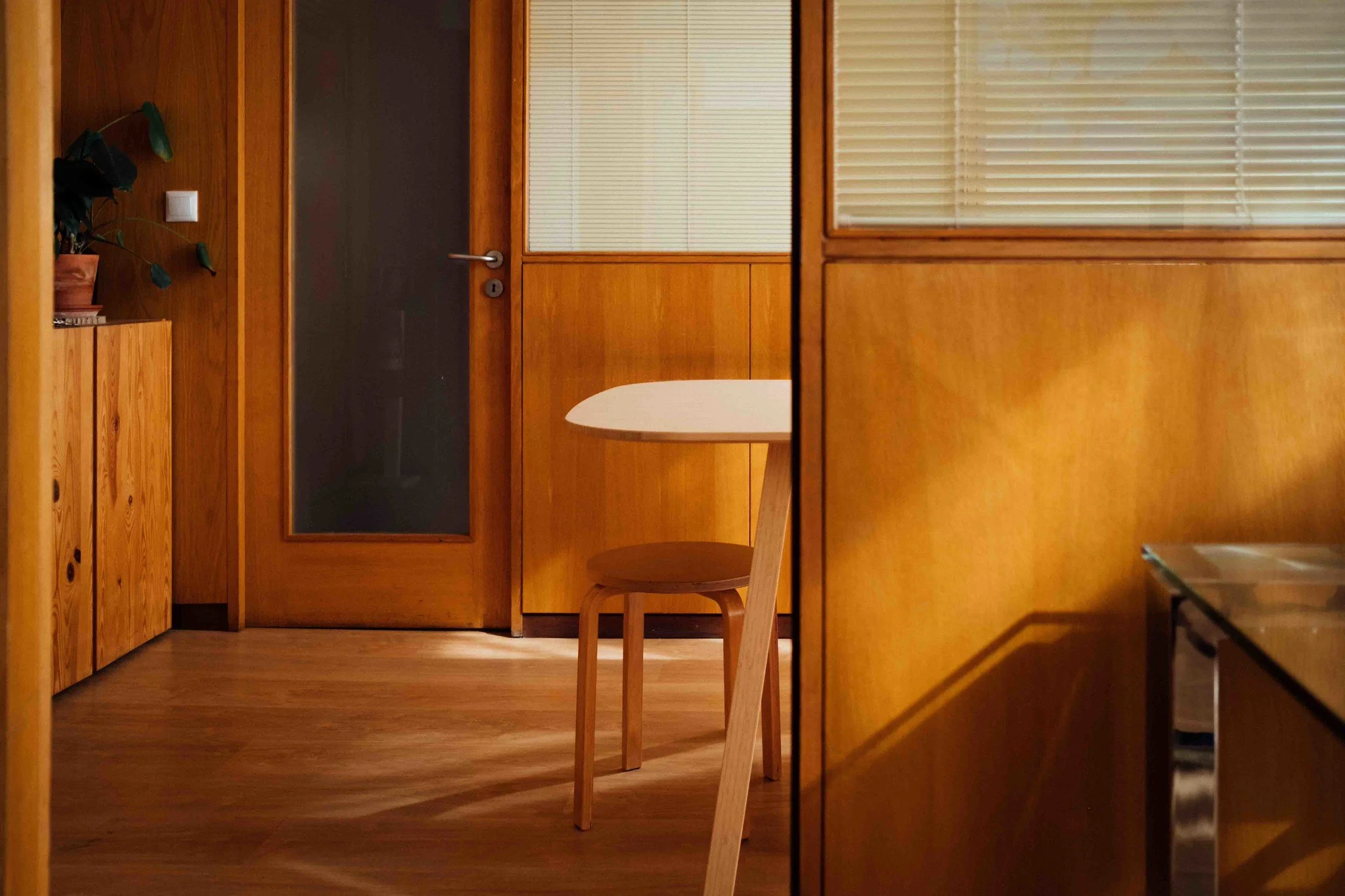
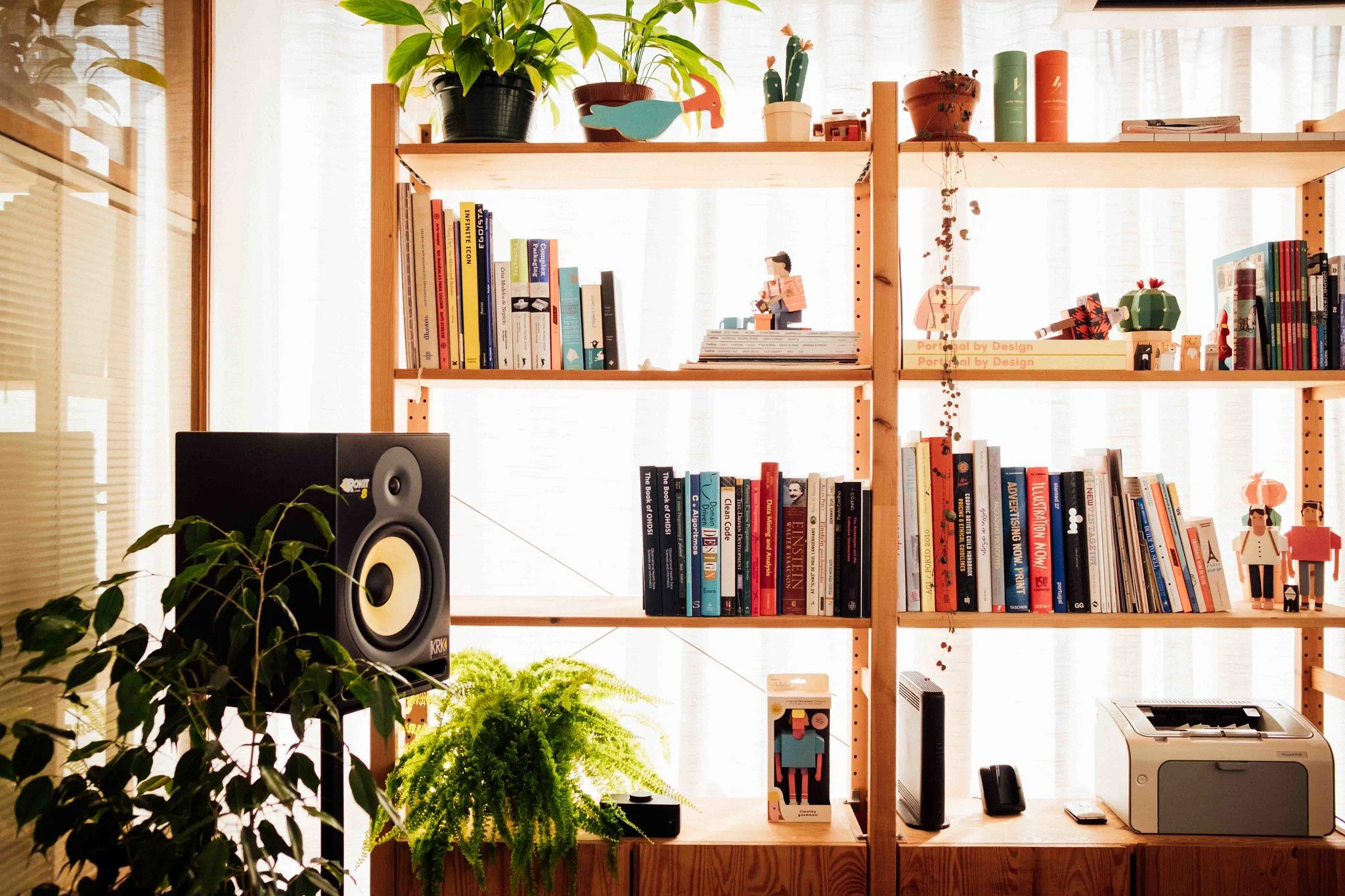
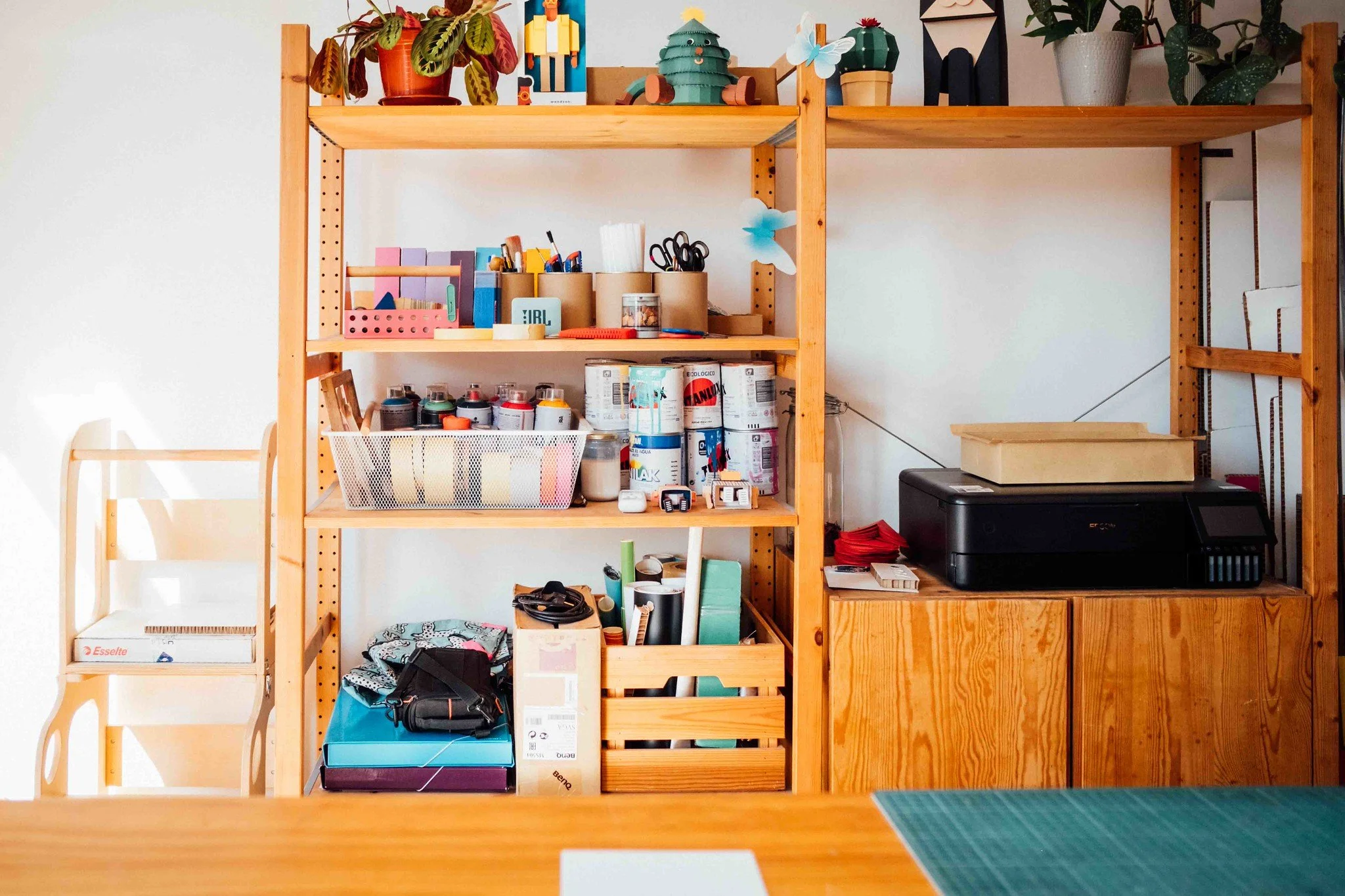
A few snapshots from the Oupas Design office.
Miguel: Let's start with the classic question: Now that we have finished this planning phase and the first part of Oupas' restructuring, which took a few months, what is on your mind now?
Cidália: Good question... What's on my mind now is the desire to do, to create, to innovate and to do more and differently. That's how I feel, and that's what I want and aspire to from now on.
Regarding the planning process and what we've been through here at the studio this year, I am energised and strong. Thanks to the work we've done, I've gained a lot of motivation. I've developed a strong desire to do things and the drive to make things happen.
When we met, you were at a very particular moment in the company. That was when Joana left, and you had to deal with two situations at once. You are running a creative business, which is, for all intents and purposes, very personal. One situation is more emotional: a person who has been with you since the beginning, who is a close friend, is leaving the project after 15 years of working side by side. The second is the practical impact that something like this has on the internal processes.
After the restructuring, with one less person, how is it working from a reorganisation perspective? When we met a few months ago, there was a lot of energy around processing the new reality and, let's say, understanding a bit what your work as a duo will be.
C: First, there is a more emotional side, and we are still trying to understand what our studio is without Joana and how we want to run it, what image we want to present to our partners, clients and community. Then there's also the practical side, right? We're still doing a bit of what we were doing before, but we're thinking, hang on, can we now go down a different path or not do certain things that we used to think were necessary? We're still in a discovery phase.
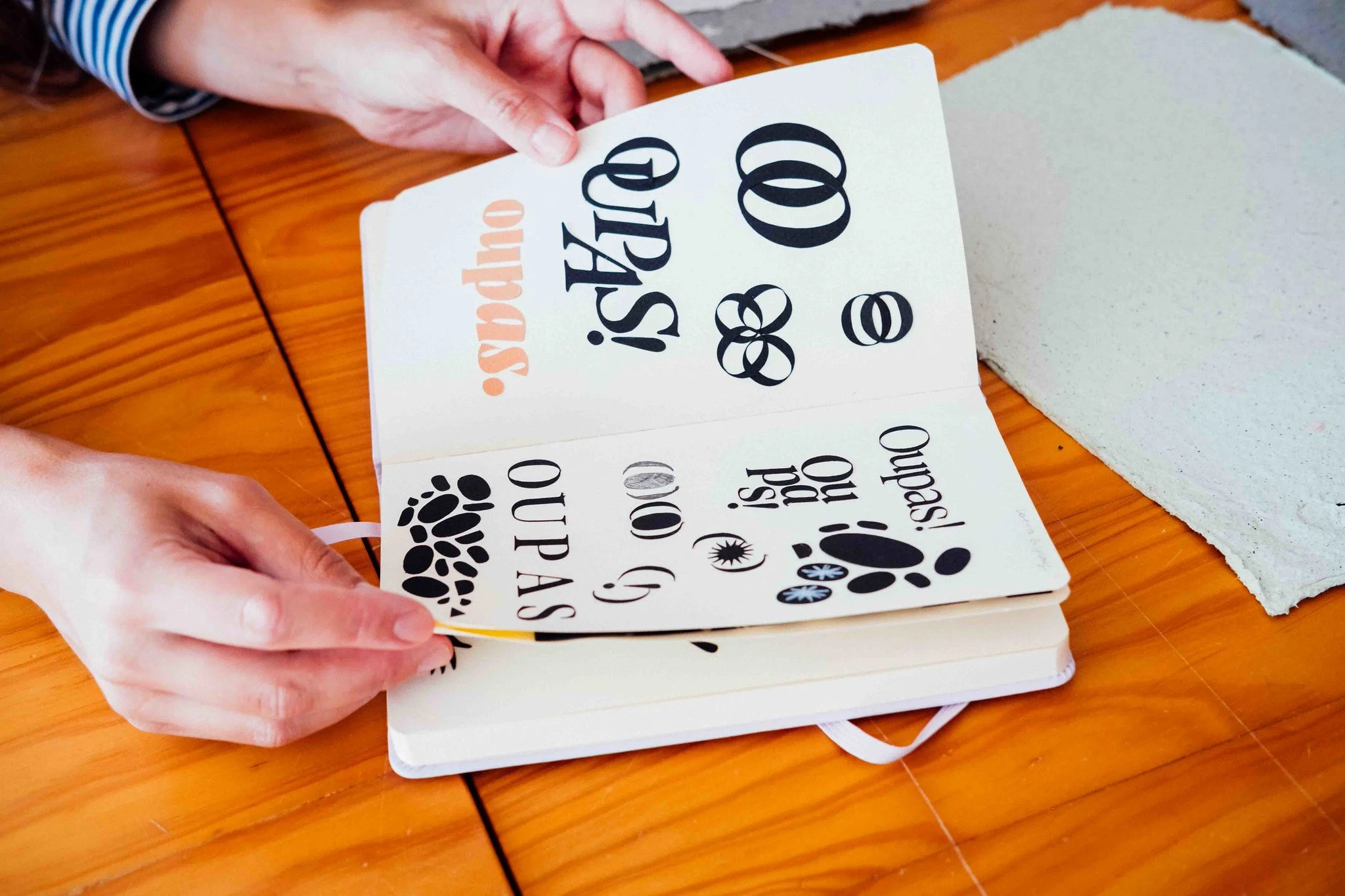
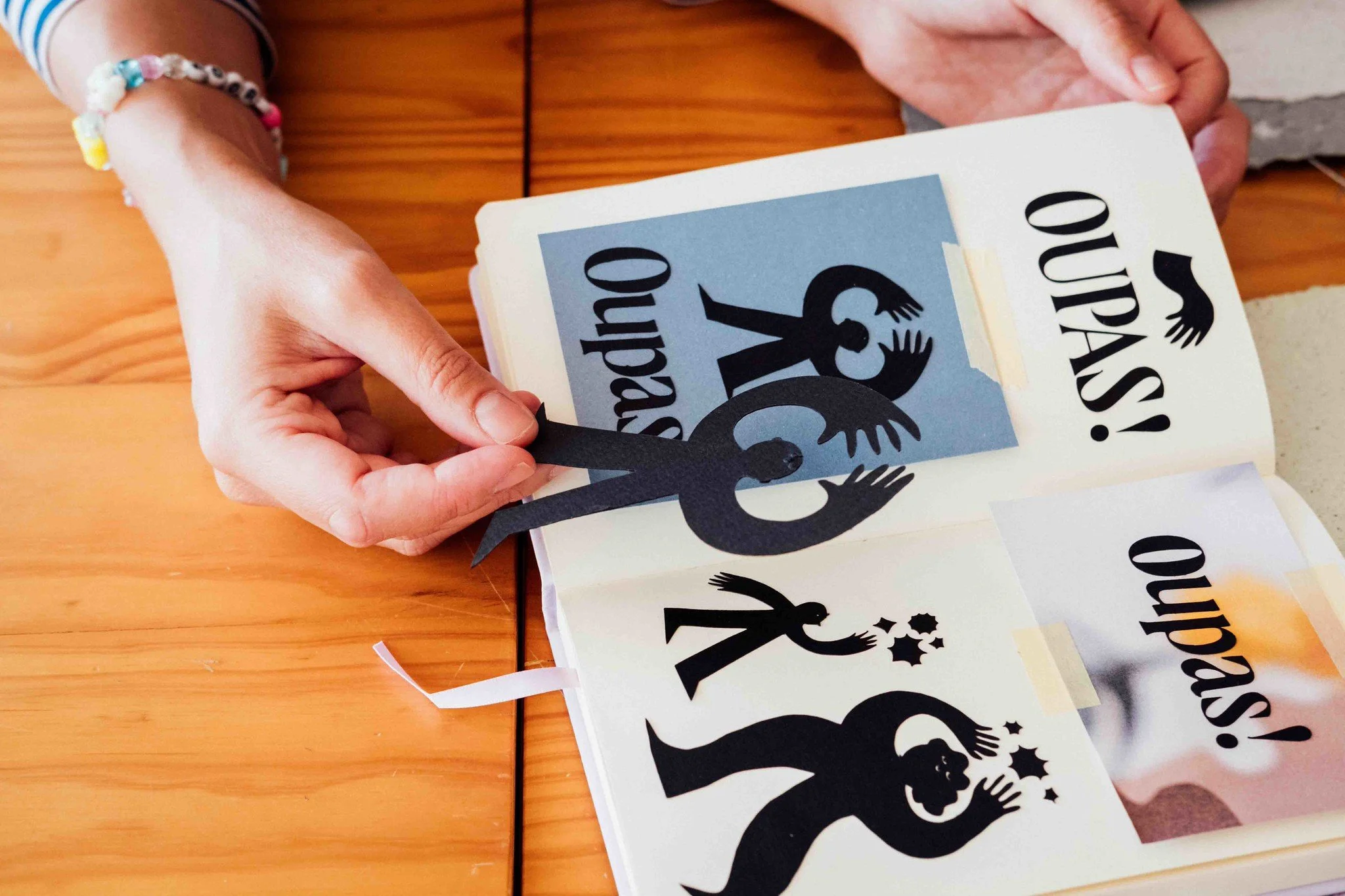
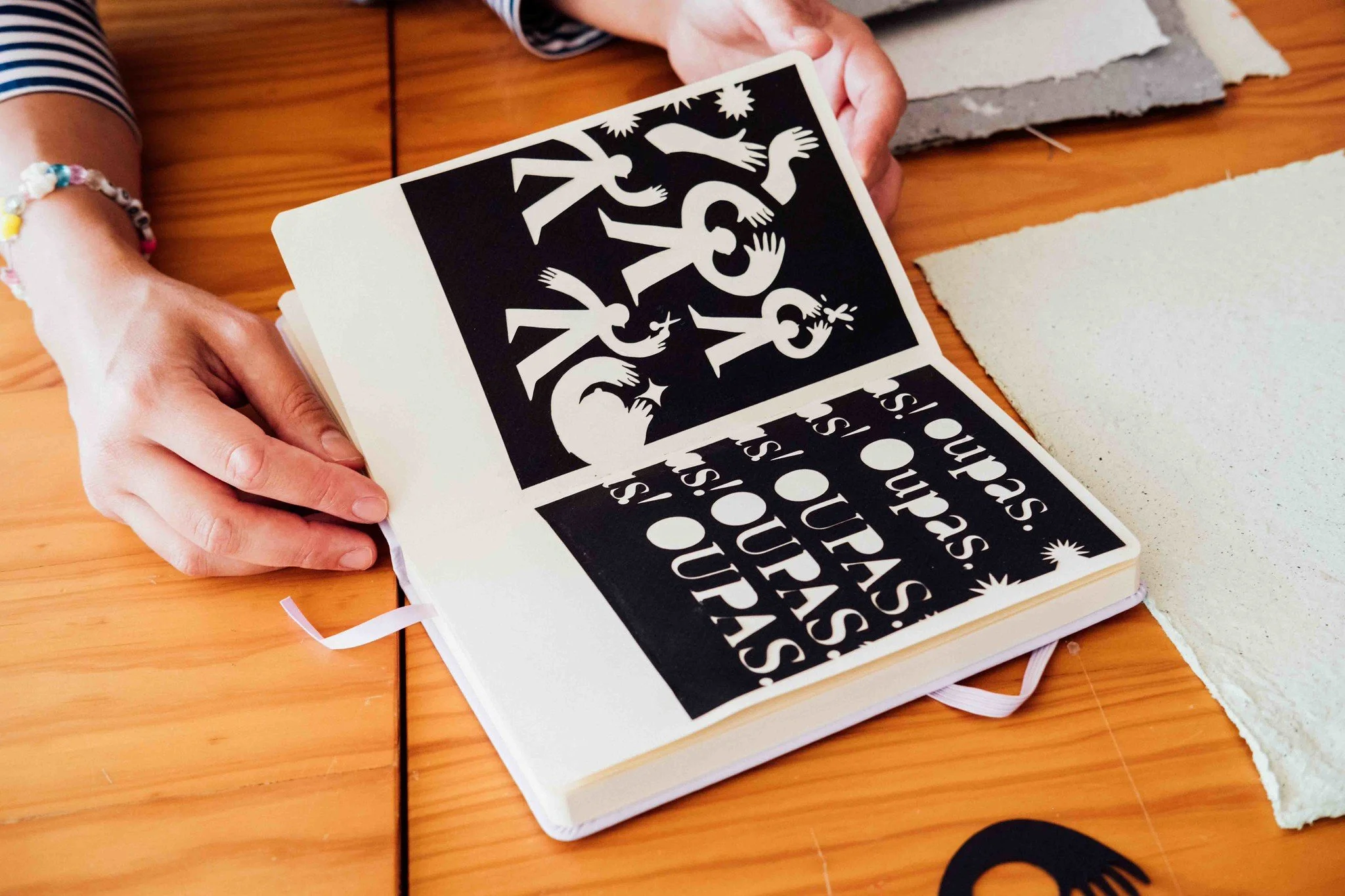
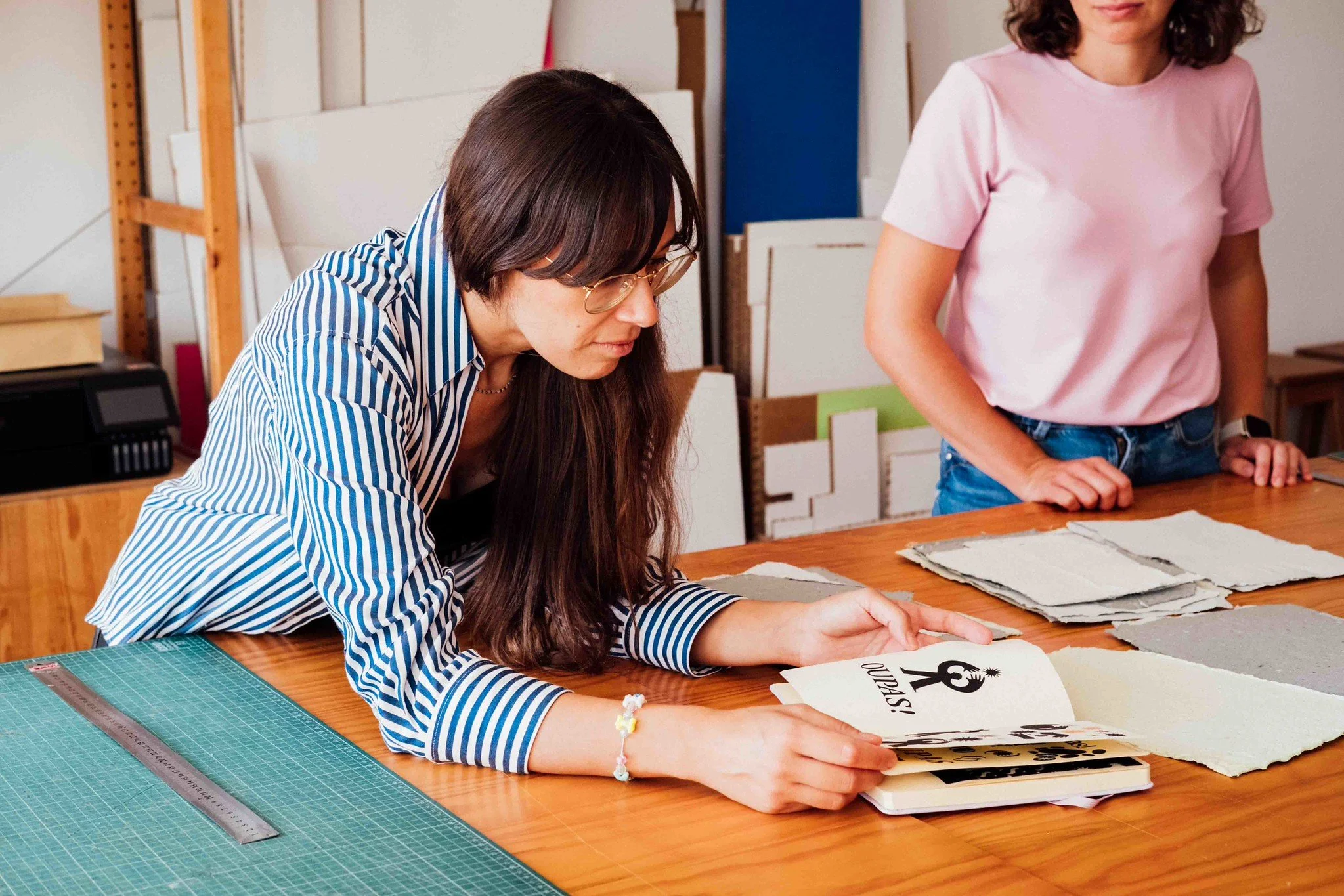
Thinking with paper. Barbot Bernardo's strategic support impacted different parts of the company. One of them was how Oupas Design would present itself to the market, starting with a new brand identity. The logo design process is unconventional: Sofia is using paper cuts to explore different visuals and graphic solutions.
Sofia: Going back to that emotional part, change can sometimes be a little scary, and this change we are making, or this review of what our studio is after the departure of one of the founders, was an opportunity for us to look at the project with fresh eyes.
We had already been with Oupas for 15 years, and there was already some saturation. Projects are sometimes very repetitive. Now is an opportunity to look at what we have developed over the years and the clients we have attracted, and to make a 2.0 version of the studio, taking greater advantage of the good things we have achieved and improving those that sometimes did not go so well or that we did not pay enough attention to.
C: This led to internal reflection and a process of discovering our personal motivations and desires. Sometimes things were driven by what our clients asked for or what came up at a given moment, without any room for personal reflection on how we were doing this and why.
So, we have two critical topics for creative enterprises, one of which is creativity as a business process, and the other is the motivation behind that same creativity. I often say that a midlife crisis occurs after 10 years of a company's existence. In the case of creative businesses, they reach this stage without having had a strategic process beforehand: things happen organically, and then we get stuck in habits or paths that were not very well thought out. In many cases, the growth the founder projected at the beginning did not materialise because they did not pause to rethink. I have a client who says she felt like she was on a hamster wheel, always chasing something without really getting anywhere. And then we can also talk a little about what drives us, the motivation behind a creative project, and what makes us leave the house every day as creative beings. What did you feel 10 or 15 years after you started?
S: It's a bit like you say, we had this crisis after 15 years in the company, also partly motivated by what we felt personally. Cidália will speak for herself; maybe she didn't feel it as much, but I thought I needed to do things differently, looking more at what I want as a designer and as a creative person, what I've always wanted to achieve, and what I may have neglected over the years. We looked more at the company, the group, and the three of us rather than at each of us individually.
At this stage, both Cidália and I are focusing more on what we want as individuals and as creatives, and aligning ourselves to do something better and with more motivation. This also includes defining roles and restructuring the studio based on each person's skills and interests.
C: This is also directly linked to motivation, because if we are working on things that are more specific to each one of us, then we will also feel like we are a more critical part of the studio. If we both do the same things, in the end, no one will dedicate themselves to something they are better at or more suited to, and we will be back to square one.
Did you ever feel any tension between you because you were repeating roles?
C: Perhaps. I felt that I was not as competent, that I was playing roles I was not good at or that were not in line with who I am.
S: Yes, that's it. Over the years, at least until the pandemic, we always had a breakneck pace, with a logic of 'whoever is available does it'. This flexibility, without a more precise definition of roles, is good on the one hand because anyone can suddenly do it. Still, it blocks the desire to explore what we really feel we are more capable of or willing to do. In other words, we may have done our job very competently, without being fully satisfied when doing it.
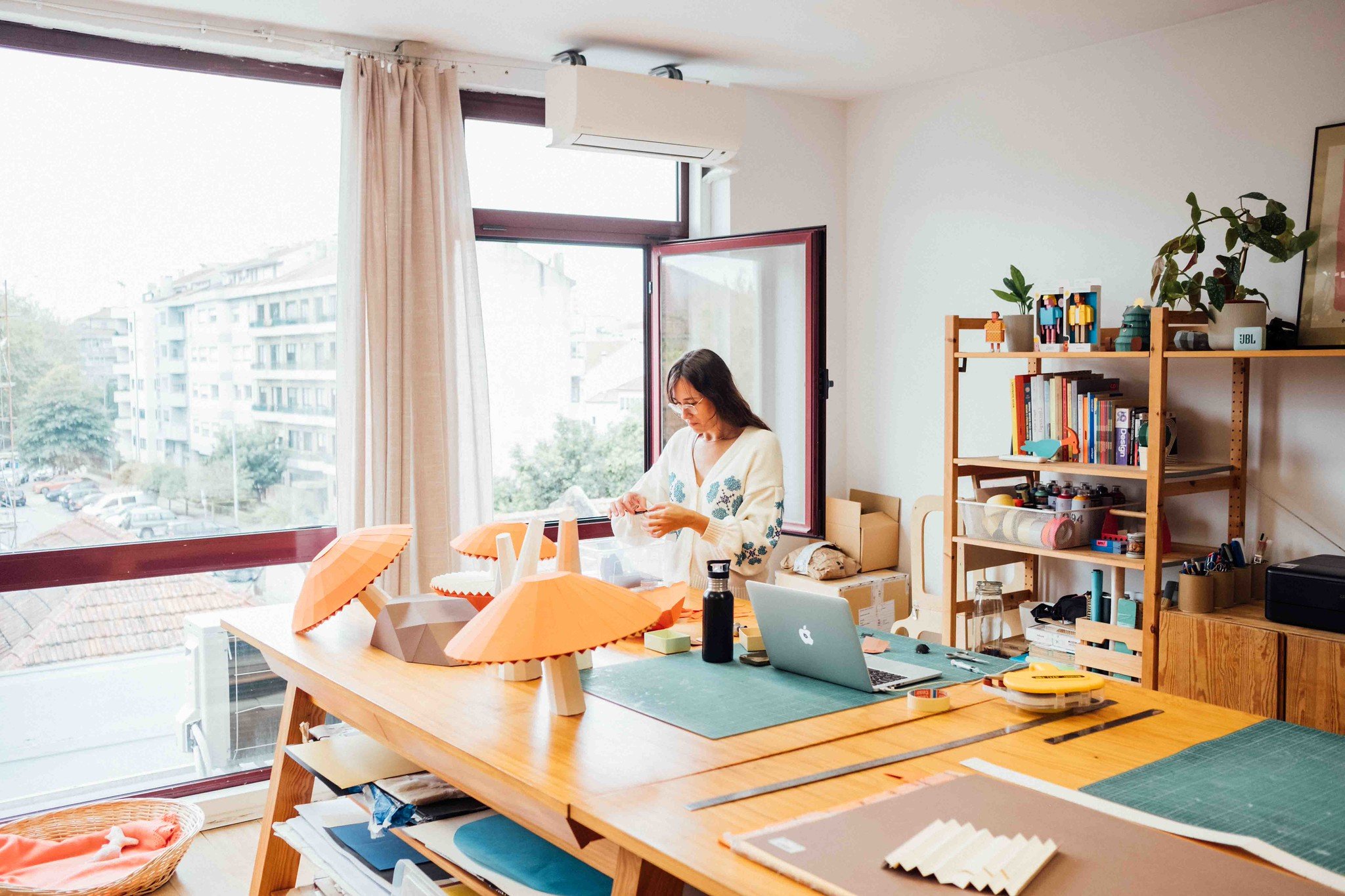
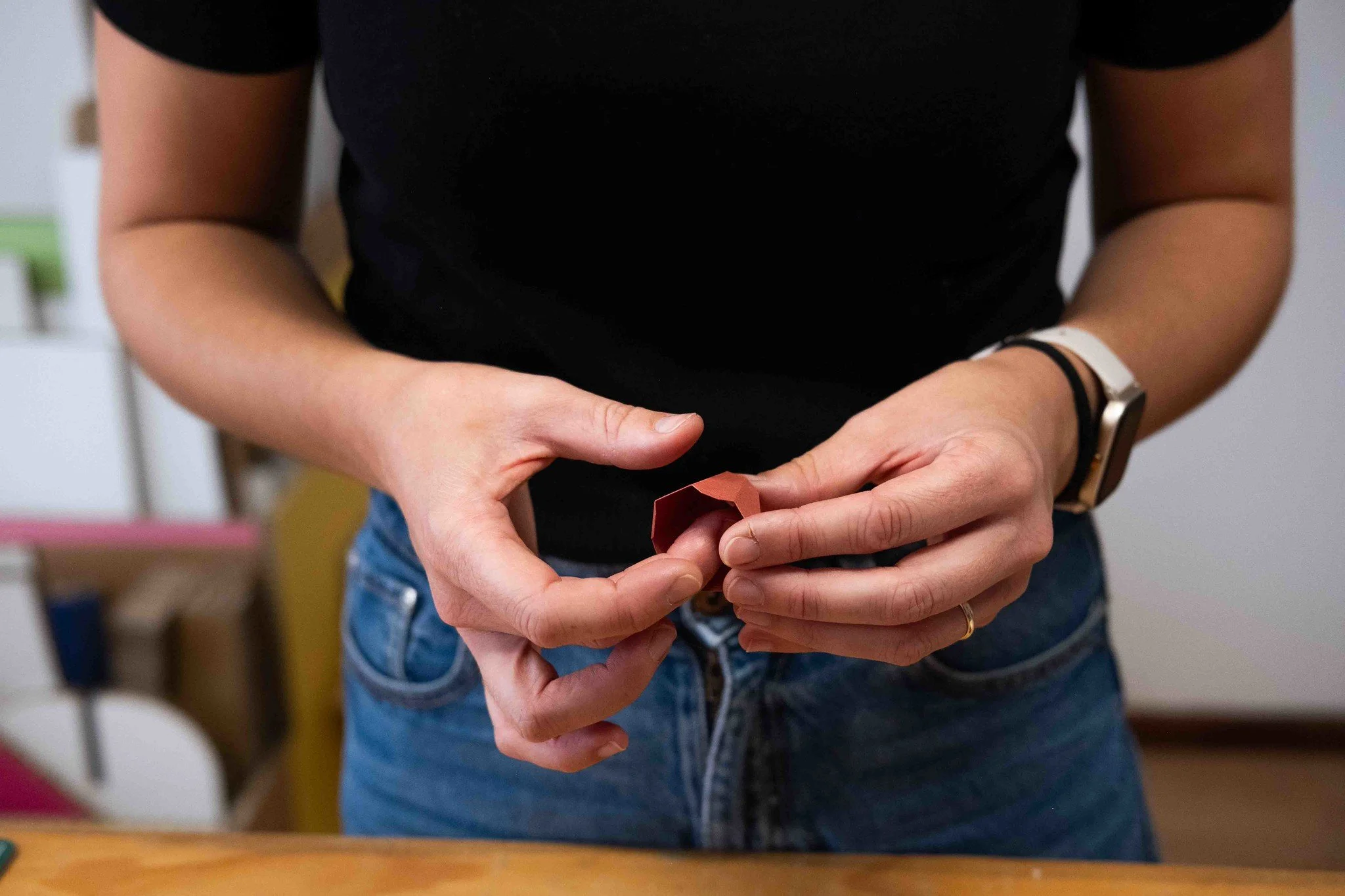
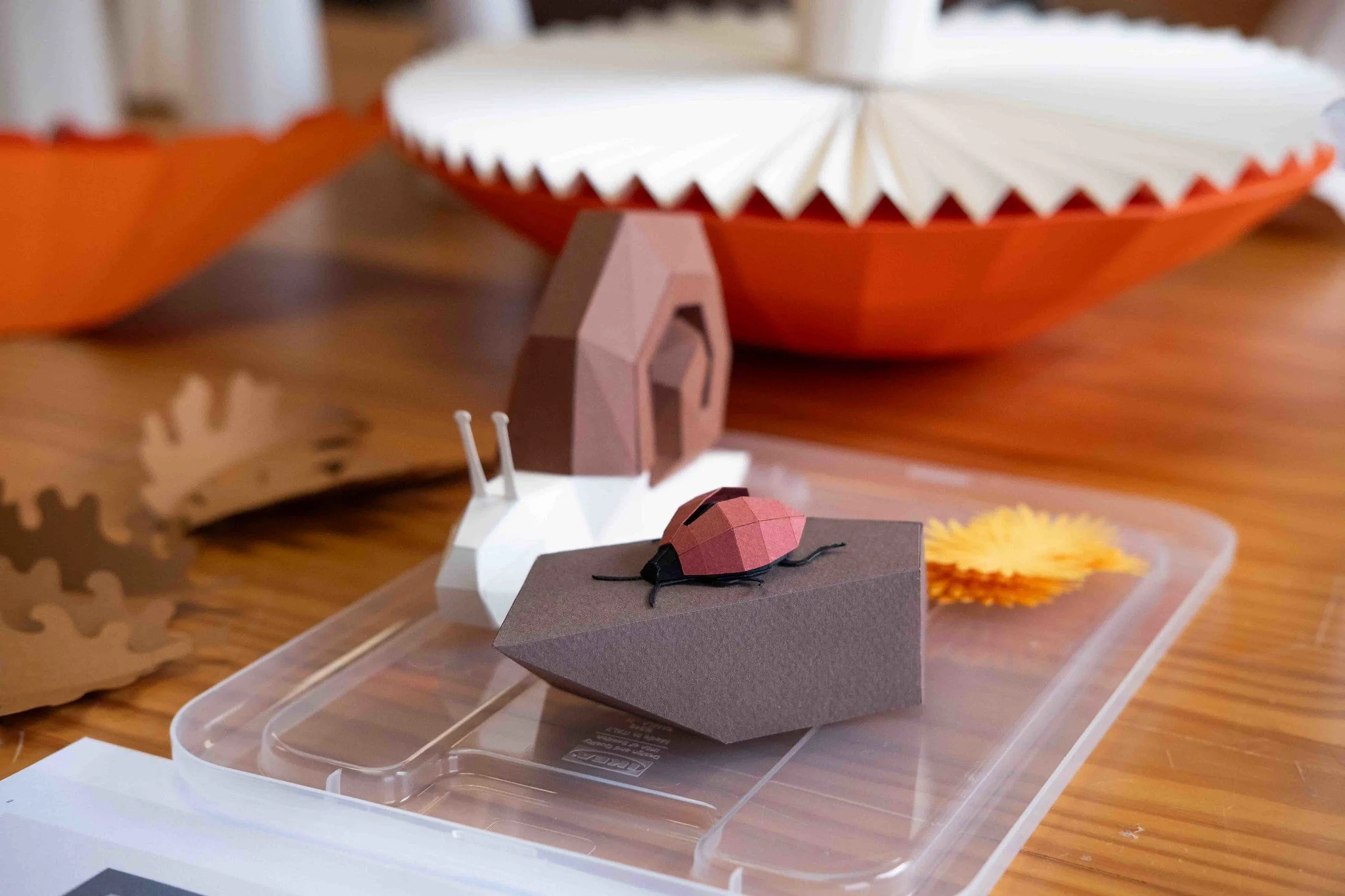

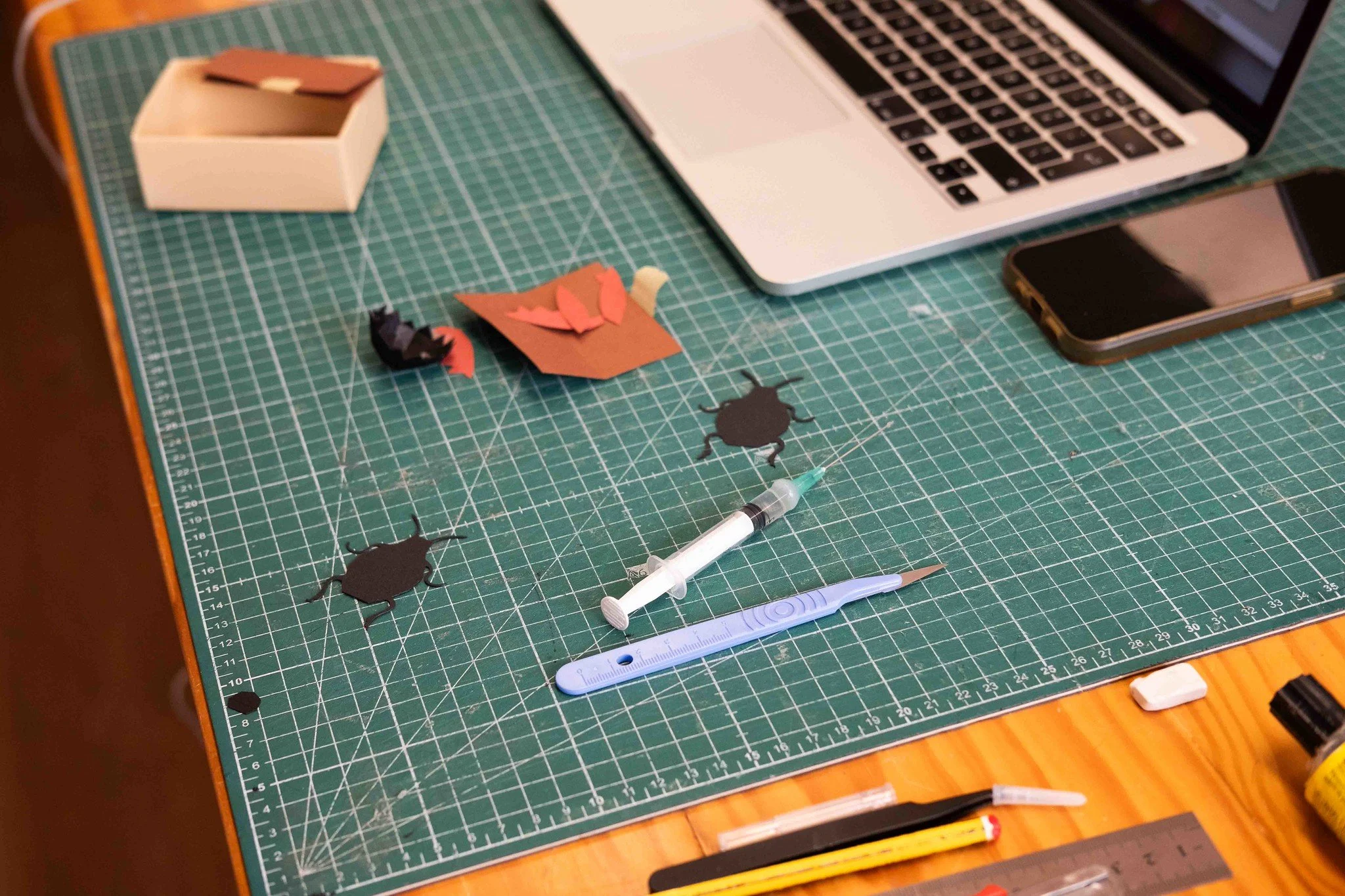
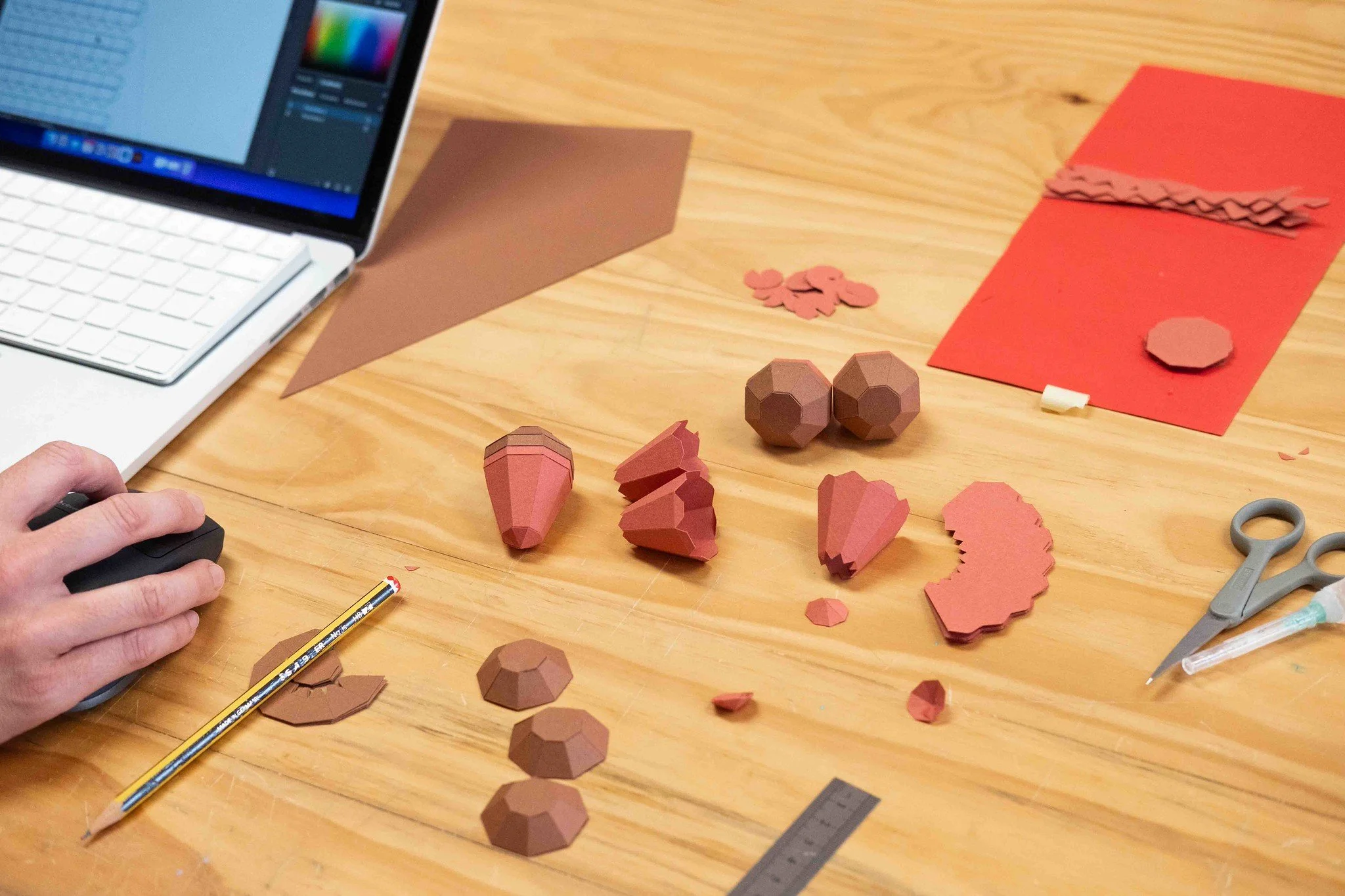
Making the Hermés display for Marcolino's 2025 festive season.
This change in organisation and willingness to change processes was one of the motivations for us to start working together. But there was another, which concerns the management of the company in a post-COVID scenario, which had a brutal impact on your business and brought about significant changes in your market dynamics. We are talking about the immediate effect on cash flow after so many events were cancelled, and also about a massive migration to online during this period, which meant that retail, one of your most important markets, also suffered for a year or two.
C: COVID was really a time to stop. We had events that had been contracted, things that were going to happen and didn't. It was basically a year of pause, of stopping, during which one or two online photography projects came up, but nothing physical happened. And of course, we felt that impact very strongly.
It was also a period marked by another moment: motherhood. Sofia became a mother at that time, and I did too shortly afterwards. This was a transformation that forced us to rethink how to continue the business and how things would happen from that moment on. If, at that stage, the events didn't happen, we also looked for more creative, smaller jobs, such as window displays or more detailed ones, but even so, we felt we weren't there yet. There was a need for greater reflection to address the transformation brought about by COVID.
Oupas' resilience comes from great financial care, on the one hand, but also from the fact that you have always managed to maintain a minimalist structure since you founded the studio...
S: Yes, it is true. It was our lifeline during that period, and we are still recovering.
Was the original plan to create a company or not?
C: It just happened, and it was a very organic thing. We finished university during the Troika (IMF and ECB rescue after the post-2008 Eurozone crisis), when there weren't many jobs for designers. And while no work came our way, no design studio would take us on, we worked together as a trio. Then things took a different dimension and solidified. We created the company, but that wasn't the intention at all, no.
Who was your first major client?
C: It was IVITY, perhaps...
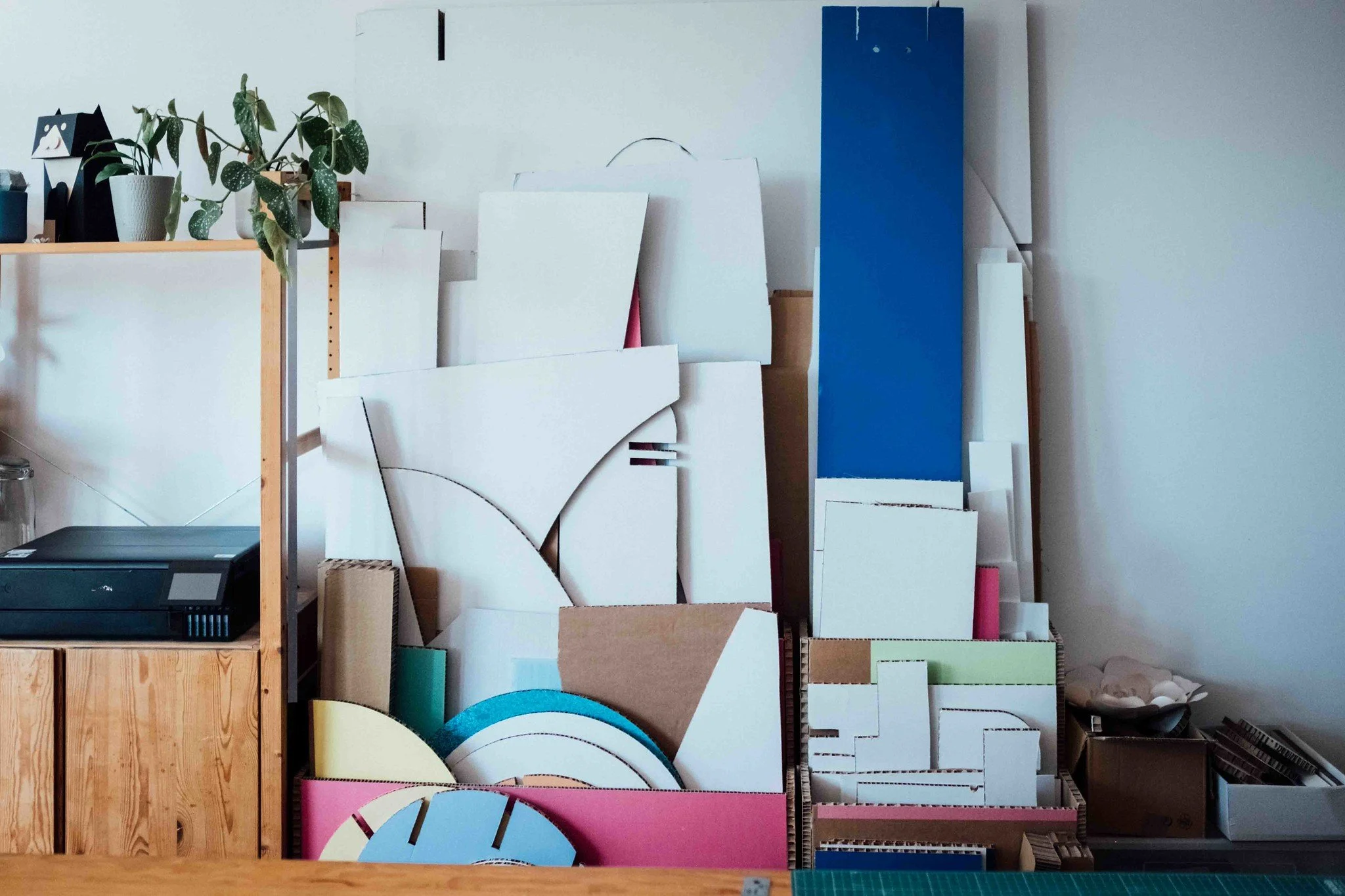
S: Yes. IVITY, an agency in Lisbon. We made a cardboard city for them, and it was more of a partnership project. We built a stage for a TEDx event, and one of the speakers was Carlos Coelho, the agency's president. He liked our work and challenged us to a curious project.
C: He wanted to create a city of brands in a warehouse he had in Lisbon. It was, 'Look, come over next week, and let's see how it goes. ' We built something improvised. Actually, it was totally improvised, because there were no plans, there was nothing!
S: It was a very large-scale event and had a lot of visibility. From then on, many events started to come our way.
What difficulties did you encounter in your growth during those first ten years?
C: We had no professional experience, just a few weekend jobs during college. It was all a learning process, with no references, nothing.
In the beginning, right at the start, we were working with more volumetric pieces. We moved away from graphic design and the two-dimensional vision we learned in college toward three-dimensional work. We needed to figure out how to do it more professionally and efficiently, both for us to build the pieces and for clients to visualise them. That was one of the phases, figuring out how we could improve technically.
From a financial point of view, it was tricky at first, but it was also a process of discovery. It was low-cost because we started in a university incubator, where we didn't have to pay rent. We had a critical experimental phase there, which allowed us to realise, after one year, that Oupas had legs to stand on.
In your work process, moving from two-dimensional to three-dimensional designs, how do you see your craft? In other words, what exactly have you learned to do really well, perfected, and that is difficult to replicate?
S: We already have a very refined process, meaning that it wouldn't be challenging for us to replicate. We already have so many technical resources and methods, so much know-how, we have already optimised our process a lot, and now we can respond much more quickly to customers. What used to take a month to do at the beginning, we now do in a week.
Over the years, we have found partners who help us with more technical components, and we know what we need from each of them. Right now, we know exactly everything that goes into production, from paper delivery times to the stocks commonly available from suppliers, and we have also optimised our own extensive stock of materials.
Everything is also optimised during production itself. For example, we have suppliers who offer discounts for larger volumes, making projects more cost-effective. These are small things we have gained over the years that now allow us to respond more quickly, more accurately, and more professionally.
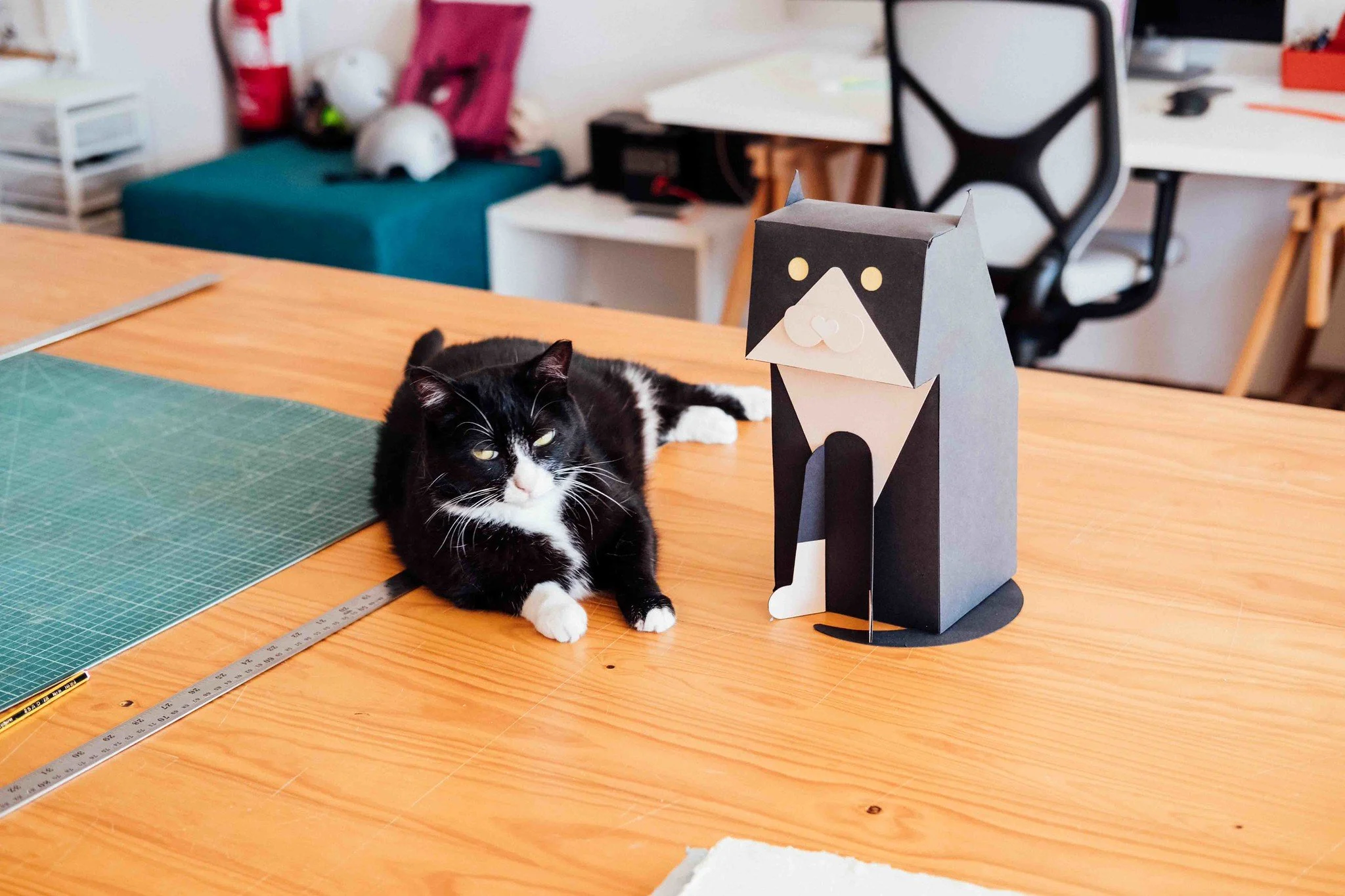
Chella is the studio’s full-time resident.
From a craft perspective, that is, in terms of technical expertise, how has this evolved?
S: With every project we do, we always learn something that we can apply to the next one.
C: In the beginning, we worked with what we were asked to do. We worked a lot with raw cardboard; everything was very rough, and we didn't work much with delicate paper. It was very rough stuff. Then, as we worked on more projects, we realised that paper could add depth and detail. Cardboard didn't have that capacity; it just brought robustness. Of course, for that impact, that gigantic scale, it's essential, but then when we moved on to smaller projects, we couldn't do what we wanted.
We also realised what we liked and didn't like about our projects. For example, we don't paint as much and work more with just the card's colours for the cut-outs.
So, is there an aesthetic language associated with this?
S: I think so. Mainly because we ended up creating a library of shapes and pieces. For example, animals and elements of nature are reinvented in each project, but some shapes are very present across projects and become part of our studio's identity; they are part of our language.
And do you have collections for clients? Does it make sense to talk about that? Do you develop a language specific to each client beyond your own language and style? If we put together the work we've done for a client over the years, would it make sense visually?
C. It's something organic; it's not very structured. But yes, it happens in some cases.
For example, for Marcolino and Hermés, we have been working extensively with the collections and the brand's colours. With this client, we always use the same line of card stock, which always has that particular texture. And also, as these are elements that are always on a very similar scale, when observed up close, there is consistency.
S: Obviously, other clients want something entirely different for each event they hold. But there's always some other graphic element. There isn't a visual system, but there are elements that are repeated across projects for the same client.
C: The material itself also brings this consistency. I'm thinking, for example, of GRAHAMS. There, everything is always very different from one display to the next. Still, the paper, the way it is worked, the details, always have a common identity; there is a unity.
At a large event, how does the creative process work? What is the difference between planning and setting up, for example?
S: We already have some systems in place for all types of projects, things that are implemented and that work. For example, how to present ideas to the client and optimise proposals so as not to go too far and risk having to backtrack later. We take communication with the client very seriously and gradually present all phases of the project, from planning through execution, to make sure we are all on the same page.
C: In a large event, the process is bigger. Between finding out what the event is, what the vibe of the event is, and what the event wants to convey. Because the event may wish to express one thing, the vibe may be different, and the decorations have to reflect that.
Sometimes the space may have nothing to do with the company itself, but it can still give us the conditions to do things we wouldn't be able to in another space.
We've had several events that were sometimes very institutional, very corporate. Still, the vibe they wanted to convey or the energy was totally different. And we have to align that decoration, that message. We have to convey that message very well. At the event, there's a discovery phase with the client and the space, which is critical to planning in line with expectations.
S: What also sets it apart from smaller projects is the technical side. Aligning with other teams, audiovisuals, reading the space, knowing the routes people have to take, and what makes sense. In other words, it goes far beyond the papercraft itself. In construction, there is much more to think about than just the design of the pieces.
How do you make your work more relevant and open up new possibilities for the client?
S: We have been thinking about types of innovation more closely linked to the service we are providing. In other words, we can have a campaign that works across multiple channels. Imagine an event, a shop, or a shop window that can be transported into the digital world to help tell the story to a broader audience.
And from a creative direction perspective, not art direction, but creative direction, do you find it difficult to sell an idea?
S: Sometimes the client cannot visualise the project well, and it is at this stage that it can be more challenging to get the message across.
There is a mock-up phase, and after that, it is usually just minor adjustments. The client already knows a lot about what they will get. No one is going to say, "Look, throw it away..." There's just no room for that.
What can happen, and sometimes does happen, is not that the client changes their mind, but that we arrive on site and the team, for example, the audiovisual team, puts the screen a metre lower, and we don't have that space. Then we have to improvise.
We've had cases where we've had to work directly with the brand's creative director, who gives us a mood board of what they want and the visual direction. Other times, the client comes in with specific references, leaving little room for manoeuvre. But most of the time, we present our ideas to the client.
Do you ever experience creative waste? In other words, investing in a design or concept that ends up not being used?
S: Sometimes we have two potential paths for the same project and, of course, the client only chooses one. Then we're left with a design that we can easily apply to other projects.
Throughout the different projects, we also record ideas for things that don't exist yet but could one day become a project. When a new job comes up, where the client is in a hurry, we sometimes already have ideas lined up and some paths half-defined.
For example, in this project, the mood board was already half-ready, the briefing was thorough, and we were able to quickly propose an idea to the client.
In these processes, who is usually your point of contact?
S: It varies a lot. Sometimes we deal with the end customer, other times with agencies.
C: It's not linear. It could be the marketing team or an agency that goes through many intermediaries before reaching the end customer.
How do you get your work?
S: Often it's word of mouth between clients, other times it's social media. Social media also serves to remind clients that we are here and that we haven't worked together for some time. We notice that after we publish something, some clients get back in touch.
C: In the case of agencies, which is a very competitive world, when we do impactful work, new agencies come to us because they have seen us working with the competition. In other cases, it is the agencies themselves that recommend us to each other.
In this environment of 'shitification', where everything digital is more or less awful, devoid of even taste, how do you constructively show your work? I take refuge in writing and creating content on the website, but in reality, the statistics remain poor. I end up feeling it's essential to create a legacy and a record of our work that may be helpful in the future. But in reality, sales don't come to us through this; it's still word of mouth, recommendations from our customers, and the contacts and networking we do. At Oupas, how do you see this dichotomy between 'digital shit' and a super competitive world out there?
C: Online has taken on little importance, actually. Our work brings this tactile experience that doesn't translate well online...
S: It's craftsmanship, it's of our time, but done by hand, ending up detached from everything we see on the internet and that we all consume.
While we know that social media is necessary and we have to use it, there are days when we refuse to be part of it, because of all the work we have to do to record and create content that ends up having no traction or bringing results, it's just one more thing to scroll through. This social media thing seems almost like blackmail; you have to be part of it. Personally, I don't like to see my stuff alongside so much rubbish.
However, it is excellent to produce this content for the website and send it to the client for use on their own platforms.
Now for a long question, with a bit of commentary. What are your thoughts on AI? It's an excellent opportunity for those who really create value. We now have AI, but we are entering that anecdotal phase where ChatGPT invents text that isn't credible, the texts are all the same, everyone communicates the same way, and what is cool now is writing. Really writing, because you can see that there is thought behind what is presented. Similarly, what's cool now is drawing, drawing by hand, and showing the process. Showing that we create value, not with that same old design, but in design processes that are thought out, that are structured, that have a strong creative direction, that have a strong art direction, are intellectualised and then also have a craft component, so to speak, in their execution.
Your value proposition of craftsmanship is even more valid than it was 10 years ago, when digital was growing, mainly social media and web communication, and was in a more exciting phase. How do you transform the material dimension of your work into the digital, not only without losing value but adding to it?
C: The ways of doing things are super important, and we may have been neglecting the part of recording and documenting the process. If people can have contact with the things being made, they will better understand how they were built, the time it took to create each piece, and the dedication each piece has, which will add more value. People realise that care and dedication went into it, that there's this sense which is touch. People need to understand how things were made, and it's one of the things we're striving to do more of.
S: We're already working on documenting this project (Hermés), let's see if anything useful comes out of it!